
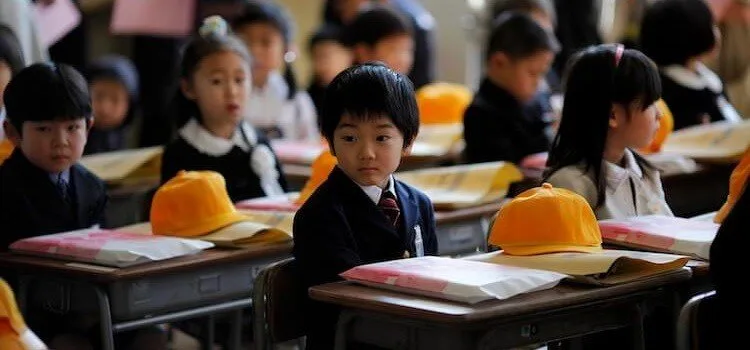
Every April, Tokyo sidewalks fill with first-graders almost swallowed by a stiff leather box on their backs. That box is the randoseru [ランドセル]—Japan’s standardized elementary-school backpack. Families still pay serious money for a bag designed to survive six years of books, rain, and the daily walk. Are they really indestructible? Not quite magic—but they are built like it.
The name comes from the Dutch ransel (backpack). What started as military kit became a schoolroom icon, a family gift at school entry, and, more recently, a curiosity for travelers who notice how little the silhouette has changed.
Contents 7
The origin of the randoseru
The word randoseru is borrowed from Dutch ransel (or related German Ranzen), meaning backpack. Western-style military reforms brought Netherlands-style rucksacks into Japanese army use; soldiers carried gear in a firm pack whose outline already echoed today’s bag.
In 1885, Gakushūin—the elite school linked to the imperial family—pushed the idea that elementary students should walk to school carrying their own supplies, rather than arriving by carriage or rickshaw. Early school packs still looked more like ordinary rucksacks. The boxy shape people recognize now is usually traced to 1887, when the crown prince (later Emperor Taishō) received a leather backpack modeled on military gear upon entering Gakushūin. The look caught on among those who could afford it.
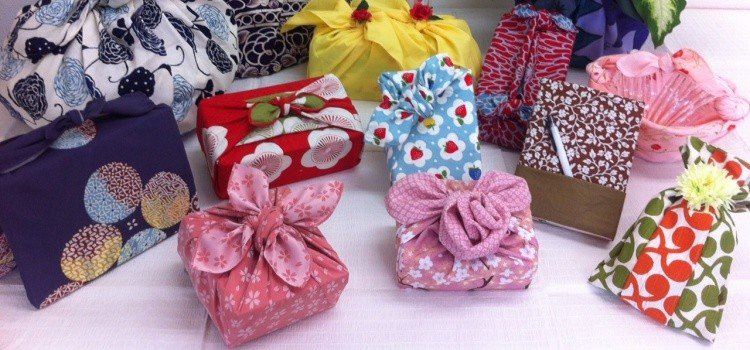
For decades the bag stayed expensive and exclusive. Until Japan’s postwar boom, many children still used simpler shoulder bags or a furoshiki cloth. Only later did the randoseru become the near-default look of elementary school life.
There is a saying that the metal side clip once held grenades for soldiers. That story is not true. The clip appeared after World War II so children could hang an obento, gym clothes, and other daily extras—hands free for the walk, often in groups, as many Japanese children still do on the school route.
What is a randoseru like?
Even today, quality randoseru are largely handmade. A single bag may involve hundreds of parts and fittings: die-cut panels, polyurethane plates, sewing, gluing, drilling the shoulder straps, riveting, and careful finishing so the box keeps its shape for years.
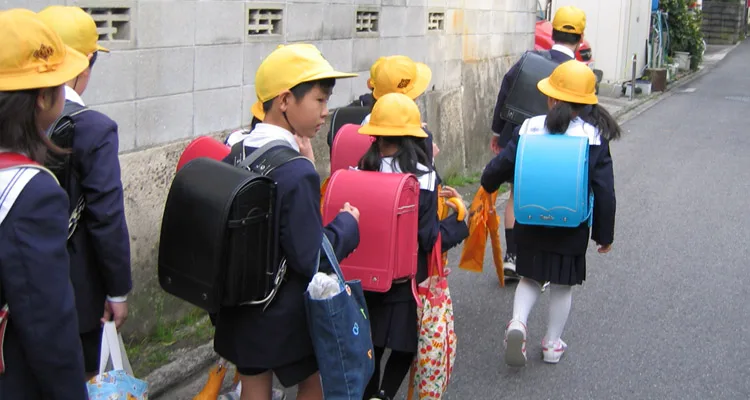
Makers design the bag for the full six years of elementary school and often back it with a multi-year warranty. Traditional colors were black for boys and red for girls; since the 2000s, pink, navy, brown, green, pastels, and two-tone combinations have become common. Grandparents frequently gift the bag when a child starts school—part practical purchase, part family ritual.
Typical dimensions are about 30 cm high × 23 cm wide × 18 cm deep. Empty weight is roughly 1–1.2 kg, with softer leather or fabric on surfaces that touch the body. Reinforced sides and divided compartments protect books and worksheets; a long flap covers the front and clips at the bottom. Many modern bags use Clarino, a synthetic leather that is lighter and more water-resistant than full hide while still looking like traditional leather.
How much does a randoseru cost?
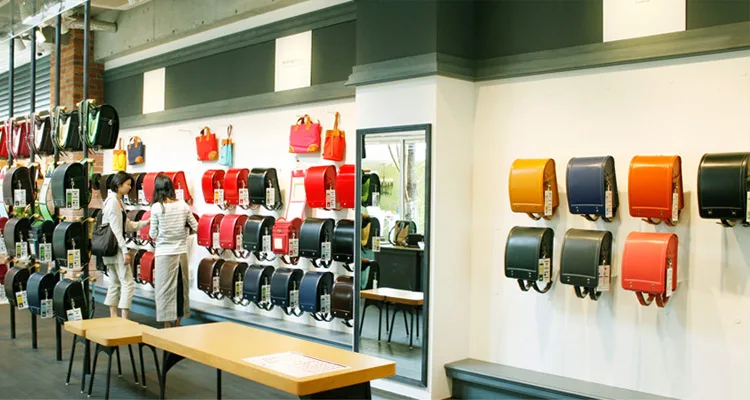
Price follows material and workshop. At chain stores and supermarkets, a genuine or synthetic-leather randoseru often sits around ¥30,000–¥40,000. Department-store and traditional workshop models commonly run ¥55,000–¥70,000, while premium lines—including horsehide or designer collaborations—can climb past ¥100,000. Rough dollar equivalents move with the exchange rate, but travelers should expect a serious purchase, not a disposable school bag.
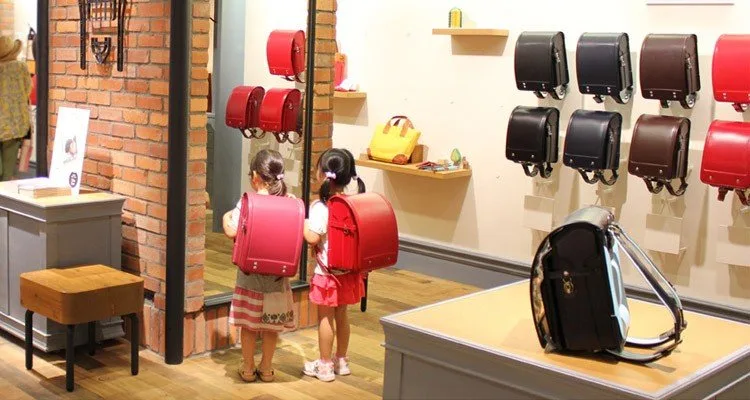
Clarino versions usually cost less than full leather while keeping the boxy silhouette. Online marketplaces and after-April auctions sometimes list new or used bags at lower prices once the Japanese school year has started. Horsehide and high-end handmade pieces sit at the top of the range.
Straps attach with metal hardware so the bag moves with the shoulders and spreads weight. The clean, almost architectural outline is part of why adult versions later found fans outside the classroom.
Where to buy a randoseru
In Japan, department stores such as Takashimaya, Mitsukoshi, Sogo, Seibu, and Kintetsu still host major spring displays. For meticulously handmade bags, specialty houses like Tsuchiya Kaban are frequent references among families who want a workshop-level piece rather than a supermarket model.
A true high-quality randoseru is easiest to inspect and fit in Japan. Outside the country, specialty importers and online shops sell both Japanese-made and overseas-made versions in black, red, blue, and other colors. Quality varies widely: some bags follow Japanese dimensions and hardware; others only copy the look. If you buy abroad, check height, width, depth, and whether the interior fits A4-size materials if that matters for your use.
International specialty shops occasionally stock novelty colors and licensed designs. Treat listed prices as snapshots—inventory and exchange rates change—and prioritize construction (stitches, flap fit, strap hardware) over marketing photos.
Randoseru for adults
Elementary school still owns the classic look, but makers have introduced adult models with a more modern, business-friendly profile: thinner body, space for tablets or documents, fewer school clips. Brands such as Tsuchiya Kaban have released “otona ransel” lines meant for commuting as well as nostalgia.
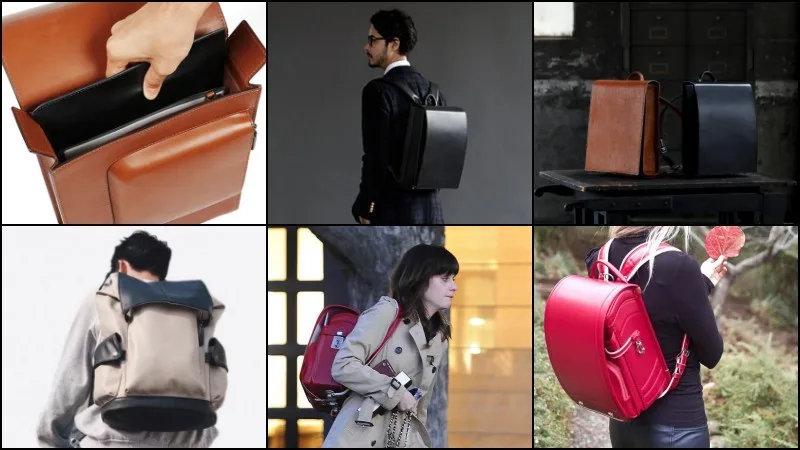
Where a child’s bag is built for textbooks and worksheets, adult cuts often slim the depth and refine the leather for work clothes. Premium adult models can land near the ¥100,000 mark. Some adults simply keep a traditional school-style bag with richer colors or metal details instead of a plain single tone.
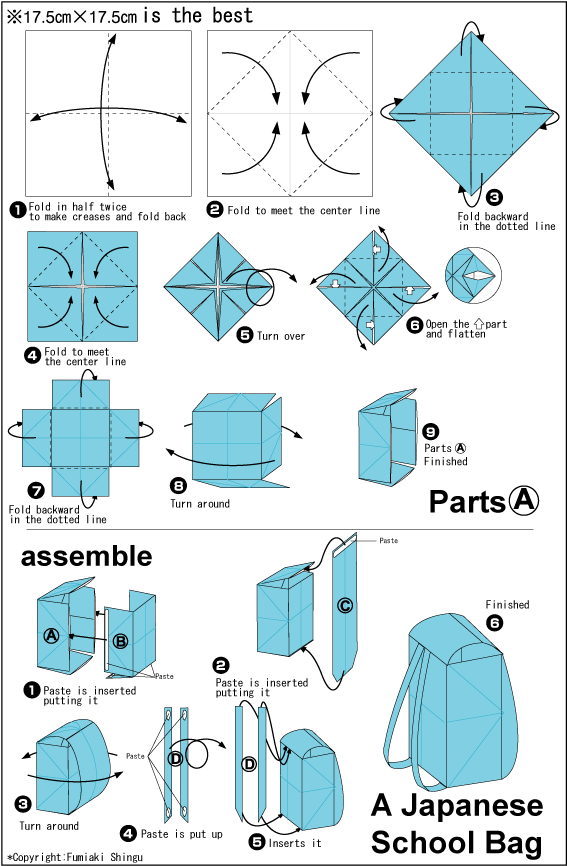
Make a randoseru out of origami
If you want the silhouette without the price tag, fold one in paper. Families once improvised simpler school bags when leather was out of reach; today, origami tutorials recreate the boxy flap for crafts and classroom projects. The diagram below walks through a simple paper version:
A cultural icon beyond the school gate
The randoseru sits deep in Japanese daily culture—from anime classrooms to April photos of first-graders. Outside Japan it spreads through kawaii fashion and social media. In 2014, actress Zooey Deschanel was photographed with a classic red bag, and the boxy silhouette keeps resurfacing as both school kit and style object.
It is not officially mandatory nationwide; social expectation does most of the work. Still, when you see rows of matching boxes bouncing toward the school gate, you are looking at more than luggage: a six-year companion, a family gift, and one of the most recognizable shapes in Japanese childhood.

Community
Comments
0 comments
There are no published comments in this language yet.
Send comment