

The term Live Action refers to film or television productions performed by real actors rather than animated drawings. In Japanese popular culture, it denotes cinematic works that bring original manga series, light novels, and anime to life with flesh-and-blood performers.
Dozens of beloved franchises receive live-action treatment every decade, making a complete overview an ambitious endeavor. Beyond the comprehensive reference list below, several landmark titles stand out for their creative vision, memorable casting, and lasting cultural resonance.
This article specifically focuses on theatrical feature films rather than long-running television series or episodic Japanese dramas.
Contents 7
Oldboy: Psychological Noir and International Acclaim
Oh Dae-su, the troubled protagonist of the story, is suddenly kidnapped and imprisoned in a private cell without knowing the identity of his captor or the reason for his confinement. After fifteen grueling years of isolation, he is abruptly released, only to discover that he has been framed for the murder of his wife, embarking on a desperate quest for truth and vengeance.
Directed by Park Chan-wook, the acclaimed 2003 South Korean film drew inspiration from the Japanese manga written by Garon Tsuchiya and illustrated by Nobuaki Minegishi. Tailored strictly for mature audiences, the production avoids exaggerated anime mannerisms in favor of raw psychological intensity, winning the Grand Prix at the 2004 Cannes Film Festival and establishing a high-water mark for comic adaptations.
Nana: Romance, Music, and Independence in Tokyo
The story follows two young women who share the same first name, Nana, yet come from completely different worlds. Nana Osaki is an ambitious punk rock vocalist determined to make her band famous, while Nana Komatsu is a warmhearted, naive romantic chasing love. After a chance encounter aboard a train bound for Tokyo, their paths cross again when they unexpectedly decide to share apartment 707.
Based on Ai Yazawa's acclaimed shojo manga, Kentaro Otani's 2005 film adaptation achieved widespread success thanks to its authentic emotional balance of humor, heartbreak, and musical energy. Starring Mika Nakashima alongside Aoi Miyazaki, the movie captured the authentic styling of the original characters and produced a chart-topping soundtrack with memorable rock ballads.
Death Note: The Supernatural Cat-and-Mouse Duel
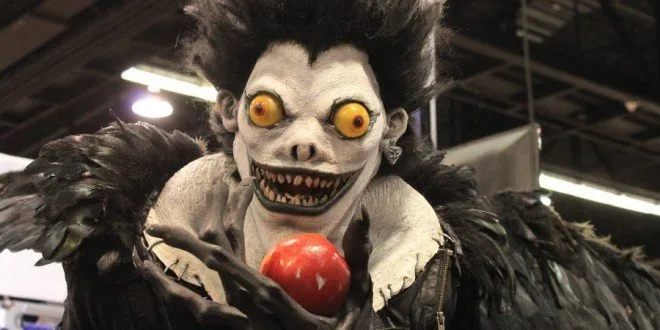
A supernatural crime thriller, the story follows brilliant high school student Light Yagami after he discovers a mysterious notebook dropped into the human realm by a death god. Learning that any person whose name is written within its pages will die, Light adopts the vigilante persona Kira to eliminate criminals worldwide, sparking an intense intellectual battle against the eccentric detective L.
Readers interested in the lore behind the franchise can explore our guide to Death Note curiosities and seasons. Shusuke Kaneko directed the prominent 2006 Japanese duology starring Tatsuya Fujiwara and Kenichi Matsuyama, which remains celebrated for capturing the psychological tension of the manga while crafting a cohesive, inventive cinematic conclusion.
Gantz: Relentless Survival and Sci-Fi Action
High school student Kei Kurono and his estranged childhood friend Masaru Kato unexpectedly cross paths on a subway platform. When a drunk man falls onto the tracks, the pair leaps down to pull him to safety, only to be struck by an oncoming train. Instead of facing death, they instantly materialize inside an unfurnished Tokyo apartment facing a mysterious black sphere known as Gantz.
The enigmatic sphere equips the resurrected participants with advanced protective suits and futuristic weaponry, dispatching them on deadly timed missions to hunt down extraterrestrial beings hiding across Japan. Shinsuke Sato's 2011 two-part film adaptation combined impressive visual effects, visceral practical stunts, and tense choreography to realize Hiroya Oku's dark sci-fi universe on the big screen.
Many creators in the industry draw inspiration from independent doujinshi culture and creative fan works before mastering the demanding art of becoming a professional author of books and manga in Japan.
Fullmetal Alchemist: Fantasy, Sacrifice, and Alchemy
Set in an alternate early 20th-century world where alchemy flourishes as an advanced physical science governed by the law of Equivalent Exchange, the story follows brothers Edward and Alphonse Elric. Desperate to revive their deceased mother, the boys attempt the forbidden art of human transmutation, triggering a catastrophic rebound that destroys Alphonse's physical body and claims Edward's left leg. In a final act of sacrifice, Edward gives up his right arm to bind Alphonse's soul to an antique suit of armor.
Equipped with mechanical automail limbs, Edward becomes the youngest State Alchemist in history as the brothers search for the legendary Philosopher's Stone to restore their original bodies. Fumihiko Sori directed the 2017 theatrical adaptation, filming key European sequences on location in Tuscany to recreate the aesthetic atmosphere of Hiromu Arakawa's acclaimed narrative.

Alphabetical Catalog of Manga and Anime Live-Action Films
Across decades of Japanese filmmaking, hundreds of animated stories and serialized comics have transitioned into theatrical live-action cinema. In addition to manga, multiple series originated as serialized novels, as detailed in our introduction to what defines a light novel. Below is an expansive reference list of notable live-action film adaptations to explore across varied genres and cinematic eras.
Use your browser's search shortcut [CTRL + F] to quickly locate specific titles within the catalog.
- 009-1: The End of the Beginning;
- 20th Century Boys (3 movies);
- A Boy and His Samurai;
- A Homansu;
- Afro Tanaka;
- Ai City;
- Ai Ore!;
- Ai to Makoto;
- Ai to Makoto: Kanketsuhen;
- Akira No. 2;
- Anonymous Noise;
- Ansatsu Kyoushitsu (Assassination Classroom);
- Aozora Yell;
- Arcana;
- Attack on Titan;
- Attack on Titan: End of the World;
- Azumi;
- Azumi 2: Death or Love;
- Bad Boys;
- Bakugyaku Familia;
- Bakuman;
- Barefoot Gen;
- Bataashi Kingyo;
- Beck;
- Black Butler;
- Blade of the Immortal;
- Bleach;
- Blue Spring Ride;
- Boys on the Run;
- Bugmaster (Mushishi);
- Bunny Drop;
- Casshern: Reincarnated from Hell;
- Chihayafuru Part 1;
- Chihayafuru Part 3;
- Chihayafuru: Shimo no Ku;
- Circuit no Okami;
- Crows Explode;
- Crows Zero;
- Crows Zero 2;
- Cutie Honey;
- Cutie Honey: Live Action;
- Cutie Honey: Tears;
- Daily Lives of High School Boys;
- Daytime Shooting Star;
- Death Note: The First Name;
- Death Note 2: The Last Name;
- Death Note: Light Up the NEW World;
- Detroit Metal City;
- Dororo;
- Dragon Ball: The Magic Begins;
- Dragonball Evolution;
- Ecchi o Nerae! Inu-Neko;
- Eko Eko Azarak II: Birth of the Wizard;
- Eko Eko Azarak III: Misa The Dark Angel;
- Eko Eko Azarak IV: Awakening;
- Eko Eko Azarak: B-page;
- Eko Eko Azarak: R-page;
- Eko Eko Azarak: Wizard of Darkness;
- Erased;
- Fist of the North Star;
- For Love's Sake;
- From Kobe;
- From Me to You (Kimi ni Todoke);
- Fullmetal Alchemist;
- Futari Ecchi;
- Futari Ecchi: Love Forever;
- Futari Ecchi: Triple Love;
- Futari H: Second Kiss;
- Gaki Rock;
- Gantz;
- Gantz: Perfect Answer;
- Garoden;
- Gegege no Kitaro;
- Gekijouban Kamen Teacher;
- Ghost in the Shell;
- Gintama;
- God's Left Hand, Devil's Right Hand;
- Gokudo Meshi;
- Grave of the Fireflies;
- Guinea Pig 2: Flower of Flesh and Blood;
- Haikara-san ga Toru;
- Hana no Asuka-gumi!;
- Hana no Asuka-gumi! Neo;
- Happily Ever After;
- Harenchi Gakuen;
- Harenchi Gakuen: Shintai Kensa no Maki;
- Harenchi Gakuen: Tackle Kiss no Maki;
- Heisei Harenchi Gakuen;
- Hentai Kamen: Abnormal Crisis;
- Heroine Shikkaku;
- Hibi Rock;
- Higanjima;
- High School Debut;
- Himitsu no Akko-chan;
- Himizu;
- Hitsuji no Ki;
- Honey and Clover;
- Hoshi no Furumachi;
- Hot Road;
- Hotaru no Hikari;
- Hozuki-san Chi no Aneki;
- I Am a Hero;
- I Give My First Love to You;
- I'll Give It My All Tomorrow;
- Ibitsu;
- Ichi the Killer;
- Initial D: Third Stage;
- Inuyashiki;
- Itazura na Kiss The Movie: High School-Hen;
- Itazura na Kiss The Movie Part 2: Campus-Hen;
- Jinuyo Saraba: Kamuroba Mura e;
- JoJo's Bizarre Adventure: Diamond Is Unbreakable Chapter I;
- Jokyo Monogatari;
- Kagen no Tsuki;
- Kaiji;
- Kaiji 2;
- Kaiji: The Ultimate Gambler;
- Kakashi;
- Kakegurui: Compulsive Gambler;
- Kakera: A Piece of Our Life;
- Kami Voice;
- Kami-sama no Iu Toori;
- Kanojo wa Uso o Aishisugiteru;
- Karate Baka Ichidai;
- Kekko Kamen;
- Kekko Kamen 2: We'll Be Back;
- Kekko Kamen: The MGF Strikes Back;
- Kin Kyori Renai;
- Kisei Jui Suzune;
- Kiyoku Yawaku;
- Kochikame The Movie: Save The Kachidiki Bridge!;
- Kochira Katsushika-ku Kameari Koen-mae Hashutsujo film;
- Koi wa Ameagari no You ni;
- Koibumi Biyori;
- Kyo, Koi o Hajimemasu;
- Kodai-ke no Hitobito;
- L: Change the World;
- Lady Snowblood: Love Song of Vengeance;
- Laughing Under the Clouds;
- Liar Game: Reborn;
- Liar Game: The Final Stage;
- Lovely Complex;
- Lupin III;
- Mai Chan's Daily Life: The Movie;
- March Comes in like a Lion: Part 1;
- March Comes in like a Lion: Part 2;
- Maria-sama ga Miteru;
- Mars: Tada, Kimi wo Aishiteru;
- Mushi-shi;
- My Love Story!!;
- Nana;
- Nana 2;
- Nigakute Amai;
- Nodame Cantabile Saishu Gakusho Zen-Pen;
- Nodame Cantabile: The Movie I;
- Nodame Cantabile: The Movie II;
- Oldboy;
- Our Little Sister;
- Ouran High School Host Club;
- Ouran High School Host Club Movie;
- Paradise Kiss;
- Parasyte;
- Ranma 1/2: Live Action Special;
- Rurouni Kenshin;
- Rurouni Kenshin: Kyoto Inferno;
- Rurouni Kenshin: The Legend Ends;
- Saikano;
- Sand Clock;
- Senpai to Kanojo;
- Shanghai Mermaid Legend Murder Case;
- Shark Skin Man and Peach Hip Girl;
- Shin Harenchi Gakuen;
- Shinjuku Swan;
- Shogun Assassin;
- Solanin;
- Strange Psychokinetic Strategy;
- Sukeban Deka the Movie 2: Counter-Attack from the Kazama Sisters;
- Tamami: The Baby's Curse;
- Tenshi;
- The End of the World and the Cat's Disappearance;
- The Guinea Pig: Mermaid in a Manhole;
- The Mole Song: Undercover Agent Reiji;
- The Prince of Tennis;
- The Secret of Akko-chan;
- The Torture Club;
- The Virgin Psychics;
- Thermae Romae;
- Tombstone of the Fireflies;
- Tsuge Yoshiharu World: Gensenkan Shujin;
- Uchuu Kyoudai (Space Brothers);
- Uzumaki (Spiral);
- We Were There: Part 1;
- We Were There: Part 2;
- Yatterman;
- Your Lie in April;
- Zoku: Ai to Makoto;
- Ooku: Emonnosuke Tsunayoshi Hen;
- Ooku: The Inner Chambers
What Makes a Manga Live-Action Adaptation Successful?
Translating the stylized aesthetics of sequential graphic art to the realities of live-action filmmaking presents distinct creative hurdles. Mangas often rely on heightened facial expressions, dynamic visual shorthand, and pacing tailored to chapter-by-chapter reading. When film directors attempt to replicate exaggerated anime mannerisms directly onto real actors, the result can feel theatrical or disconnected from cinematic reality.
The most enduring adaptations tend to focus on narrative core and emotional fidelity rather than superficial frame-by-frame mimicry. By condensing expansive story arcs into focused two-hour narrative journeys, grounding character relationships, and utilizing practical stunts alongside selective digital effects, productions like Nana and Rurouni Kenshin demonstrated how manga stories can thrive as compelling cinema in their own right.


Community
Comments
0 comments
There are no published comments in this language yet.
Send comment