
Fullmetal Alchemist is one of Japan's best-known manga and anime series. It mixes adventure, science, loss and the question of what a person is willing to sacrifice for others. At the centre are two brothers who pay a high price for a forbidden experiment.
This overview covers the author, the manga, both anime versions and the later adaptations, and explains why the series is still read and watched long after it ended.
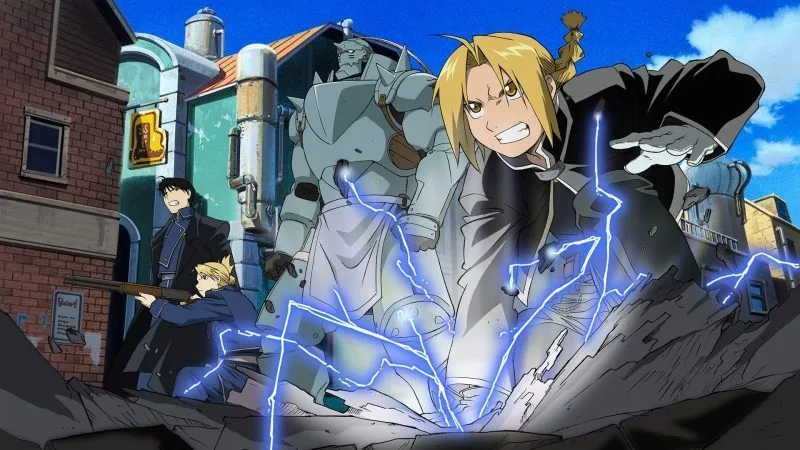
Contents 14
What is Fullmetal Alchemist?
Fullmetal Alchemist is a manga by Hiromu Arakawa, serialised in Monthly Shōnen Gangan from 2001 to 2010. It ran for 108 chapters collected in 27 volumes. The series was adapted into two anime, and later into films, light novels, video games and a live-action film.
The story takes place in the fictional world of Amestris, which resembles an industrialising Europe. State, military and alchemy are closely connected. Alchemists can reshape matter, but they must respect the law of equivalent exchange.
The author: Hiromu Arakawa
Hiromu Arakawa was born in 1973 in Hokkaido and grew up on a farm. That background shapes her storytelling: work, community and practical problems matter more in her work than pure spectacle.
Fullmetal Alchemist was her breakthrough. She drew it for nine years and stayed responsible for both story and art. She later worked on Silver Spoon and The Heroic Legend of Arslan.
The story of Edward and Alphonse
Edward and Alphonse Elric try to bring their mother back with alchemy. The experiment fails. Edward loses a leg and later an arm; Alphonse loses his whole body, and his soul is bound to a suit of armour.
Together the brothers search for the Philosopher's Stone to restore their bodies. On the way they are drawn into conflicts between the military, the state and alchemists, and into the aftermath of a war that still shapes the country.
With every step it becomes clearer that the stone is more than an object. It is tied to decisions, to people and to a system that uses alchemists for its own purposes. The brothers must therefore find not only their bodies but also their place in that order.
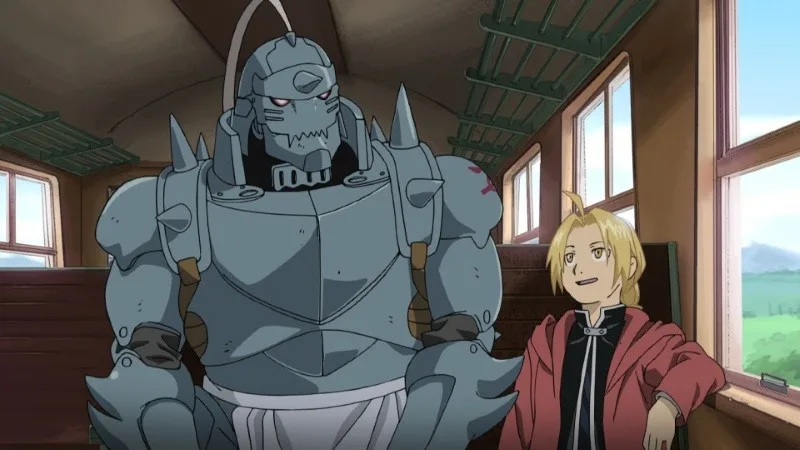
Alchemy and equivalent exchange
Alchemy in the series follows one clear rule: to gain something, something of equal value must be given. This principle works as magic and as a moral statement about responsibility and limits.
The Philosopher's Stone appears as an exception to the rule. Whoever uses it avoids the price that alchemy normally demands. That is exactly where the central conflicts of the story begin.
The two anime versions
The first anime aired from October 2003 to October 2004 and has 51 episodes. At some point it develops its own plot, moving away from the manga. Many fans value it for its darker and more dramatic tone.
Fullmetal Alchemist: Brotherhood aired from April 2009 to July 2010 and has 64 episodes. This version follows the manga closely and is therefore often considered the fuller adaptation. If you are new to the story, Brotherhood is a good place to start.
Films, light novels and live action
The first anime was followed in 2005 by the film Conqueror of Shamballa, which continues its story. In 2011 came The Sacred Star of Milos, a standalone film for the series. Both are additions, not requirements for understanding the manga.
There are also six light novels by Makoto Inoue, illustrated by Arakawa. A Japanese live-action film came out in 2017, followed by two sequels in 2022. The story has also been adapted into several video games.
How the manga was published
Fullmetal Alchemist began on 12 July 2001 in Monthly Shōnen Gangan and continued until September 2010. Arakawa worked with regular breaks to keep the quality of the art. The ending came by plan, not because of cancellation.
The 108 chapters were collected in 27 volumes, along with artbooks and companion books. For many readers the clear length is an advantage: the story has a beginning, a middle and an end, without loose threads left open.
The Ishval war and politics
An important background is the Ishval war. The Amestrian military intervenes in the region and uses alchemists as weapons. The consequences of that war shape the behaviour of several main characters.
The series thus shows how state power uses individuals and how guilt is managed afterwards. Characters such as Roy Mustang carry responsibility for decisions taken on the state's orders. That makes the story more political than many other shōnen series.
Games and other adaptations
Several video games appeared for handhelds and consoles, including releases for Game Boy Advance, PlayStation 2, PlayStation Portable, Nintendo DS and Wii. They tell their own stories and are interesting for collectors, but not necessary for the plot.
The light novels by Makoto Inoue expand individual episodes and characters. Arakawa provided the illustrations but was not involved in the writing. They are additions to read after the manga.
The homunculi
The homunculi are artificial beings created from the sins and failures of alchemy. Each stands for a trait such as pride, wrath or envy. They first appear as opponents but turn out to be part of a larger plan.
Their existence shows that forbidden alchemy changes more than matter; it shifts human limits. For the brothers they are therefore more than enemies: they show where the attempt to avoid alchemy's price can lead.
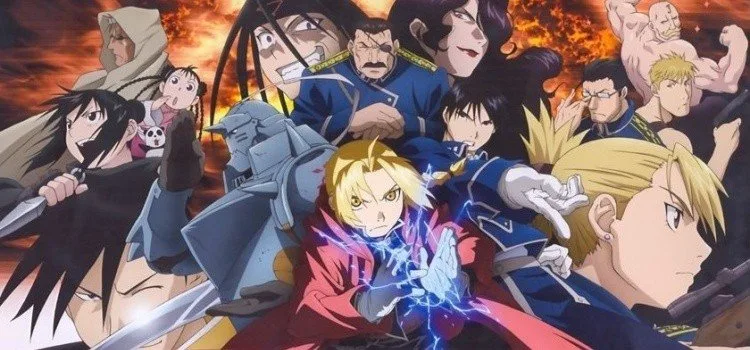
Characters, themes and tone
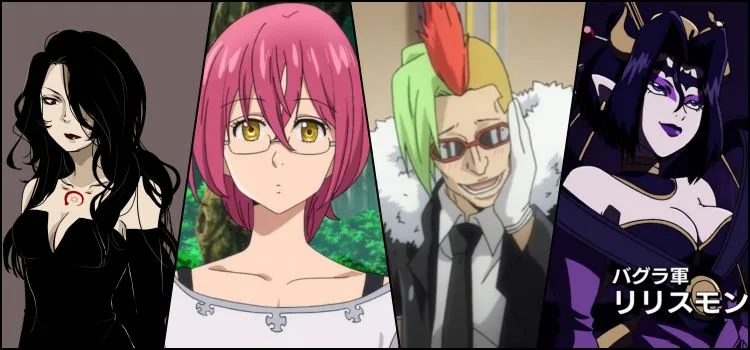
Besides the brothers, characters such as Roy Mustang, Riza Hawkeye, Winry Rockbell and the homunculi shape the story. The series moves between humour, fight scenes and quiet moments, and takes time for supporting characters.
Thematically it deals with loss, guilt, responsibility and the question of whether a state protects its citizens or uses them for its own goals. The Ishval war stands for the dark side of military power and is not treated as a footnote.
Impact and place in anime history
Fullmetal Alchemist is considered one of the most influential shōnen series of the 2000s. It is praised for its closed plot, believable characters and refusal to stretch the story endlessly. The manga ends with a clear resolution.
The series is still recommended to anyone looking for an anime that does not rely only on fights. It is also an example of how Japanese pop culture translates serious themes into an accessible format.
Another reason for its lasting popularity is the tone. The series takes its characters seriously without preaching. Mistakes have consequences, and not every character gets an easy resolution.
Common questions for newcomers
Where should I start? If you want the complete story, start with the manga or with Brotherhood. The 2003 series is worth watching afterwards as an alternative interpretation.
How many episodes are there? The first series has 51 episodes; Brotherhood has 64. The manga has 108 chapters in 27 volumes.
Is the series finished? Yes. The manga and both anime versions have an ending. The films and the live-action adaptation add to the story but do not replace it.
Conclusion
Fullmetal Alchemist works as an adventure, as a family story and as a political narrative. The clear structure, the moral questions and the characters explain why the series still finds new readers and viewers years after it ended.
To go deeper, read about manga, manhwa and manhua, the longest anime series, the most popular mangakas, Tokyo Ghoul and tips for becoming a mangaka.



Community
Comments
0 comments
There are no published comments in this language yet.
Send comment