

Ranking Japanese television dramas, commonly known as doramas, is a rewarding challenge because the medium covers such diverse ground. A single season can offer high-stakes cyber thrillers, lighthearted high school comedies, tearful true stories, and psychological mind games. While every fan keeps a personal roster of favorites, certain productions stand out for their enduring popularity, memorable characters, and cultural reach.
Based on storytelling, cast performances, and overall impact, here is a curated guide to 10 of the best Japanese doramas of all time. Whether you are stepping into Japanese television for the first time or looking to revisit iconic titles that shaped the format, these series remain well worth your screen time.
Contents 11
Bloody Monday
Bloody Monday (Buraddi Mandei) is a 2008 television adaptation of the popular manga written by Ryo Ryumon, starring Haruma Miura in one of his most memorable early roles. For viewers who enjoy fast-paced suspense, cybersecurity intrigue, and high-stakes action, this series delivers from the opening scene.
The story follows Fujimaru Takagi, a gifted high school hacker known by the handle Falcon. When a deadly biological weapon is unleashed in Russia, Japanese authorities recruit Fujimaru to help stop a terrorist organization plotting a catastrophic biological attack in Tokyo. His investigation quickly places him in the center of an international conspiracy involving biological warfare, undercover agents, and digital espionage.
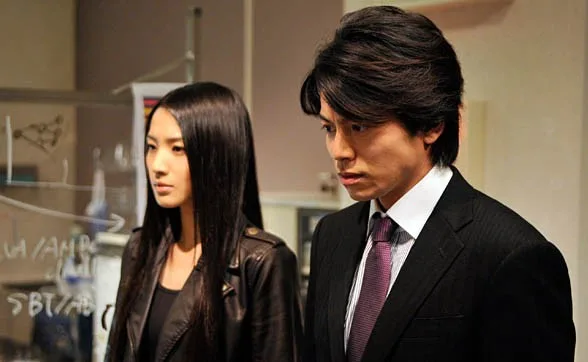
Packed with unpredictable plot twists and intense confrontations, Bloody Monday remains a landmark Japanese thriller that keeps viewers guessing until the final revelation.
My Boss My Hero
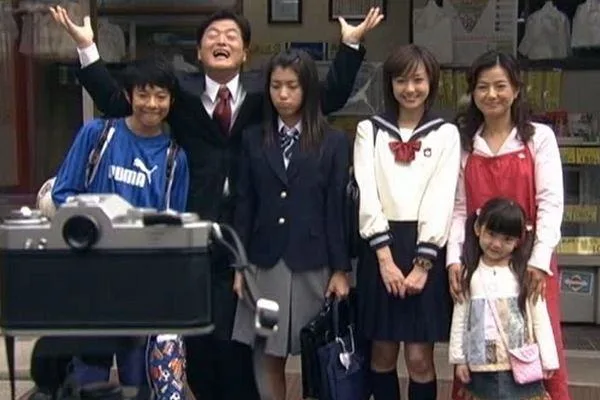
My Boss My Hero, broadcast in 2006, is a Japanese comedy drama loosely inspired by the 2001 South Korean film of the same name. The Japanese version brings warmth, physical comedy, and unexpected heart to an underworld premise, setting it in one of the most familiar backdrops in Japanese pop culture: the high school classroom.
The premise sets up immediate comedic tension. Makio Sakaki, played with boundless energy by Tomoya Nagase, is the 27-year-old heir apparent to a prominent Japanese mafia family. Although he excels at street brawls and intimidating rivals, his utter inability to do basic arithmetic causes a multimillion-dollar deal to fall apart. Frustrated by his lack of education, his father presents an ultimatum: graduate from a regular high school, or forfeit leadership of the syndicate forever.
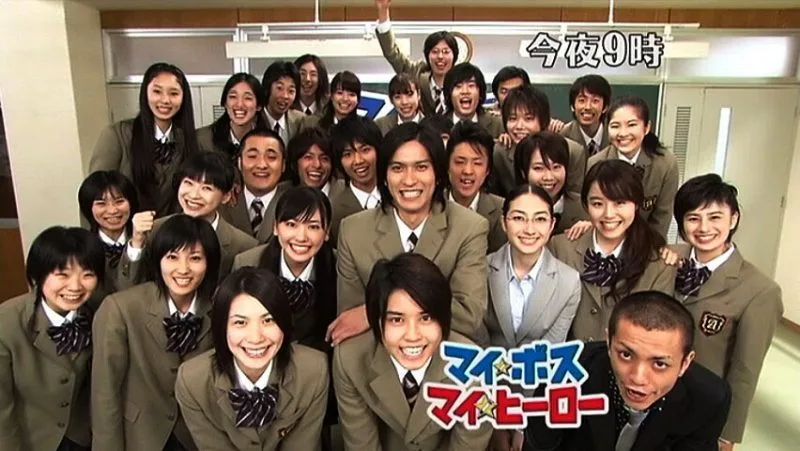
Undercover as a seventeen-year-old student, Makio must navigate tests, friendships, school festivals, and pudding rivalries without blowing his cover. Guaranteed laughs and a captivating and addictive plot, it has to be on the list of the best of all time.
Itazura na Kiss
Itazura na Kiss is based on the beloved shojo manga by Kaoru Tada, which was left unfinished after the author passed away unexpectedly. The story went on to become one of the most widely adapted romantic comedies in East Asian television history. The original live-action television adaptation aired on TV Asahi in 1996, bearing the same name as the manga. Running for just nine episodes, it remains a swift and charming watch.
The narrative revolves around Kotoko Aihara, an earnest and clumsy high school student who gathers the courage to confess her feelings to Naoki Irie, the school genius who immediately rejects her. Fate intervenes when an earthquake collapses Kotoko's house, prompting an invitation from her father's old friend to stay at his home, which turns out to be Naoki's family residence.
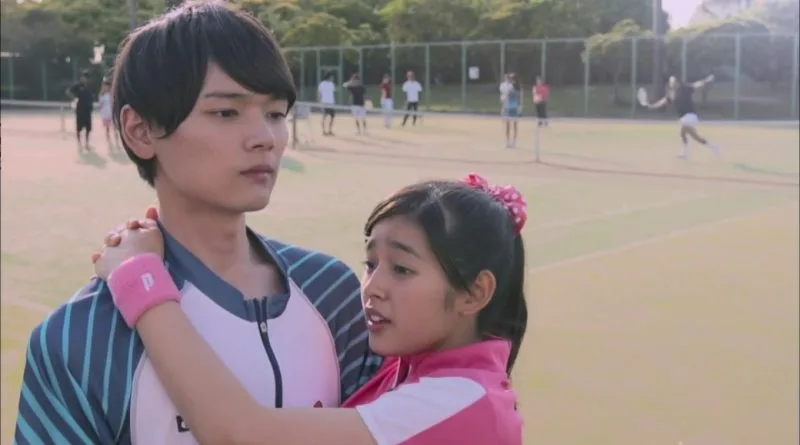
The forced cohabitation sparks genuine character growth and comedic misadventures, establishing tropes that shaped romantic J-dramas for decades. Beyond the 1996 original, the franchise inspired the popular Japanese remake Itazura na Kiss: Love in Tokyo (2013), the Taiwanese hit It Started with a Kiss (2005), and the South Korean adaptation Playful Kiss (2010).
The Brothers Karamazov
The Brothers Karamazov (Karamazofu no Kyoudai), broadcast by Fuji TV in 2013, is a daring psychological adaptation of Fyodor Dostoevsky's monumental 19th-century Russian novel. Transporting 19th-century Russian literature into a contemporary Japanese provincial city, the production maintains the philosophical weight and moral ambiguity of the original masterpiece.
When the tyrannical patriarch of the Kurosawa family is found murdered inside his home, suspicion immediately falls upon his three adult sons: Mitsuru, an impulsive unemployed rebel; Isao, a brilliant attorney burdened by intellectual cynicism; and Ryo, a compassionate aspiring monk. Through police interrogations and extended flashbacks, the series unpacks family dysfunction, greed, guilt, and existential doubt across eleven tightly scripted episodes.
Gokusen
Adapted from Kozueko Morimoto's manga, Gokusen (2002) is a cornerstone of Japanese school comedy and youth drama. Rather than focusing on romance, the series centers on Kumiko Yamaguchi, affectionately nicknamed Yankumi, an idealistic young woman who begins her teaching career at the rough Shirokin High School.
Assigned as the homeroom teacher to Class 3-D, a room filled with hostile delinquents who have driven away previous instructors, Yankumi faces daily hostility. Unbeknownst to the school administration and students, she is the fourth-generation heir to the Oedo yakuza clan. Armed with martial arts prowess, unyielding street loyalty, and sincere dedication to her pupils, Yankumi protects her students from trouble while teaching them the value of friendship, self-respect, and perseverance.
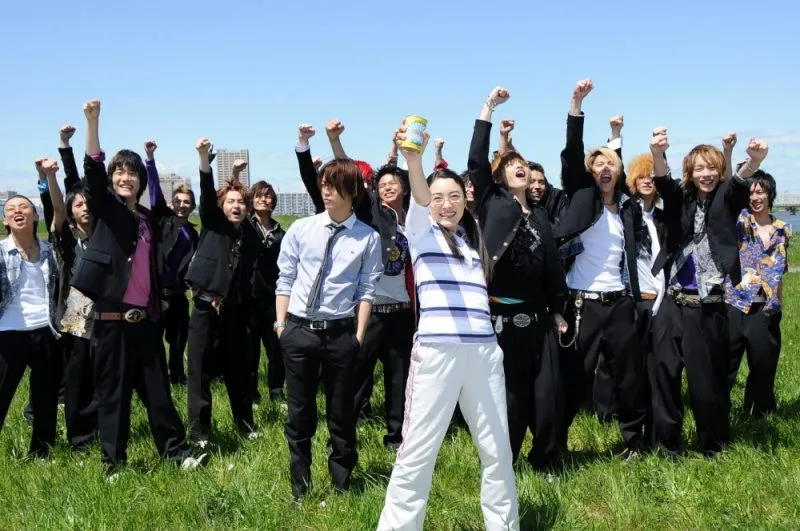
Starring Yukie Nakama alongside a young ensemble that included Jun Matsumoto and Shun Oguri, Gokusen became a cultural sensation that spawned two sequel series in 2005 and 2008, as well as a feature film in 2009. The original 2002 season remains the gold standard of the franchise.
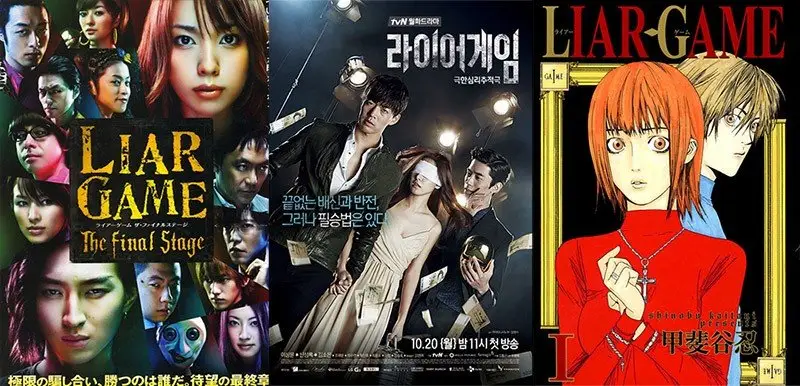
Liar Game
For fans of psychological mind games and game theory, Liar Game (2007) is essential viewing. Adapted from Shinobu Kaitani's acclaimed manga, the series plunges viewers into a secretive, high-stakes competition where survival depends entirely on deception and strategic reasoning.
The story begins when Nao Kanzaki, an exceptionally honest college student played by Erika Toda, receives a mysterious box containing 100 million yen alongside an invitation to the Liar Game tournament. Contestants must swindle each other out of cash, with the losers saddled with astronomical real-world debts. Desperate for help after being tricked early on, Nao enlists Shinichi Akiyama, a brilliant ex-convict and master swindler played by Shota Matsuda. Together, they confront ruthless opponents in elaborate psychological trials that constantly test human greed and trust.
Unnatural (2018)
Written by award-winning screenwriter Akiko Nogi, Unnatural (2018) stands as one of the sharpest procedural dramas produced in Japan over the past decade. The series centers on the Unnatural Death Investigation (UDI) Lab, a government-approved laboratory dedicated to uncovering the true causes behind suspicious, unexplained fatalities in a country where post-mortem investigations are relatively rare.
Satomi Ishihara delivers a commanding lead performance as Mikoto Misumi, an empathetic forensic pathologist working alongside her cynical colleague Kei Nakado, played by Arata Iura. Each episode investigates a distinct case involving poisonings, infectious outbreaks, medical negligence, or concealed homicides, while gradually unraveling the overarching personal tragedies of the pathologists themselves.

With polished production values, insightful social commentary, and Kenshi Yonezu's record-breaking theme song Lemon, Unnatural represents the pinnacle of modern Japanese television writing.
1 Litre of Tears
The translation of the title is 1 liter of tears, which is what you will shed while watching this dorama.
Aired in 2005 on Fuji TV, 1 Litre of Tears (Ichi Rittoru no Namida) is based on the published diary of Aya Kito, a Japanese girl diagnosed at age 15 with spinocerebellar degeneration, an incurable neurological disease that gradually robs the body of motor control while leaving the mind completely intact. Her published writings touched over 1.1 million readers across Japan.
Starring Erika Sawajiri in a career-defining performance, the eleven-episode series follows Aya's transition from a cheerful student preparing for high school to someone confronting physical decline. Rather than succumbing to hollow melodrama, the series highlights the steadfast support of her family, classmates, and doctors. It is a profoundly moving testament to human resilience that continues to move audiences worldwide.
Hana Kimi
Bringing pure energy and infectious humor, Hanazakari no Kimitachi e: Ikemen Paradise, widely celebrated as Hana Kimi, is one of the definitive romantic comedies of mid-2000s Japanese television. Adapted from Hisaya Nakajo's popular manga and aired on Fuji TV in 2007, the series captured huge television ratings and cemented the careers of its young ensemble cast.
The story follows Mizuki Ashiya, played by Maki Horikita, a Japanese girl living in the United States who idolizes high jump athlete Izumi Sano, played by Shun Oguri. After Sano suffers an injury that prompts him to quit jumping, Mizuki moves to Japan and disguises herself as a boy to enroll in Sano's all-boys boarding school, Osaka Gakuen. Sharing a dormitory room with Sano and attracting the comedic romantic confusion of classmate Shuichi Nakatsu, played by Toma Ikuta, Mizuki finds herself navigating chaotic school rivalries and athletic tournaments while fiercely protecting her secret.

Hana Yori Dango
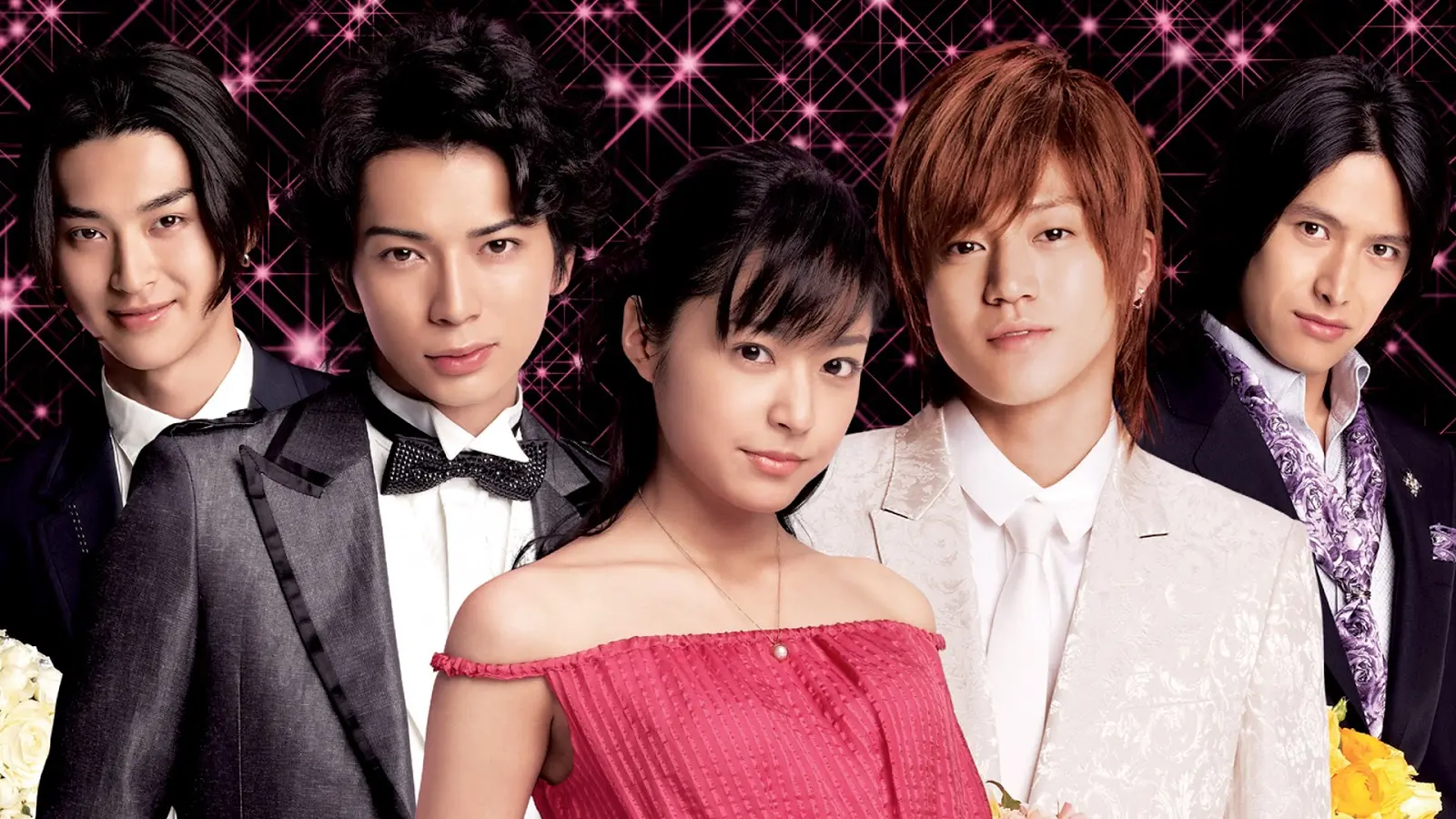
Iconic, dramatic, and intensely entertaining, Hana Yori Dango (Boys Over Flowers) remains arguably the most influential romantic drama in Japanese television history. Premiering on TBS in autumn 2005 as an adaptation of Yoko Kamio's legendary shojo manga, the series achieved immense ratings, prompting a direct sequel season, Hana Yori Dango Returns, in winter 2007, and a concluding feature film in 2008.
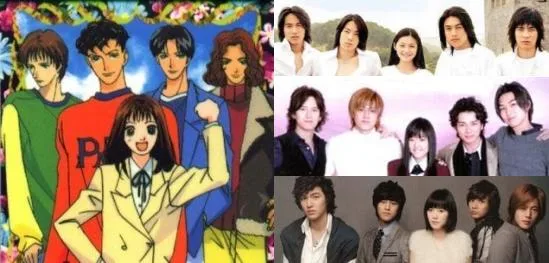
The story unfolds at Eitoku Academy, an elite private academy catering to Japan's wealthiest dynasties. The student body is ruled by the F4, a clique of four billionaire heirs led by the arrogant Tsukasa Domyoji, played by Jun Matsumoto, alongside Rui Hanazawa, played by Shun Oguri. Anyone who challenges the F4 receives the dreaded red notice in their locker, sanctioning relentless schoolwide bullying.
Makino Tsukushi, played by Mao Inoue, is a working-class scholarship student who hopes to keep her head down and graduate quietly. When she stands up to Domyoji to defend a classmate, she receives the red tag, becoming the target of the entire school. Rather than fleeing, Makino fights back with fierce determination, completely upending Domyoji's worldview and igniting an unforgettable romance.
Beyond its record ratings in Japan, the franchise sparked celebrated international adaptations, most notably South Korea's Boys Over Flowers (2009) and Taiwan's Meteor Garden (2001), cementing its status as an enduring classic of East Asian pop culture.
Why Japanese Dramas Stand Out
What makes Japanese television dramas so compelling for international audiences is their narrative focus. Unlike long-running Western serials that often stretch across many seasons, J-dramas traditionally air in compact quarterly cours of eight to twelve episodes. Each episode serves a distinct purpose, driving toward a decisive narrative conclusion without unnecessary filler.
Whether you begin with the adrenaline-fueled hacking of Bloody Monday, the heartwarming delinquency of Gokusen, the forensic investigations of Unnatural, or the romantic rivalries of Hana Yori Dango, these ten series showcase the narrative versatility and emotional resonance that define the best of Japanese storytelling. Pick the genre that appeals to you most, and start your journey into the world of doramas.




Community
Comments
0 comments
There are no published comments in this language yet.
Send comment