
Drop a few coins, press a button, and a steaming bowl of ramen slides out of a metal hatch. That scene is what Jihanki Shokudo (自販機食堂) is about: places in Japan where warm meals come from vending machines, often with tables, trash bins, and a thick layer of Showa-era nostalgia. It is less about futuristic robots and more about an old, slightly odd way to eat on the go.
Travelers and culture fans usually meet the idea on two levels: as a category of auto-restaurants, and as the well-known shop of the same name in Gunma Prefecture. Separating those two helps — and both explain why hot noodles from a machine still draw people in.
Contents 7
What are Jihanki Shokudo?
Jihanki is everyday shorthand for jidohanbaiki — a vending machine. Shokudo means a simple cafeteria or dining hall. Together, the phrase points to rooms where machines dispense hot or freshly finished snacks and guests eat on the spot. In Japan the model is also called an auto-restaurant, auto-snack, or coin snack.
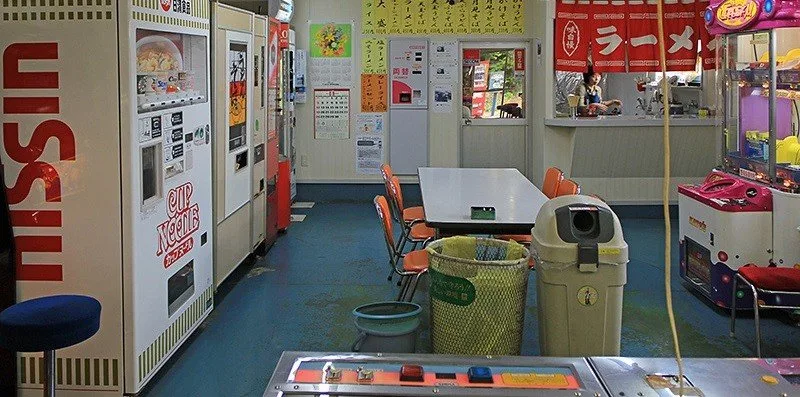
Unlike a drink machine on a street corner, the point here is a meal plus a seat. Many locations run with no staff on the floor, or only occasional visits: the operator restocks machines several times a day, empties trash, and keeps coins flowing. Prices often land in a thrifty band — roughly 200 to 500 yen per dish, depending on the menu and the region.
For the wider map of Japan’s machine culture, from coffee to odd specialty units, see the guide to hanbaiki and vending machines.
How the machine actually works
A common misunderstanding: the cabinet does not cook a full dish “from zero” in under a minute. Classic noodle machines usually hold a prepped bowl inside — noodles ready to go, toppings such as tempura or chashu — kept chilled. After you buy, the unit pours hot water, finishes the bowl, and adds broth. That is why the meal appears so fast and still arrives piping hot.
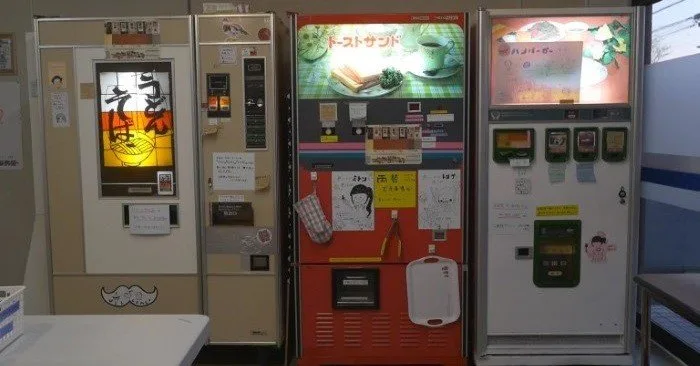
Burger and toast machines follow a different rhythm: many keep prepared or half-finished items warm, or toast them briefly. The result is not fine dining, but it is also not a bare supermarket shelf of cold instant packs — especially at shops that prep food in their own kitchen before loading the machines.
Because the stock is perishable, a visit works best when machines are restocked regularly. Empty slots and “sold out” lights are normal; restocking depends on the operator and the time of day.
A short history: from truck stops to retro fandom
Auto-restaurants boomed along national highways in the 1970s. Truck drivers and night travelers needed hot food when kitchens were closed. Later, game corners and arcade cabinets often sat beside the food machines — a break that mixed a meal with a few minutes of play. Through the 1980s and after, the model shrank: 24-hour konbini, fast-food chains, and safety concerns made many roadside spots less necessary.
Some machines survived in Gunma, Saitama, and other rural routes. In recent years a Showa retro wave has brought fans back: people drive out of their way for noodles from a decades-old unit. Japanese reports sometimes estimate roughly 50 to 60 active food-machine sites still running — a soft number, since machines break and spare parts grow scarce.
What comes out of the machine?
- Hot noodles: ramen, soba, udon — often with tempura, chashu, or local twists.
- Quick snacks: toast sandwiches, burgers, simple warm breads.
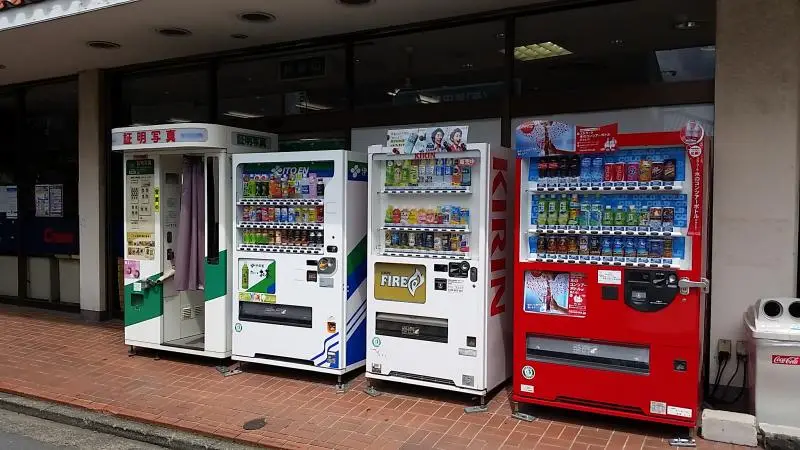
- Drinks and sweets: tea, coffee, ice cream, or bottled drinks — sometimes in a retro style.
The room is usually plain: tables, napkins, hashi (chopsticks), and separate bins for leftovers and packaging. Some places stay surprisingly clean for self-service; guests clear their own trays. At certain stops you also find gashapon capsule machines or cheap arcade games for about 10 yen — an echo of the old auto-restaurant mix of pause and play.
Payments lean toward coins. Many shops keep a bill changer on site, so knowing how yen coins work saves a scramble at the machine.
Example: Jihanki Shokudo in Isesaki (Gunma)
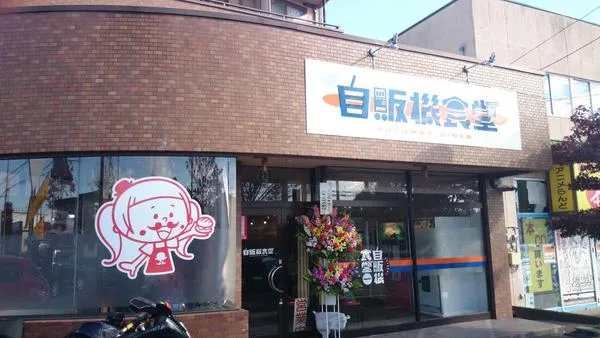
The shop Jihanki Shokudo in Isesaki (群馬県伊勢崎市) made the idea famous among international visitors: several retro machines, hot noodles, burgers and toast, often open around the clock, without constant staff on the floor. Reports describe clean tables, condiments at the seat, and an owner who restocks a few times a day and leaves a phone number if coins jam.
In older write-ups, typical dishes sat around 250–400 yen. Menus and hours can change — anyone making the trip should check current notes on maps or local updates. Important: this store is a strong example, not the only place of its kind in Japan.
Tips for a visit
- Bring coins: many machines prefer coins. A changer for bills is often inside the room.
- Hot means hot: bowls and broth come boiling. Wait a moment and handle carefully.
- Expect a short menu: selection is limited; a favorite item can be sold out.
- Clean up after yourself: leftovers and bowls go in the marked bins — that is what keeps unstaffed spots usable.
- Plan the trip: many classic sites sit on country roads or in smaller cities, not in the middle of Tokyo.
Closing
Jihanki Shokudo and auto-restaurants are a slice of Japanese food culture that mixes thrift with retro charm: no table service, but hot noodles in seconds and a pause that feels like another decade. For anyone curious about everyday Japan beyond the usual restaurant strip, this is a concrete story — coin in, bowl out, and the break suddenly has a different era in it.

Community
Comments
0 comments
There are no published comments in this language yet.
Send comment