
Do you know how to say Happy New Year in Japanese? There are several ways to wish someone a good new year, from very formal to casual. In this guide, you'll learn the most common Happy New Year phrases in Japanese — with romaji, kanji, and English translations — so you can greet your friends and family the right way.
New Year's Day in Japan (Oshōgatsu, お正月) has been celebrated on January 1st since 1873, when the country adopted the Gregorian calendar. The turn of the year is still the country's most important family holiday.
On New Year's Eve, many Buddhists head to temples to listen to the 108 bell tolls (joya no kane, 除夜の鐘) — each ring symbolizes one of the earthly desires Buddhist teaching says must be overcome. Others climb hills or visit shrines to watch the first sunrise (hatsuhinode, 初日の出) or make their first shrine visit of the year, called hatsumōde (初詣).
For a broader look at the holiday, see our article on Oshōgatsu — New Year in Japan.
Contents 6
How to say Happy New Year in Japanese
If you want to wish someone a Happy New Year, Japanese offers several levels of politeness. The most important — and most formal — phrase is:
- Shinnen akemashite omedetou gozaimasu
- 新年明けましておめでとうございます
Literally, it means "Congratulations on the New Year." It's used mainly in the first week of January, when the new year has just begun.
The word gozaimasu at the end makes the sentence more polite and formal. With close friends, you can drop it and just say akemashite omedetou [あけましておめでとう], or use the very casual abbreviation ake ome [あけおめ] — useful online, but rarely said in person.
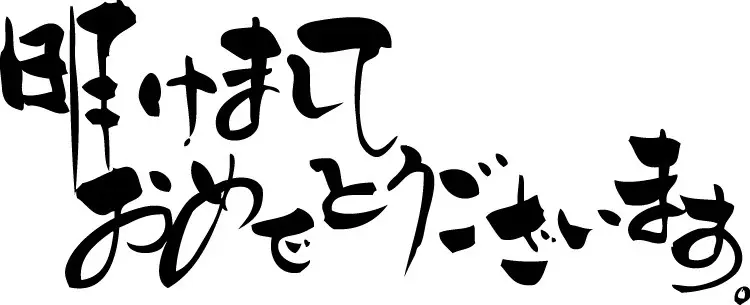
A nice detail: the kanji 明 (ake) means both "to dawn" and "to begin," which is why it fits the start of a new year so well. A rarer alternative is akete omedetou [明けておめでとう], the same kanji in its verb form.
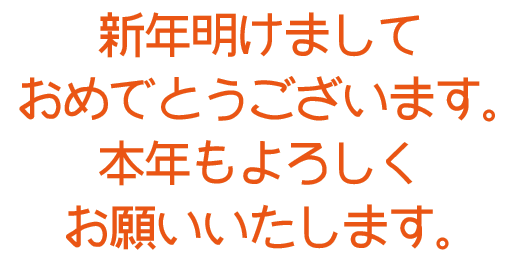
Another expression you'll hear constantly is 今年もよろしくお願いします (kotoshi mo yoroshiku onegaishimasu) — roughly "I hope to count on your good will again this year." Among younger people, this is often shortened to kotoyoro [ことよろ] in casual chats.
Saying Happy New Year and a good end of year
If you're still in the last days of December, you'll want the equivalent end-of-year phrase:
- よいお年をお迎えください (Yoi otoshi o omukae kudasai) — "Please have a good new year."
- Casual form: Yoi otoshi o! よいお年を!
It's the standard thing to say at work, in cards, and in messages right before January 1st.
Shinnen and other formal variants
The word 新年 (shinnen) literally means "new year" and shows up in several formal greetings:
- Shinnen omedetou gozaimasu — Happy New Year (formal).
- Shinnen akemashite omedetou gozaimasu — a fuller, very formal version used in writing and speeches.
On business cards and in formal printed greetings, you'll also see 賀正 (gashō), a single kanji phrase meaning "Happy New Year." More literary variants include 頌春 (shōshun) and 慶春 (keishun) — both pair the kanji for "spring" with one meaning "celebrate." They appear mostly in ceremonial writing.
Nenmatsu: end-of-year phrases
年末 (nenmatsu) means "end of the year." It refers to the period roughly from mid-December through New Year's Eve, and it's the keyword for any end-of-year greeting.
Just as akemashite marks the start of the new year, nenmatsu marks its closing days. The most common variants:
Pick the one that fits how close you are with the other person — the longer the sentence, the more polite it sounds.
年末よろしく Nenmatsu yoroshiku
Good end of year (casual).
年末よろしくお願いします Nenmatsu yoroshiku onegaishimasu
Please have a good end of year (standard polite).
年末もよろしく Nenmatsu mo yoroshiku
Also have a good end of year (casual, among acquaintances).
年末にもよろしく Nenmatsu ni mo yoroshiku
Have a good end of year too (slightly more emphatic).
Key New Year phrases at a glance
Here is a quick-reference list of the most useful Japanese New Year phrases, with romaji, kanji, and a short English gloss for each:
あけましておめでとうございます Akemashite omedetou gozaimasu
Happy New Year (the standard polite phrase).
新年歓迎 Shin'nen kangei
Welcome to the new year (used in formal cards and speeches).
頑張れ Ganbare
Good luck / You've got this / Let's go (a common New Year pep talk).
良いお年を Yoi otoshi o
Have a good (rest of the) year — the standard end-of-December greeting.
新年おめでとうございます Shinnen omedetou gozaimasu
Happy New Year (formal, written).
記念日おめでとうございます Kinenbi omedetou gozaimasu
Happy New Year (literally "happy anniversary") — used in some formal greetings.
Cultural tips for the Japanese New Year
A few customs are worth knowing if you want the language to land properly:
- Nengajō (年賀状) — New Year postcards, sent in late December and delivered on January 1st.
- Hatsumōde (初詣) — the first shrine or temple visit of the year, usually in the first three days of January.
- Osechi (おせち) — the traditional boxed New Year meal.
- Ozōni (お雑煮) — New Year soup with mochi rice cakes, eaten on the morning of January 1st.
- Otoshidama (お年玉) — money given to children in decorated envelopes.
Pairing a phrase with one of these customs — wishing someone a good hatsumōde or thanking them for otoshidama — is what turns a memorized greeting into something that sounds natural.
For more on the holiday itself, see our guide to Oshōgatsu — New Year in Japan.
Which phrase would you actually use first — the long formal version, or the short casual one?



Community
Comments
0 comments
There are no published comments in this language yet.
Send comment