
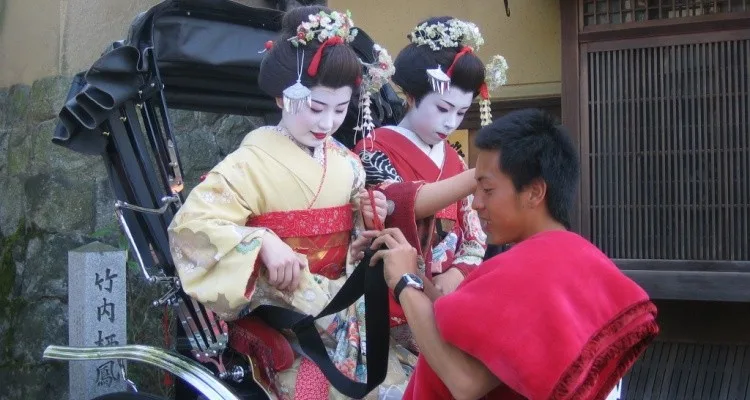
In tourist streets from Asakusa to Arashiyama, you still meet a two-wheeled cart pulled by a runner in traditional dress. That is the jinrikisha (人力車)—Japan’s classic human-powered rickshaw, once everyday city transport and now a slow, guided way to see historic neighborhoods.
The English word “rickshaw” comes from this Japanese name. What keeps the ride interesting is not speed: it is the height of the seat, the pace, and a shafu who often doubles as a local guide between temples, markets, and photo stops.
Contents 5
Origin and evolution of the jinrikisha
The term jinrikisha is built from the characters jin (person), riki (power/force), and sha (vehicle)—literally a “human-powered vehicle.” It spread in Japan around the late 1860s and early Meiji years, when wheeled vehicles returned more freely to city streets after the Edo-era limits, offering a lighter alternative to palanquins and horse carriages.
Who invented it is still debated. A widely told Japanese account credits Yosuke Izumi together with Kosuke Takayama and Tokujiro Suzuki, drawing on Western carriages. Other stories name American blacksmith Albert Tolman or missionary Jonathan Goble (sometimes called Scobie), said to have wanted a smoother way to move an ailing spouse through Yokohama. Exact credit is less important than the result: the form caught on fast.
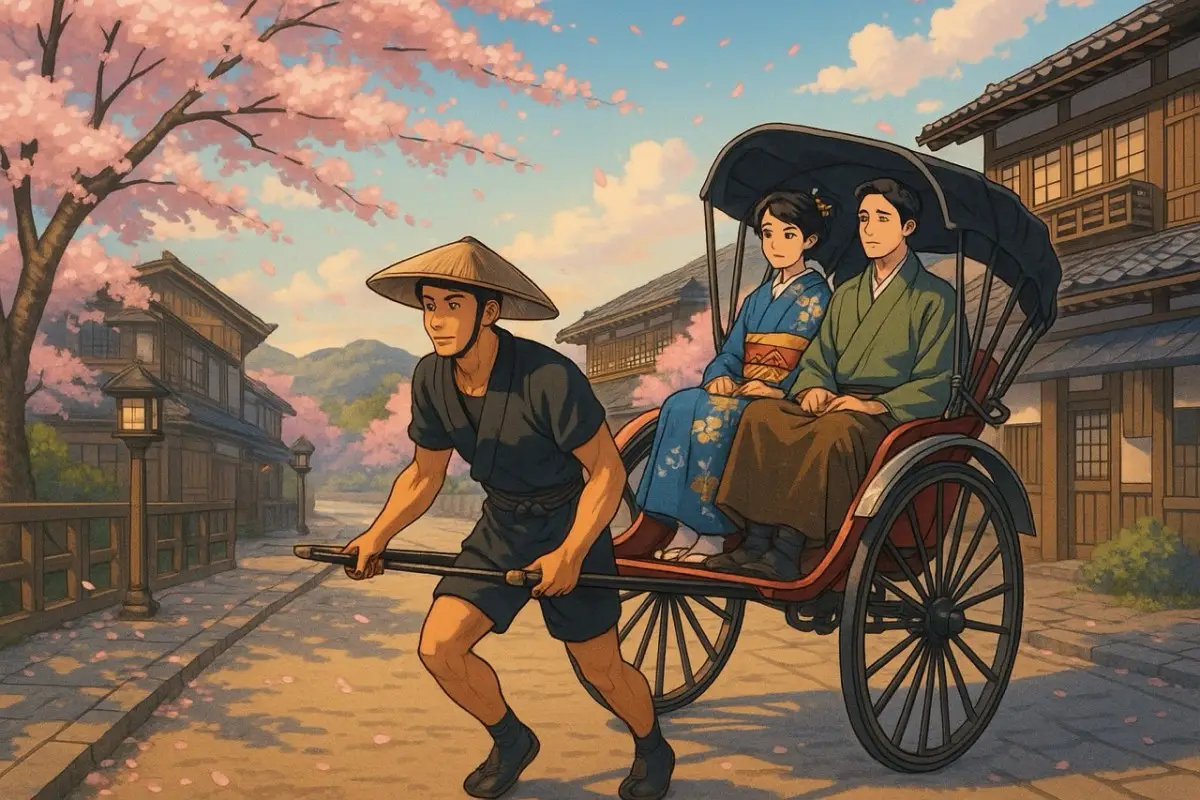
By 1872, estimates put about 40,000 rickshaws on the streets of Tokyo alone. For a time they became a main form of urban public transport in Japanese cities—cheaper to run than horse power for short hops, and quicker than a shoulder-borne cabin.
Kago: the predecessor of the jinrikisha
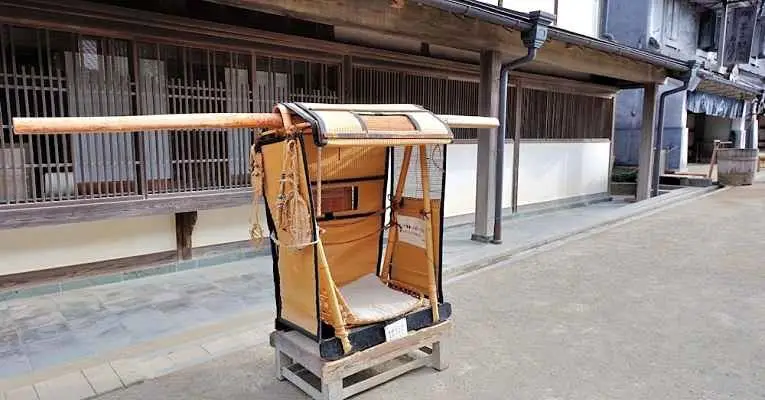
Before wheels took over, many elite or official trips used the kago (駕籠): a basket-like cabin hung from a long bamboo pole and carried by two or more bearers. It worked for short routes but was heavier and less agile. Once a light two-wheeled seat with shafts became common, the jinrikisha largely replaced the kago for everyday hire.
What a jinrikisha ride is like
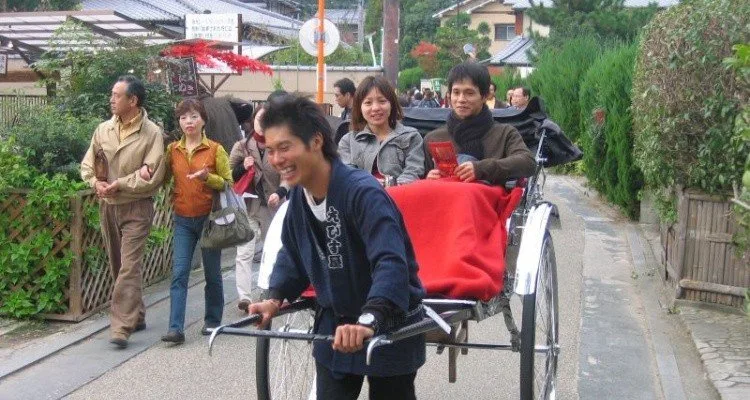
A modern ride is more sightseeing than commuting. Drivers, called shafu, pull the cart and often narrate history, shop names, or photo corners along the route. You sit a little higher than street level, move at a walking-to-jogging pace, and can pause for pictures without fighting a tour-bus timetable.
On cold days many stands lend a lap blanket. In rain, some carts use a collapsible hood; storms or strong wind can cancel service for safety. Always confirm the course, duration, language support, and price before you board—operators differ by neighborhood.
Fares depend on time, route, and how many people share one cart (often up to two adults). As a rough guide shared by operators and travel guides: short courses of about 10–20 minutes may start around 3,000–4,000 yen depending on area and passenger count; about 10,000 yen for 30 minutes and 20,000 yen for 60 minutes for two people is a common ballpark in popular spots. Longer private or multi-stop tours cost more. Treat any number as orientation and check the board or staff on the day.
Where to find jinrikishas in Japan
Today you mainly meet jinrikishas in tourist districts rather than as daily city transit. Places that regularly offer rides include:
- Kyoto — traditional streets such as Gion, Higashiyama, and Arashiyama near the bamboo paths and Togetsukyō Bridge.
- Tokyo — Asakusa around Kaminarimon, Nakamise, and nearby temple streets.
- Kamakura — shrine and temple routes, including approaches toward the Great Buddha area.
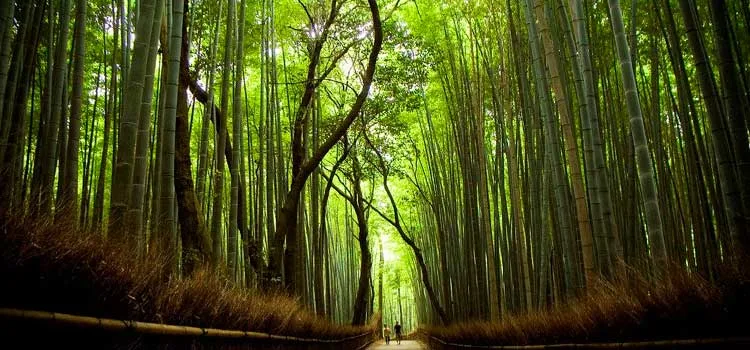
In the bamboo forest of Arashiyama, a short course can link bridge views and grove paths at a slower rhythm than walking the whole stretch on a crowded day.
Smaller historic towns also keep stands or seasonal routes—Kanazawa, Nara, Takayama, Nikkō, and similar heritage centers appear on many traveler maps. Availability changes with season and weather, so look for active stands rather than assuming every old street still runs carts daily.
Curiosities and cultural impact
In the Meiji period the jinrikisha stood for modern street life as much as for luxury: a hired seat that moved faster than a kago without needing a horse. Japanese makers also exported the idea across Asia, where “rickshaw” became a broader family of pulled, cycled, and later motorized carts.
As trains, trams, and cars spread, daily rickshaw work faded in Japan. What remained in places like Kyoto and Tokyo’s traditional entertainment districts is a living souvenir of that era—less about getting somewhere fast, more about reading the street with a human guide between the shafts.
If your itinerary already includes a historic quarter, a short jinrikisha course is one of the simplest ways to slow down, hear a local story, and leave with photos that still feel tied to the place.

Community
Comments
0 comments
There are no published comments in this language yet.
Send comment