
Dragons are mythological creatures from various cultures, the most famous are from China, Korea, and India, but Japan also has its legends and stories of Dragons. In this article, we will talk about Japanese dragons and some curiosities.
Dragons in Japan are called ryu [竜 or 龍] and the vast majority are related to water and not fire as some think. Besides being aquatic, they often transform into humans or other things. Unlike Chinese dragons, they resemble snakes and have heads similar to crocodiles.
Dragons are rarely mentioned in Japanese stories. Some say that these dragon stories stem from sightings of enormous fish that grew disproportionately. Some are dragons imported from other cultures, some even appear in dragon animes.
Contents 13
Ryujin - Dragon God of the Sea and His Daughters
Ryujin [龍神] is a Dragon god also known as watatsumi [海神] who lives in the ocean and appears in various Japanese myths. He transforms into a human and stole priceless jewels from a prince.
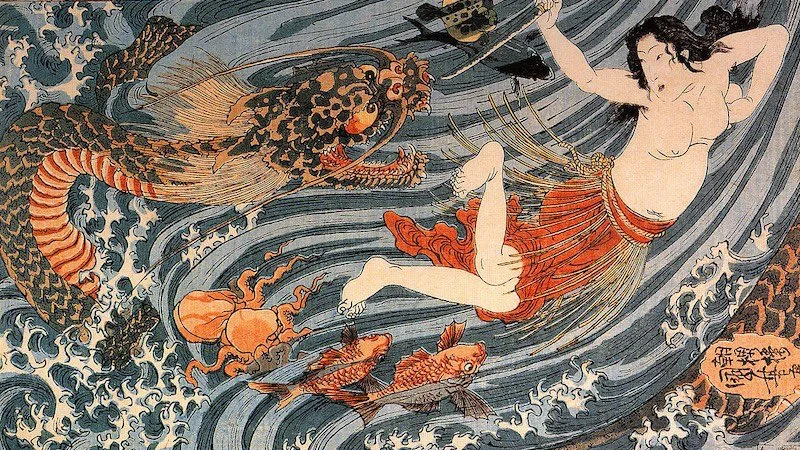
The legend says that this prince falls in love with Princess Tamatori, who manages to steal the jewels from her beloved but cuts her breasts to hide the jewels from the wrath of Dragon Ryujin, thus dying from the wound.
It is believed that Ryujin lives in an underwater palace called Ryūgū-jō, where he kept the tide jewels called kanju. These magical jewels were used by Ryujin to control the tides.
Otohime, Toyotamahime, and Kuniyoshi
Toyotama-hime is another daughter of the Dragon God Ryujin. Toyotama marries Prince Hoori but returns to the sea when he breaks the vow of not spying on her.
Otohime is one of the most beautiful daughters of the Dragon God Ryujin. She is also the grandmother of Jimmu, the first emperor of Japan. She is present in the legend of Urashima Taro, a young fisherman who saved Otohime who was in the form of a turtle.
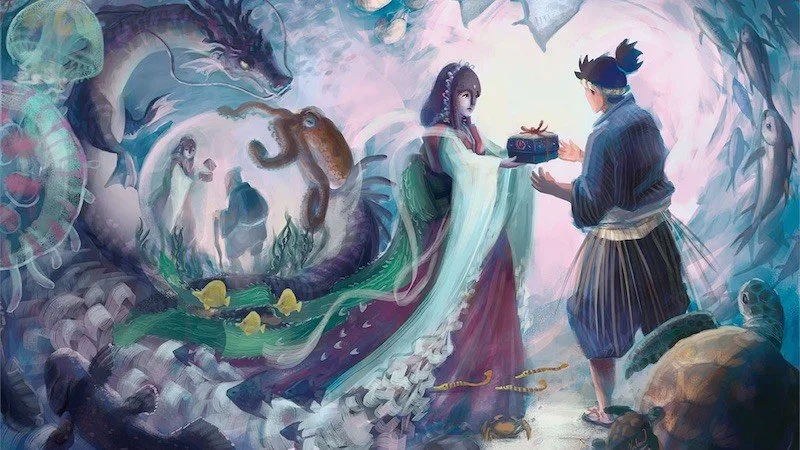
Kuniyoshi - Another daughter of the Dragon God Ryujin, she observes a warrior named Hidesato who was not afraid of her Dragon form and later asks the warrior to kill a giant centipede.
Yamata no Orochi - Eight-Headed Dragon
Yamata no Orochi [八岐の大蛇] is an eight-headed dragon, with eight tails and red eyes with moss and trees on its back. It was so large that it occupied eight valleys and eight peaks. Also known as the Great Serpent (Dragon) of Eight Heads.
Annually, the Orochi Dragon demanded the sacrifice of eight virgins. One day, one of the eight required virgins was Susano's beloved. Considered the god of thunder, Susanoo no Mikoto, with his sword, cut off each head of Orochi.
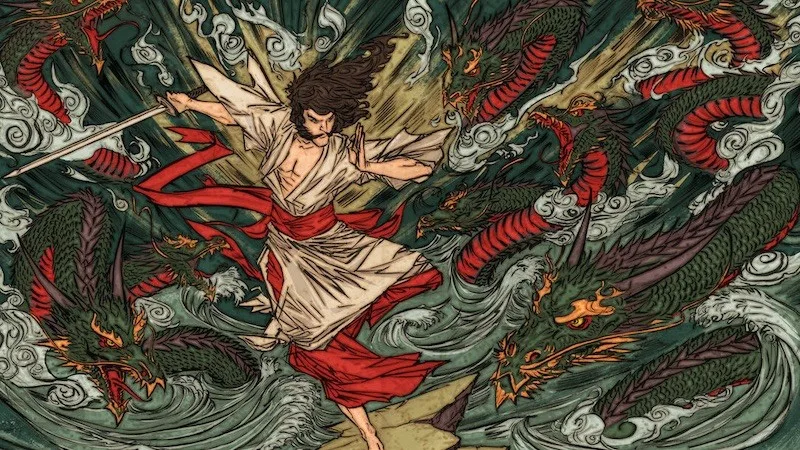
From its belly fell the sacred orb of life, the Magatama, and from the last severed head rolled a tear that became the mirror. Amaterasu kept the dragon-slaying sword Kusanagi, Izumo kept the Magatama orb, and Princess Yata kept the mirror.
These three objects are now known as “The Three Sacred Treasures of Japan” and are said to be preserved in the Imperial Palace of Tokyo.
Kiyohime - The Angry Lover
Kiyohime's [清姫] family was wealthy and her father Shoji was the village chief. The family provided lodging for priests and travelers. One day, young Kiyohime fell in love with a traveling healer named Anchin.
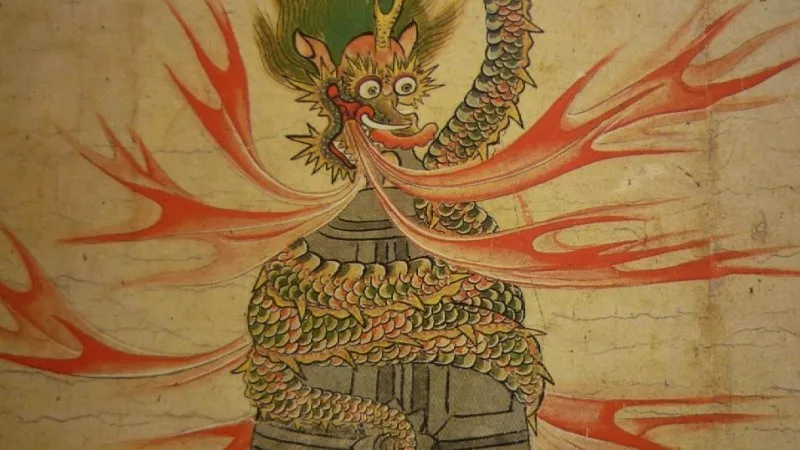
Kiyohime and Anchin had a romance, but one day the healer lost interest in Kiyohime and tried to escape across the Hidaka river. Kiyohime's anger was so great that she transformed into a dragon and chased Anchin.
The healer tried to hide from Kiyohime's wrath inside an iron bell in a temple, but Kiyohime, as a dragon, coiled around the bell, struck the bell several times, and in the end let out a fire belch that melted the bell with Anchin inside it.
Seiryu - AZURE DRAGON and the 4 Dragons
There are two legends involving 4 protective creatures. In one, the 4 creatures of green, red, black, and white protect Japanese cities, while in another, there are four dragons that protect the seas.
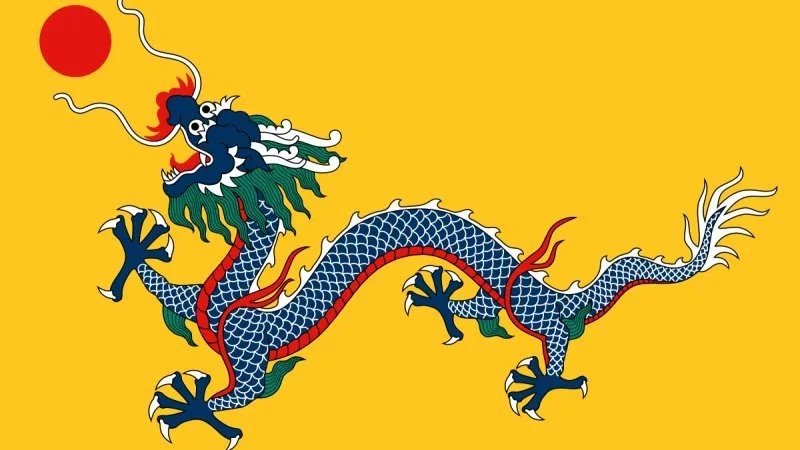
Azure Dragon is present in both. He is a green dragon of Chinese origin called Qing Long. In China, he is a symbol of the Chinese constellations, but in Japan, he is one of the four spirits that guard Japanese cities.
He is also called Seiryu, the protector of the city of Kyoto or of Eastern Japan. The West is protected by a White Tiger, the North by a Black Tortoise, and the South by a Red Bird.
Other Japanese Dragons
There are many Japanese dragons that appear in legends and historical, cultural, and religious records. Below we will briefly mention some popular Japanese dragons.
Mizuchi - Another Serpent Dragon
Mizuchi [蛟] is a Japanese aquatic dragon/snake and possibly a deity, mentioned in the chronicles of Nihon Shoki and in the poems Man'yōshū. Records mention human sacrifices made as offerings to the Mizuchi that inhabited the rivers.
Wani - The Crocodile Dragon
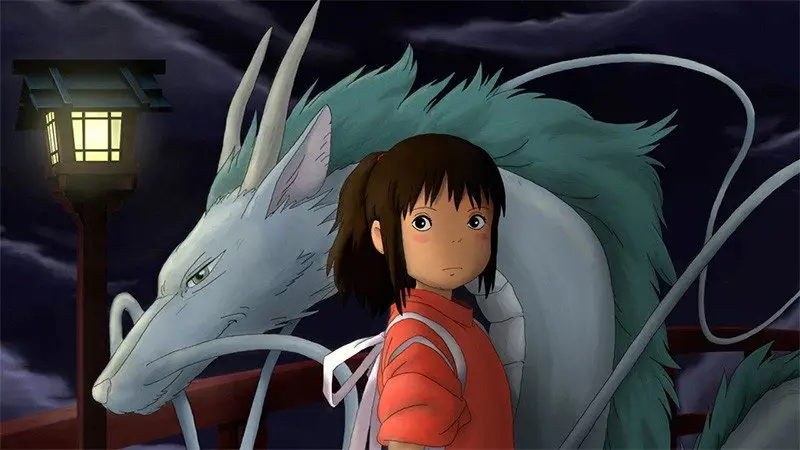
Wani [鰐] is a crocodile dragon or sea monster mentioned twice in Japanese legends. Wani can also simply be a crocodile, but in Japanese mythology, it is categorized as a dragon.
Nure-onna - Yokai Serpent
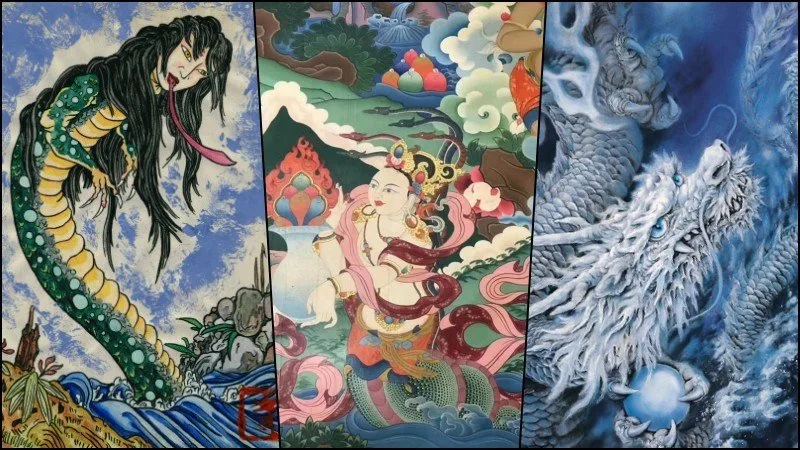
Nure-onna [濡女] is a yokai that resembles a serpent, which are the popular dragons of Japanese legends. Its difference lies in the woman's head. She is often seen in rivers and beaches washing her hair.
Zennyo Ryuo - Rain Dragon
Zennyo Ryuo - He is a dragon god of rain mentioned in Buddhist stories and in the Imperial Palace of Kyoto. He is a small dragon that often appears in human form but with his dragon tail.
Kuraokami - The Snow Dragon
Kuraokami is referred to as the Dragon of Darkness, but he is also a Shinto deity of rain and snow. He was also born of Izanagi and Izanami just like most Japanese dragons and deities.
Kuzuryu - The Exorcised Dragon
Kuzuryu is a dragon from the folklore of Nagano Prefecture in Japan. He is mentioned as a poisonous and fierce dragon that lives in the lake, where humans had to offer sacrifices. One day he was exorcised and became the local guardian.
Inari Ōkami - Deity of Prosperity
This deity is very popular and has a mountain full of gates in Kyoto dedicated to Inari. She is often represented as a fox. She has also appeared as a serpent or dragon in some accounts.





Community
Comments
0 comments
There are no published comments in this language yet.
Send comment