
Urashima Tarō (浦島太郎) is one of the best-known Japanese tales. A statue of the fisherman stands at the Urashima shrine in Mitoyo on Shikoku, and the story is still printed in picture books for children.
The core is simple: a man spends a few days somewhere outside of time and comes back to a world that no longer contains him. What the versions disagree on is how long he was away and what happens when he opens the box.
Contents 7
The fisherman and the turtle
Urashima Tarō lives with his old mother in a village on the coast and is known as a skilled fisherman. One day he sees children tormenting a turtle, stops them and carries the animal back to the sea.
The next day a voice calls his name across the water. It is the turtle, thanking him and inviting him to the palace of the dragon king. Tarō hesitates because he does not want to leave his mother, but follows when the turtle promises it will not take long.

The palace under the sea
They reach Ryūgū-jō, the palace of the dragon god, shining like gold and silver. Servants shaped like fish receive them, and Otohime steps out, one of the daughters of Ryūjin, the dragon god of the sea.
In the popular telling she was the turtle he rescued. She shows him the treasures of the palace, including the tide jewels that Ryūjin uses to raise and lower the sea, and asks him to stay.

Three days that are not three days
Tarō loses track of time. Food, music and the company of the princess make him forget the village and his mother, until after a few days he comes to his senses and decides to go back.
Otohime asks him to stay. When he refuses, she gives him a box tied with a silk cord, the tamatebako, and makes him promise never to open it.
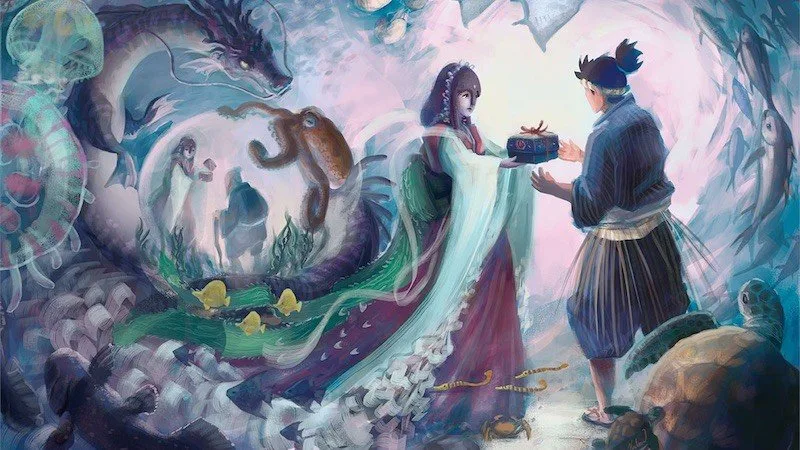
The return
The turtle carries him back to his beach. The people he passes are strangers, and a man he does not know is living in his house. The man says he has heard of an Urashima Tarō who lived there centuries ago.
The few days in the palace were centuries on land. His mother is dead, the village has changed, and nobody is waiting for him. Only the box is left.
What is inside the box
Tarō opens it against his promise. Smoke rises, and the young man ages in a moment: his back bends, his hair turns white, his skin folds.
In most versions he dies on the beach; in others he turns into a crane. Read that way, the smoke holds the years of his life that were left behind in the palace.

How the tale was handed down
The oldest trace is in the Man'yōshū, an eighth-century poetry collection: there Urashima no ko travels to the land of Tokoyo and loses his youth on return. The palace and the princess are barely present in that version.
The familiar form, with Otohime, the dragon palace and the box, comes from the Muromachi period and spread widely in the seventeenth century as an illustrated story. That is the version that turned the material into a tale with a clear lesson.
The number of years also changes between editions. Some say three years, others three hundred, and the older tradition gives no exact figure because the palace sits outside of time.
What the story says
The tale warns about lost time, but it also says something about gifts from another world: they cannot be used at home. Tarō cannot go back, and the box only keeps what he can no longer live.
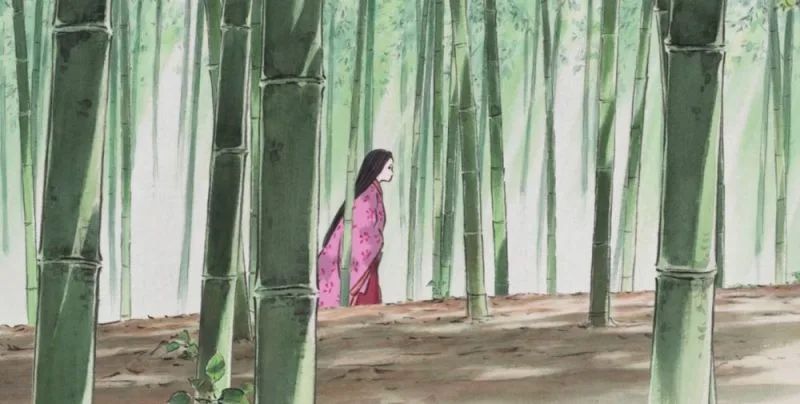
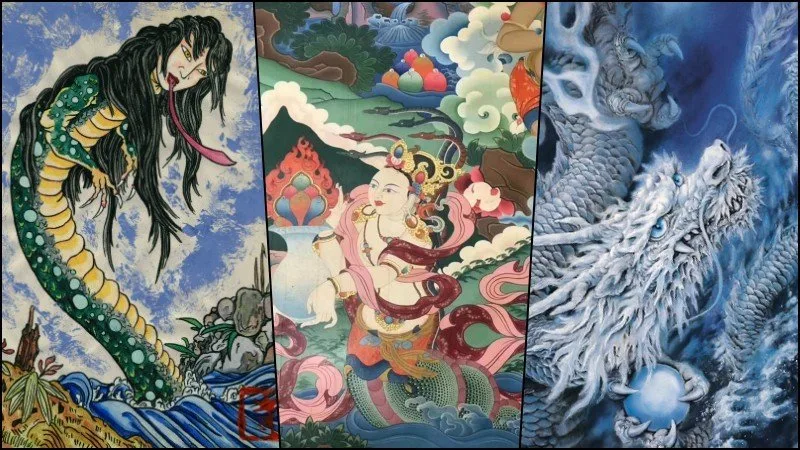
Anyone who wants the figures again will find Ryūjin, Otohime and the palace in the overview of Japanese dragons. Another well-known tale is covered in the article on Princess Kaguya.





Community
Comments
0 comments
There are no published comments in this language yet.
Send comment