
Between 1868 and 1947, after the fall of the feudal system (shogunate) and the establishment of a new government, Japan transformed into the largest Asian power thanks to the industrialization and militarization of the country that placed the Japanese in a position of sovereignty compared to the rest of the Asian continent.
During the conflicts fought with China during the Sino-Japanese wars, the invasions of Korea, the Russo-Japanese War, World War I, and the Pacific War, Japan achieved military success. However, Imperial Japan went into decline after suffering several defeats during World War II, which resulted in military weakening and defeat in the Second World War, leading to Japan’s surrender to the Allied Forces in 1945.
After the surrender, Imperial Japan was dissolved in 1947 and the constitution in force at the time (Meiji Constitution) was replaced by the Constitution of 1947, giving rise to Modern Japan.

Fall of the Shogunate and Meiji Restoration
After Emperor Meiji (1852 – 1912) ordered the dissolution of the Tokugawa Shogunate, samurai forces supported by daimyos who were dissatisfied with the shogunate, along with the government that aimed to build economic relations with foreigners, the feudal military government that ruled Japan for six centuries finally dissolved, thus bringing a new era to the country with a constitutional government model that provided a more democratic government for the Japanese people.
However, Japan’s opening to foreign trade was not peaceful even after the end of the shogunate, as there were still political forces opposing the “Westernization” of Japan and the trade relations established with foreigners.
However, over the years, Western influences in Japan’s politics gave rise to militarization ideas and nationalist ideology that influenced Japanese society until the end of World War II.

World War, Sino-Japanese and Russo-Japanese Wars
Before World War I, Imperial Japan fought in two significant wars following its establishment after the Meiji Revolution. The first was the First Sino-Japanese War (1894 – 1895). The war revolved around the issue of control and influence over Korea under the rule of the Joseon Dynasty, which resulted in a Japanese victory.
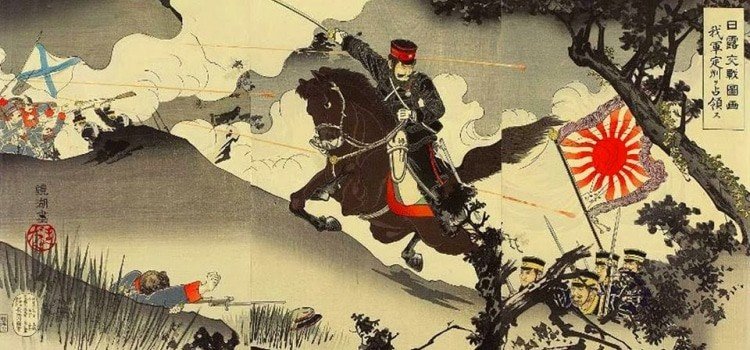
The second was the Russo-Japanese War (1904 – 1905) fought over the dispute for control of Korean lands, resulting in another victory for the Japanese empire.
Japan entered World War I in 1914, taking advantage of Germany’s distraction with the European War to expand its sphere of influence in China and the Pacific. Along with England, France, and the United States, Japan managed to win World War I.
Did you like the article? Then don’t forget to comment and share with your friends. Click here to read the second part discussing World War II and the fall of Imperial Japan.
Leave a Reply