
Burikko [ぶりっ子] is a Japanese term used to describe people who act and speak in an infantilized manner; it can be considered a type of style, culture, and behavior that delves into the Kawaii and Lolita culture. In this guide, we will talk about everything related to these girls who behave with excessive cuteness.
Have you ever wondered why Japanese women do not shave their pubic hair? Click below to read our article: Why Japanese women usually do not shave.
Contents 18
What Does Burikko Mean?
Burikko [ぶりっ子] is an intentional appeal to femininity (beauty, cuteness), where women pretend to be ignorant and spoiled in front of the opposite sex, feigning helplessness. It can also be translated as false child or pretended child.
We use this word to describe predatory girls who act pure, innocent, and very feminine (like “I don’t poop, ride unicorns, and don’t know what sex is?”) but who actually know exactly what they are doing to get what they want.
The origin of the word comes from [振りっ子] and [鰤子] where the suffix buri [振り] indicates a style, manner, and way. The noun furi [振り] also conveys the idea of agitation, swing, appearance, and behavior. The ideogram [鰤] that composes some archaic versions refers to the Japanese Amberjack fish.
The suffix buri was used to refer to various words in the Japanese language. Perhaps by examining these expressions you can get an idea of the meaning of the word and its variants. See below:
- Kawaiiko buru [可愛い子ぶる] - Cute child;
- Iikoburu [いい子ぶる] - Good child;
- Nekowokaburu [猫をかぶる] - Dress like a cat;

In summary, the word Burikko literally means to act, follow a style, a manner, to have an appearance and behavior of a child [子]. The word refers to pretending to be something, that is, a child, with childish and innocent behavior.
There are verbs that resemble the origin of the word, such as the verb buri [振る] which means [to assume the air of…] or [to behave like...] or the onomatopoeia buruburu [ぶるぶる] which means trembling, showing an excess.
Another coined word is "Hamachikko" derived from the young fish buri which is called hamachi. The aim was to separate young women who acted like children (burikko) from adult women who acted like children (hamachikko), but the term did not become popular and nowadays only burikko is used.
A person who hides their true nature and shows a different personality to someone.
Meaning of Burikko
Behaviors and Characteristics of Burikko
Burikko encompasses many behaviors that express forced childishness, from a submissive look to a childlike voice. Gestures, grimaces, tilts, and MOE behavior are characteristics of Burikko. See below the main behaviors:
Main Behaviors of Burikko
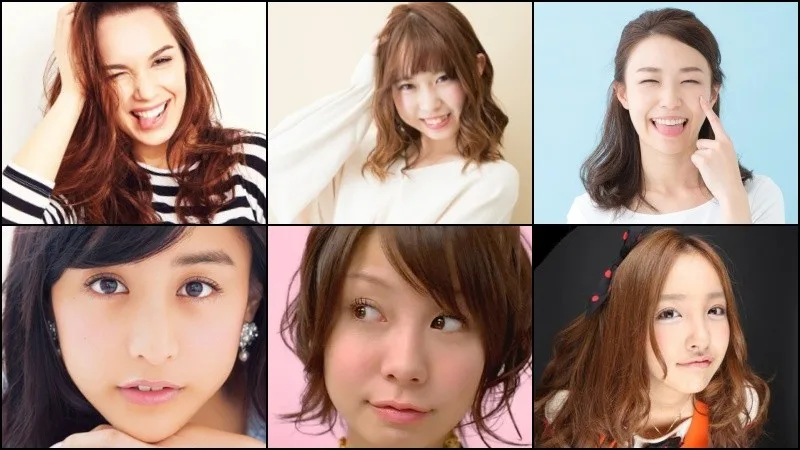
They also tend to make cute gestures and facial expressions, some strongly exaggerated that show fear or surprise in ordinary situations. Even the way burikko sneeze tends to be cute.
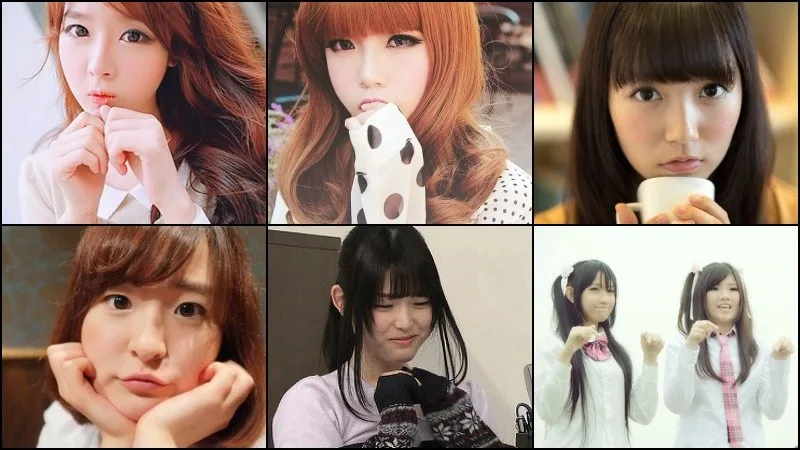
They act like damsels in distress and use their charm to attract the attention of boys. They often puff their cheeks, tilt their heads to the side, or touch their face with a finger while speaking, sometimes lightly covering their face with their hands.
They often fill their cheeks with air to create an impression like "Moo! I'm angry!" or "Moo! Don't be mean!" or "I'm sad to say this!
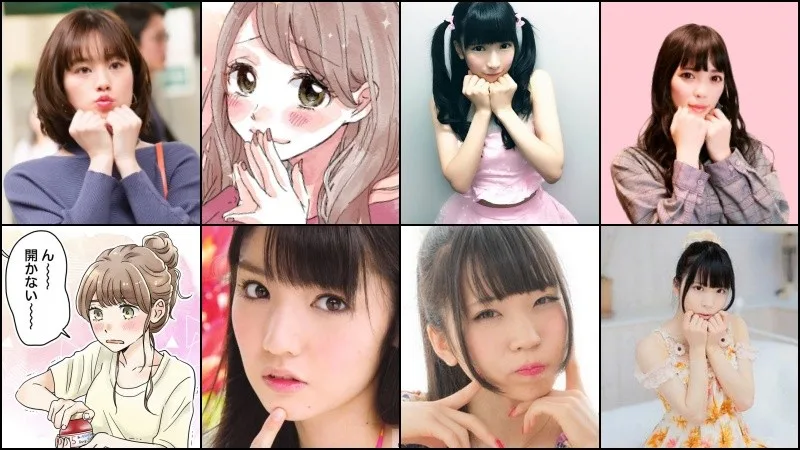
Some gestures of burikko involve a duck mouth called ahiruguchi [アヒル口] where they pucker their lips a bit. Another gesture is called sparrow face known as chungao [チュン顔]. Another cute characteristic of these girls is the ability to look up using only their eyes.
A traditional and natural flirting technique is to touch oneself. Burikko also tend to touch themselves frequently; they intentionally hold the hand of the other person just to say thank you (something rare in Japanese culture). They may also shake the shoulders of boys to ask for something.
Some burikko tend to stick their tongue out of their mouth, a gesture called tehepero [テヘペロ] similar to Peko-chan from Milky. A very strong gesture that conveys a sense of humor and cuteness.
Uchimata - Walking with Feet Inward
Uchimata [内股] is the name given to the way some Japanese girls walk, with their toes pointed inward. In the West, it may be known as pigeon toe, and some even treat it as a disease.
In Japan, it is the opposite; few girls actually walk like this, many force this walking style because they find it cute and kawaii. It is believed that this is common in Japan because of the way Japanese people usually sit with their legs back.
Some Japanese burikko also tend to take quick steps, making small runs at school in a cute and eye-catching way that wins the heart of any man.

Feigning Inabilities and Forgetfulness
Generally, burikko pretend not to be able to do certain things so that boys will do them for her. Something like not being able to open the lid of a candy, not being able to reach something from the shelf, burning a finger in the kitchen, or not being able to lift something (even if it's light).
Men feel like alpha males when they help these girls with trivial tasks, a great art of seduction known not only by burikko girls. They also tend to pretend to forget something, forget something at home, or how to use a certain tool or machine.
If they pretend not to be able to do something, they expect the boy to do it. In this case, another characteristic comes into play, the famous "begging act." They often say things like "buy me a souvenir," "I can't, do this for me," or simply express the desire to eat something.
Dialogue and Communication of Burikko
Generally, a burikko girl is always positive, cheerful, and lively; she tends to speak of herself in the third person, using her own name instead of I. They also tend to use feminine pronouns like atashi (I). Being positive girls, they often give many compliments.
They also tend to use honorific suffixes "chan" or "tan" both for the third person and for others. Another custom is to elongate words, especially at the end of sentences [ばか~]. They also often start their sentences with "etto" [え〜と] which means um...
Many Japanese, especially famous ones, tend to speak with a very childlike high-pitched voice, one of the main characteristics of burikko. Some go overboard and end up making strange sounds and moans that can even resemble sexual relations.
This is one of the reasons some Westerners do not like anime, as characters often have a cute and childlike voice, in addition to making those weird moans. Of course, I personally think that the Japanese language contributes to this high-pitched sound tone.
They also tend to give many compliments, all excessively and in a very loud tone. Things like "Wow!", "Cute!", "Cool!" and "I'm happy!"... Generally, burikko use a soprano voice, the highest female voice type with the greatest vocal range of all types of voices.
Burikko Vocabulary
They not only speak like children but also use childish words. See below some of the childish words used by burikko:
| Burikko-go | Japanese | Meaning |
| おちゅかれさま | お疲れ様 | Good job |
| よちよち* | よしよし | Okay, there |
| しゅごいでしゅね〜 | すごいですね | Cool, right? |
| よくできまちた | よくできました | Good job |
| わんわん | 犬 | Dog |
| ぶーぶー | 車 | Car |
* Yoshi Yoshi - A word that expresses consent and comfort for children.
Another word frequently used by burikko is the expression kawaiii [可愛い〜] which is usually used excessively. They practically think everything is cute!
Other frequent words considered cute are:
- Ukeruu [うける〜] - To receive;
- Mechasugoine [めっちゃすごいね] - Incredible;
- Omoshiroii [面白い〜] - Interesting;
- Kakkoii [かっこいい〜] - Cool;
- Wakannai [わかんない〜] - Abbreviation of Wakaranai (I don’t know);
- Dekinai [できない〜!] - I can’t;
- Chotto kowaindesukedo [ちょっと怖いんですけど〜] - I’m a little scared;
Burikko-ji - Cute Writing
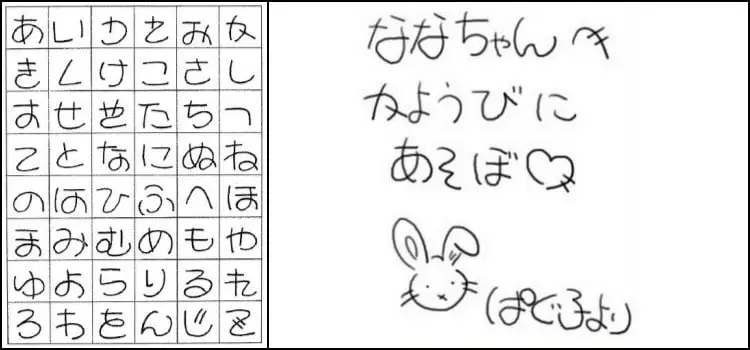
At the time of the popularization of the kawaii movement, some styles of infantilized writing called burikko-ji, maru-ji, koneko-ji, and manga-ji emerged, which involved stylized, rounded letters with childish characteristics like hearts, stars, and kittens.
It also refers to girls who constantly draw kaomoji in texts or simply use many cute emoticons in electronic text messages. Not all girls who use this style of writing can be categorized as a burikko girl.
Style and Appearance of Burikko
What clothes do burikko wear? What hairstyles do they make? Now let's look at some styles and appearances of burikko.
Burikko generally wear short skirts, even in heavy rain or wind. If they decide to wear pants, they are usually short and high-waisted because they avoid hiding their legs. They also like one-piece dresses, always cute clothes with eye-catching characteristics.
Unlike Harajuku girls, burikko avoid bright colors, preferring light colors mixed with pastel, pink, and purple. Even so, colors like red and blue may be present in some pieces. White and pink are the most used colors because they express purity and femininity.
Burikko also like flowers, ribbons, lace, and ruffles. Some like lace materials and appeal to transparency. Ruffles are present on sleeves, skirts, and even on bag straps.
The Burikko fashion cares a lot about details. For example, nails, smartphone cases, headphones, wallets, regular holders, business card holders, handkerchiefs, bags, handkerchief cases, socks, etc. Generally, cute objects that differ from the traditional are chosen.
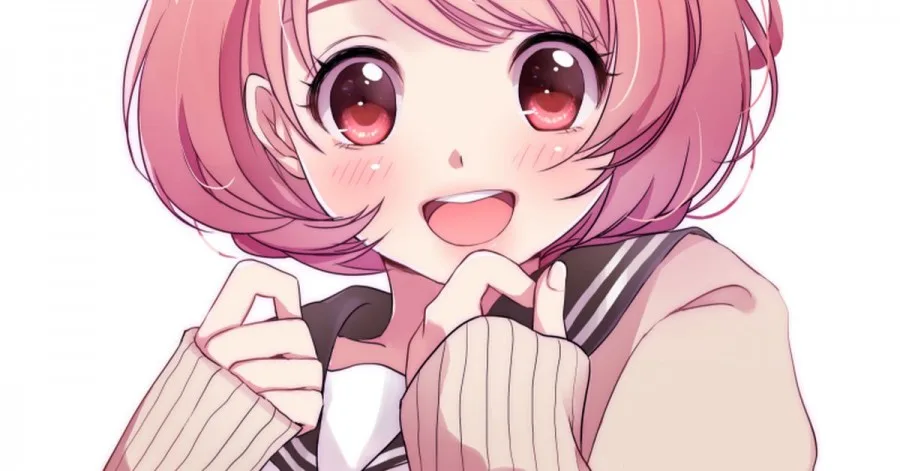
Some burikko tend to wear long sleeves that cover even the tips of their fingers called moesode [萌え袖]. Their legs are exposed, creating the famous absolute territory Zettai Ryouiki.
Hairstyles of Burikko
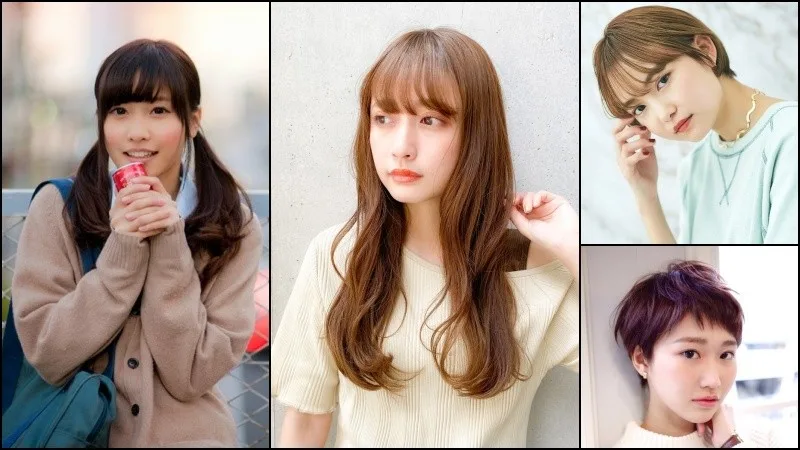
Generally, burikko girls also have a childlike hairstyle, usually the famous twin tails, which consist of tying hair at both ears. Currently, it is not a rule, but we can see such hair in anime, Idols, and maids.
Another popular hairstyle among burikko consists of loose brown hair. Generally, a brown, beige, gray-brown, or simply some highlights in the hair create a cute atmosphere according to burikko girls.
Another popular hairstyle is bangs; some even cover their eyebrows or eyes. It seems complicated to do, taking hours of dedication every morning. Other girls claim that short hair that even looks masculine has positive results because it becomes friendly to men.
The Skills of Burikko
Besides the characteristics and behaviors mentioned earlier, being burikko involves having some special skills that also define this culture.
Generally, a Burikko girl is good at acting. She can even shed fake tears if she wants.
Regardless of her true intentions, she can pretend to be anyone at will. They enjoy acting and receiving compliments, which is why many are famous Idols.
Girls who exhibit burikko behavior have a broad vision known as horse vision (they have a 350-degree vision). They can observe as much as possible around them and can manipulate situations and adapt flirts.
Another skill is high absorption; girls need to learn and practice gestures, often observing the people around them and how they react to these gestures. Generally, new burikko girls need to imitate others, usually famous Idols, hence the absorption skill.
Other positive points and skills to stand out in burikko are:
- They are hardworking;
- They are extroverted;
- They speak firmly;
- They are attentive;
The Problems of Being Burikko
Many girls wish to adopt this lifestyle or some of its characteristics just because it seems cute. The big problem is that such a word has gained a pejorative side of a false girl interested in conquering men with false behaviors.
This is not the only problem for girls who wish to adopt this culture; generally, other women hate girls who behave in this "burikko" manner. The reputation generated with men is good, but with girls of the same sex, it is never good.
As it is a flirting technique, acting only in some situations with such behavior can create a perception that you are a false or selfish person. "Burikko" girls do not always have the same attitude towards everyone.
Generally, "burikko" girls have a hostile attitude towards women who are attractive in appearance and inside. They tend to adopt a cold attitude towards these other women who do not need to pretend or make an effort.
The best advice for girls who wish to follow aspects of the "burikko" culture is simply to be natural with everyone. Many Japanese girls tend to have innocent behavior as a lifestyle and not as something temporary or false.
If you are attentive to everyone and show your true personality, you can be a "burikko" without any problem.

The Origin of the Term Burikko
The term was coined during the 1980s and is sometimes attributed to Japanese comedian Kuniko Yamada, although its exact moment of invention is unclear. This is because some shounen manga used similar expressions to refer to pretended girls.
The mangaka and illustrator Toshifumi Eguchi around 1978 used expressions like kawaiikoburuna [かわいこぶるな!] and burikkodana [ぶりっこだな] to refer to a girl who pretended to be cute. Such expressions likely gave rise to the word burikko, which was later questioned by some experts.
As mentioned above, it was a popular word for children and young people due to the origin of male comics, but this word spread as a replacement for the conventional word "Kamatoto" (described later).
It established itself as a new word not only for young people but also for middle-aged and older people. All this with the help of comedian Kuniko Yamada who popularized the term in 1981. Shortly after, this term began to appear in magazines and even became the name of a manga magazine for adults specialized in lolicon.
Although the term seems pejorative, many girls consider it a friendly provocation. Many girls of the time had a flirtatious tendency, resulting in "burikko" behaviors. Nowadays, many women adopt this behavior as a lifestyle without taking it to extremes.
Burikko became a kawaii subculture among girls aged 12 to 18 in the 80s. About 50% of girls at the time wore something related to the culture, whether gestures or writing. Burikko is also a word used to refer to the edible eggs of the hatata fish.
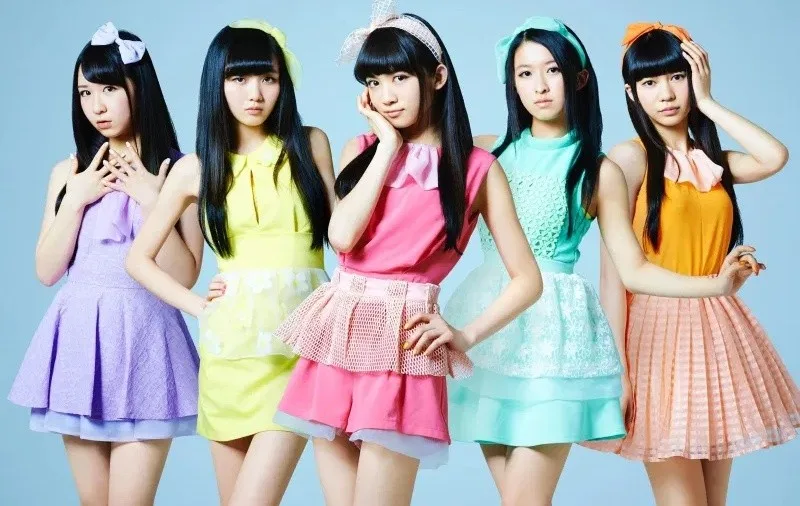
Famous Burikko Japanese Girls
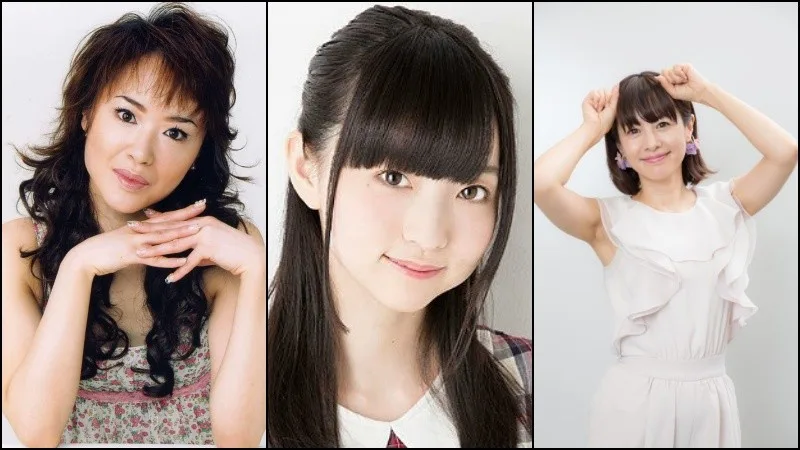
Seiko Matsuda was one of the first Idols to be called Burikko because of her mischievous and unfriendly behavior. People observed her gestures and suspicious behaviors; she even lied and cried on music shows.
The voice actress and actress Minami Tanaka often dominated the world with her superior eyes and burikko poses. She used to say that her gestures and comments were intentional. Today, many girls follow this style to become famous.
Yuko Ogura is another who self-named with a nickname and has a nasal voice. Tamao Sato is another famous teenager known for her watery eyes and exaggerated, seductive reactions. She became famous for the punpun pose [プンプンポーズ] where she puts both fists on her head. We also recommend researching Sayumi Michishige and Momoko Tsugenaga.
Kamatoto - Predecessor of Burikko
The word kamatoto [蒲魚] usually written in katakana has a meaning similar to burikko. According to the dictionary, the word kamatoto means pretending innocence, ignorance, or naivety.
Again, it refers to a woman who knows but pretends not to know and behaves like a sexually naive person. The word "Kamatoto" existed long before the popular word "Burikko" and was originally used at the end of the Edo period for prostitutes who pretended to be innocent.
The origin of the word Kamatoto derives from Kamaboko, a type of surimi combined with the word toto [とと], a nickname used in Kansai to refer to fish. This nickname came from the word tou [疾う] which means quickly, referring to the time of consumption of fresh fish.
Another theory is that the term arose from girls pretending to be rich daughters to try to attract men's attention.
Reasons That Lead Japanese Girls to Burikko
About 27% of Japanese women have tried to appeal to the childish side when flirting with a man. Have you ever wondered what reasons lead Japanese girls to act like children? Here are some psychological studies that show the possible causes of burikko. Most of the time, it involves just the desire to stand out or be cool.
One of the psychologies of burikko is the lack of confidence in one’s own appearance, which leads the girl to cover her appearance with cute gestures, actions, and words. A woman who is satisfied with her facial features and body tends to hide her complexes from the opposite sex using "burikko".
Another reason is that the girl does not like her own personality, so she tends to hide who she really is. An introverted woman who does not like herself interprets a different self during flirting, acting like a child to be treated kindly by those around her, thus generating confidence.
Another reason that leads a girl to have this behavior is the desire to be loved by a specific person, who probably likes this type of behavior. Perhaps she simply wants to win over the boy using her cuteness. Sometimes she also wishes to be loved by everyone.
There seems to be a psychology where girls wish to appeal to their femininity. In Brazil, this happens when girls wear provocative clothes and necklines; in Japan, the culture leads girls to act in a cute and childish manner. Burikko conveys femininity through language, gestures, and clothing.
Of course, some girls simply want to be called cute, which is why they act this way. Others are fierce girls but change their behavior with the aim of not hurting others.
What Do Men Think About Burikko Japanese Girls?
Some Japanese say they like the burikko style because it is cute. Even if it is calculated, false, or invented, they somehow feel attracted to this cuteness. Others claim to like it because they receive compliments and it makes them feel good.
Burikko are good listeners and good speakers. They look directly into your eyes and nod, "Yes," and listen to the story with all their strength. The simple fact that these Japanese girls have the courage to look into your eyes already positively differentiates them from others.
Even if the girl is not flirting or interested, they generally act friendly towards men. Men like it because they consider it an attitude, something that many Japanese girls and even Japanese men do not usually have. They are hardworking in various ways.
This greatly facilitates relationships with men without attitude. Some also say they like burikko because they feel like alpha males, feel in control, and feel that they are being useful and helping with something.
Of course, there are some men who find it ridiculous, nonsensical, and exaggerated, but others claim that such attitudes ignite their love. Others find it difficult to accept because they know the true face. Not to mention the reputation that some propagate.
Videos About Burikko
To conclude, let's leave some videos showing their appearance and behavior:




Community
Comments
0 comments
There are no published comments in this language yet.
Send comment