
In Japanese, there are different ways to refer to a spouse or partner. In this article, we will look at some of these ways, their meanings, and their differences. Ready to learn how to say wife in Japanese?
There are many ways to say wife in Japanese; below you will see many of these forms, their meanings, and their differences. One of the main differences is that there are words used to refer to one's own spouse or to the spouse of others.
Contents 6
Tsuma - My Wife
Tsuma [妻] is the most well-known term for wife, especially among Japanese language students, but they should be aware that this term is used only to refer to one's own wife. This is because the word also carries a romantic and embellished connotation, something like my dear, my honey.
Generally, the garnish served with sashimi is also called tsuma, because the word is also used to refer to something that is beside. Historically, the word tsuma was used to refer to both, husband and wife.
The word makes perfect sense; its origin comes from [端] which means side and edge, indicating the person who is beside, that is, the spouse. Another way to read the ideogram for wife is sai [妻] which can be used in the formation of other words such as:
- Saishi [妻子] - Wife and children, formerly wife;
- Saitai [妻帯] - To have a wife, to marry;
- Saisho [妻女] - Wife, Wife and children;
- Saishou [妻妾] - Wife and mistress;
- Tsuma no Mikoto [妻の命] - You (spouse);
- Gensai [幻妻] - Wife; Woman (derogatory); prostitute;
- Gusai [愚妻] - Archaic wife;

Okusan - Wife
A common way to refer to your wife is by using the term okusan [奥さん] which can also be used to refer to other people's wives or married women. It is a respectful honorific sonkeigo, but its origin is controversial.
Oku [奥] means at the back and, in this case, at the back of the house. So okusan refers to someone who stays at the back of the house and does not come to the front, someone who stays hidden. This concept came from the Sengoku Period where women stayed inside the castle at the back and served their master, shujin [主人].
According to the dictionary, oku-san or oku-sama is also a common nickname for middle-aged women. It is common to see men calling women whose names they do not know okusan. The act of doing things for the wife is called okusankoukou [奥さん孝行].
Kanai - Housewife
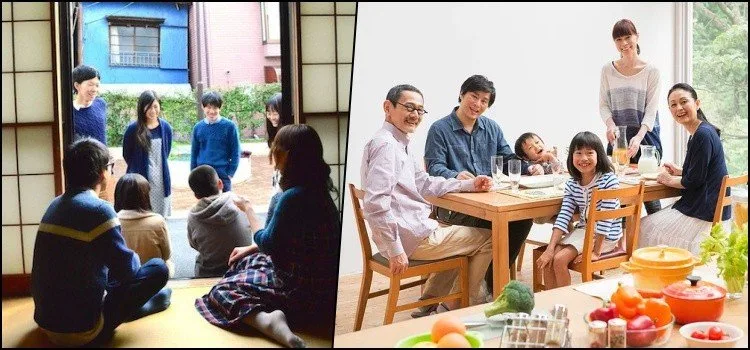
Another similar term is kanai [家内] which can refer to wife in a humble form kenjougo that is commonly written in hiragana. The word literally means inside the house, which describes the woman's role and her hustle within the house.
Kanai can also refer to someone's family, which can be seen in the famous amulet kanaianzen [家内安全] which serves to protect the family from danger. Even though it is a term used for one's own wife, this word can be offensive to some.
I think that if feminists read this article, they would freak out, but many of these words are respectful and cute for Japanese women. Don't let the origin of the words upset you, or you'll go crazy if you research the origins of Portuguese words.
Nyoubou - From Maid to Wife
The word nyoubou [女房] originally referred to high-class women who worked in the Japanese Imperial Court. As expected, some ended up in bed with some of the local men. The word literally means woman of the room [房].
Bou is a type of room where they served guests and took care of the Princess or the Emperor. They got this name because they received their own room on the premises. Over time, due to events, this term became used to refer to wives.
The term is used only to refer to one's own wife. Some may not like this term due to its origin. Sometimes the term is used with the woman you live with, without any marital bond.
Oyomesan - Bride
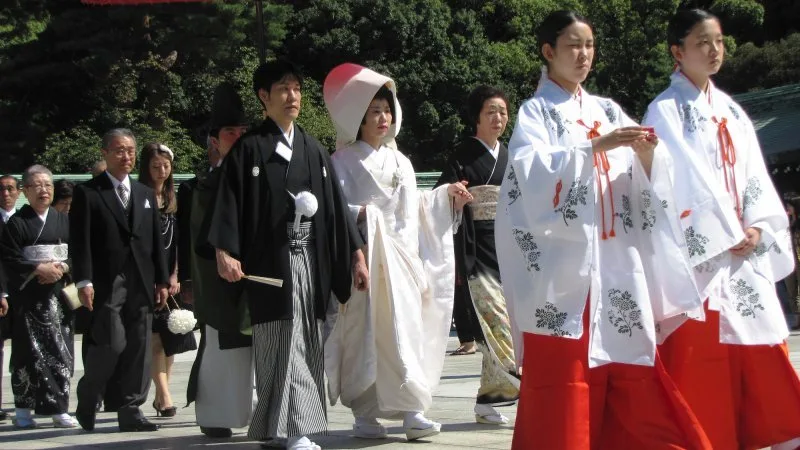
Although the word oyomesan means bride, it can also refer to one's own wife after marriage, but on rare occasions. Written with the ideogram [嫁] yome or yomesan can also be used to refer to a daughter-in-law.
In the Kansai area in Osaka and Kyoto, such usage for wife is common; you might hear something like "uchi no yome", a phrase quite popular among manzai comedians. Another archaic way to call a wife or bride is wakoto [我事].
To be more specific, we call the woman bride using the expression hanayome [花嫁] so much that when searching for yome and hanayome on Google images, you will see quite a difference in the attire. We also have words like shinbu [新婦].
Other Ways to Say Wife in Japanese
Below we will see other ways to say wife in the Japanese language:
- Bujin [夫人] - Wife; Mrs.; Madame; Wife of a noble;
- Kami-san [上さん] - Wife, usually of merchants or local chiefs;
- Fuufu [夫婦] - Husband and Wife;
- Kaasan [母さん] - Although it means mother, it can refer to one's own wife;
- Kakaa [嬶] - Wife;



Community
Comments
0 comments
There are no published comments in this language yet.
Send comment