
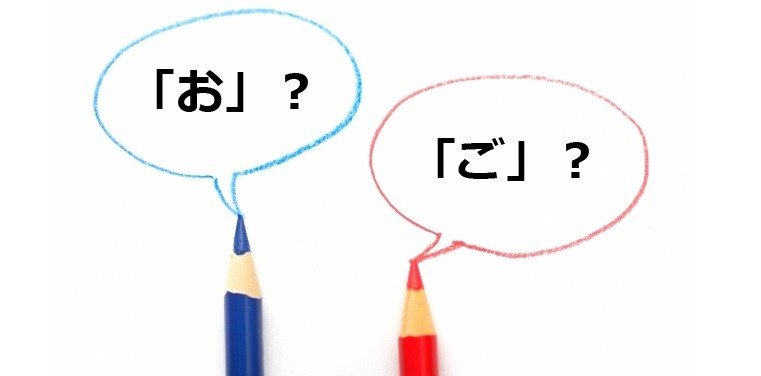
You have probably come across Japanese words that start with “o – お” like okane, ocha, ogenki or that end with “go – ご” like goyukkuri.
But have you ever wondered why the Japanese use these honorifics before some words? When do they use each one? In which words should they be used? In this article, we will clarify all these doubts.
The name of these honorifics is called bikago (美化語) which means language of beautification. As the name suggests, these honorifics are used to beautify words, it is used to express respect and courtesy, making the speech sound more refined, elevating the voice to a very polite style.
お vs ご
The honorific お(o) is added to words, regardless of their origin. Even foreign words like ズボン can have お added before them. お can be used in nouns, adjectives, or adverbs. On the other hand, the honorific ご is used in few words, and only words of Chinese origin.
But don’t be confident and try to use these honorifics in any words. Listen carefully to the natives, learn quite a bit of vocabulary, and you will know which words should use the honorific.
Bikago 美化語
Bikago is not just the use of お or ご but there are other honorifics that are: み-, おみ- and おんみ (mi-, omi-, onmi-) but they are used only in words with religious or imperial importance. For example, the word 子 (ko – Child) when adding the honorific み = み子 means “child of god”. I don’t think it’s a coincidence that priestesses are called Miko (巫女).
Some words are almost or always accompanied by honorific prefixes. To know if a word is always used with an honorific, try to find it in the dictionary without the honorific, some words change completely without its use.
In some words, the use of the honorific can completely change the meaning of the word, or its pronunciation with the honorific:
| Word | Meaning | Word with Bikago | Meaning |
| 八つ (hatsu) | Eight | お八つ(Oyatsu) | Afternoon tea |
| 飯 (hashi) | Rice | ご飯 (gohan) | Meal |
| 主人 (shujin) | Head of the family | ご主人 | Someone’s husband |
| 家族 (kazoku) | Family | ご家族 | Someone’s family |
| 釣り (tsuri) | Fishing | お釣り | Change, small change |
| 絞る (shiboru) | Squeeze, wring | お絞る | Hand towel |
| 汁(shiru) | Soup, juice | お汁 (otsuyu) | Broth, sauce |
| 腹 (hara) | Stomach | お腹 (Onaka) | Stomach |
| 化け | Unreadable, transform | お化け | Ghost, Monster |
In other cases, the words are similar or have the same meaning but are written differently when using the honorific:
| 水⇒ お冷 | cold water |
| うまい ⇒ おいしい | Tasty, delicious |
| 便所 ⇒ お手洗い | Bathroom |
Examples
There are many words that use honorifics, we will leave more examples below, and some sentences so that you can study more in depth the bikago that has great importance in the Japanese language.
| Japanese | Meaning | Japanese | Meaning |
| お名前 (Onamae) | Your name | ごゆっくり (Goyukkuri) | Relax, Tranquility |
| お茶 (Ocha) | Tea | お世辞 (Oseji) | Flatter, praise |
| お元気 (Ogenki) | How are you? | お金 (Okane) | Money |
| お庭 (Oniwa) | Garden | お天気 (Otenki) | Weather |
| お飲み物 (Onomimono) | Drinks | お菓子 (Okashi) | Sweets |
| お食事 (Oshokuji) | Meal | お店 (Omise0 | Shops |
| お料理 (Oryōri) | Cooking / dishes | ご祝儀 (Goshukugi) | Congratulatory gift |
| ご機嫌 (Gokigen) | Mood | ご挨拶 (Goaisatsu) | Greetings |
| ご結婚 (Gokekkon) | Marriage | ご連絡 (Gorenraku) | Contact |
It is important to remember again that not all words will use honorifics, and that they should not be used in any word, and that honorifics can completely change the meanings of words.
See an example of a sentence where the word is spoken with and without the honorific:
O-namae wa nan desu ka.
お名前はなんですか.
What is your name?
Watashi no namae wa Miki desu.
私の名前は美樹です.
My name is Miki.
Below is an example of the honorific お being used in a noun, adjective, and adverb:
O-tanjoubi Omedetou.
お誕生日おめでとう。
Noun: Happy Birthday.
O mizu o nonde kudasai.
お水を飲んでください。
Noun: Please drink your water.
O-genki desu ka.
お元気ですか。
Adjective: How are you?
Douzo go-yukkuri.
どうぞごゆっくり。
Adverb: Take your time.
O-naka ga itai.
お腹が痛い。
Noun: My stomach hurts.
Did you like the article? Share it with friends! Do you know any other words that have the honorific Bikago?
Leave a Reply