

An anime can be praised by critics and still reach almost no viewers. In Japan, the broadcast slot, home-video sales and merchandising often decide whether a series succeeds, and ratings alone do not tell the whole story. The four series below are examples of that gap: they are considered critical favourites or cult shows, yet found only a small audience on Japanese television. A look at the moe genre shows the same rule at work.
Contents 7
What “flop” really means in Japan
Many anime air in the so-called late-night slot, usually between about 10 p.m. and 4 a.m. Ratings there are naturally low, and broadcasters do not expect a mass audience. Instead, these productions are financed by Blu-ray and DVD sales, figures, music and licensing. A series can therefore “fail” on television and still work commercially, because a small, loyal fan base supports it. That is why the word “flop” is relative when it comes to anime.
1. Shin Sekai Yori (2012)
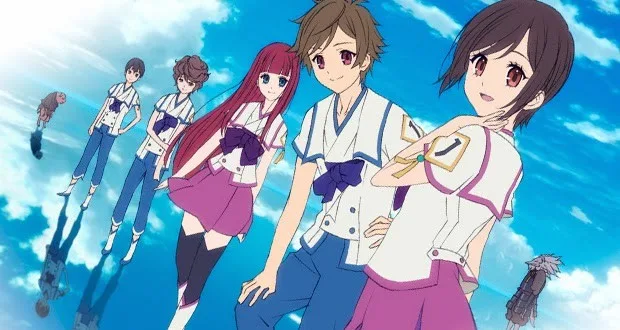
Shin Sekai Yori (“From the New World”) was made in 2012 by A-1 Pictures and adapts Yusuke Kishi's novel from 2008. The story is set in a seemingly peaceful village where children grow up with psychic powers and gradually learn that their world rests on a dark past. Critics praised the dystopian atmosphere and the social questions the series raises.
Even so, its reach in Japan remained small. The mix of 2D animation and cel shading looked unusual to some viewers, and the late-night slot limited it to a niche audience. Internationally it has a loyal following that still calls it a modern masterpiece.
2. Watamote (2013)

Watamote (“No Matter How I Look at It, It's You Guys' Fault I'm Not Popular!”) is based on the manga by Nico Tanigawa, which has been running since 2011. The 2013 anime adaptation by Silver Link follows Tomoko Kuroki, who struggles with social anxiety and the feeling of not fitting in. The series is deliberately uncomfortable and moves between comedy and a serious study of loneliness.
In Japan the series met mixed reactions and did not reach a broad audience. Internationally it was noticed much more widely and is now often discussed as a sensitive portrayal of social anxiety. The author Nico Tanigawa has repeatedly stressed how much she values feedback from overseas fans, a sign of how differently a work can be received in Japan and abroad.
3. Serial Experiments Lain (1998)
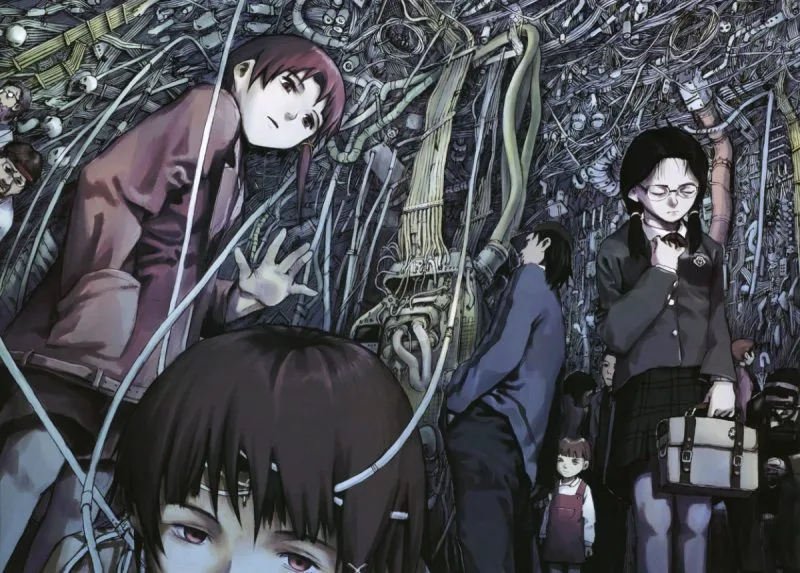
Serial Experiments Lain aired on TV Tokyo in 1998 and was animated by Triangle Staff. The story of Lain Iwakura, a girl drawn into the world of the Wired, is dense, mysterious and full of references to networks and identity. The series is now considered a classic of experimental anime.
Producer Yasuyuki Ueda explained in an interview with Animerica that the series was conceived in part as a kind of cultural war against the American culture that Japan adopted after the Second World War. The irony is that Lain is discussed more intensively in the United States and Europe than in Japan, where it first found only a small audience.
4. Ghost Stories (2000 to 2003)
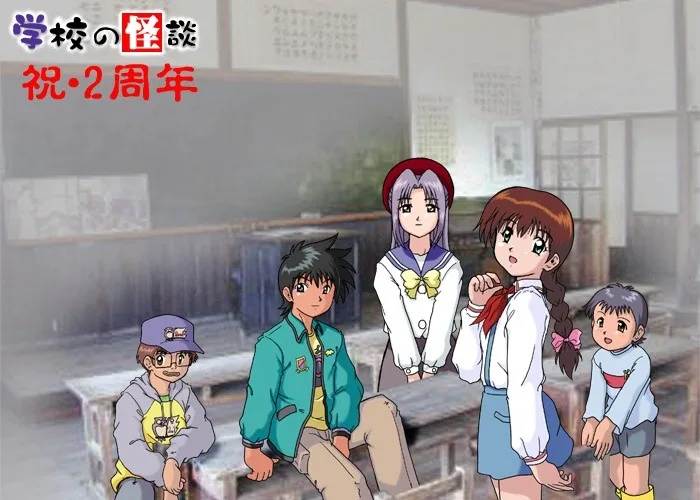
Ghost Stories (Japanese Gakkou no Kaidan) aired on Fuji TV from 2000 to 2003 and is based on a book series by Toru Tsunemitsu. In Japan the series had no major commercial success and kept a niche audience. It became known mainly through the English dub, which turned the plot into a cheeky parody and won many fans, especially in the United States.
The example shows how much translation and adaptation can change the perception of an anime: the same series is unremarkable in Japan and a cult title in the English-speaking world. Read more in Ghost Stories: why the anime is so controversial.
5. The moe problem: ratings are not everything

Many modern moe series also reach only a small audience on Japanese television. That does not make them failures automatically: much of their revenue comes from figures, Blu-rays, music and licensed products aimed at a small but willing-to-pay target group. For broadcasters and producers, a series with low ratings can therefore still be profitable.
Anyone who wants to understand why some series disappear despite critical praise, while others survive with weak ratings, has to look at the business model. A good introduction to fan culture and its terms is the article Otaku: what the word really means.
Final thoughts
Shin Sekai Yori, Watamote, Serial Experiments Lain and Ghost Stories show that critical praise and television ratings often sit far apart in Japan. Broadcast slot, target group and business model all help decide whether a series counts as a success. Anyone who looks beyond the mainstream will find some of the most interesting anime among these “flops”. More recommendations outside the mainstream are collected in the list of the best original anime.





Community
Comments
0 comments
There are no published comments in this language yet.
Send comment