
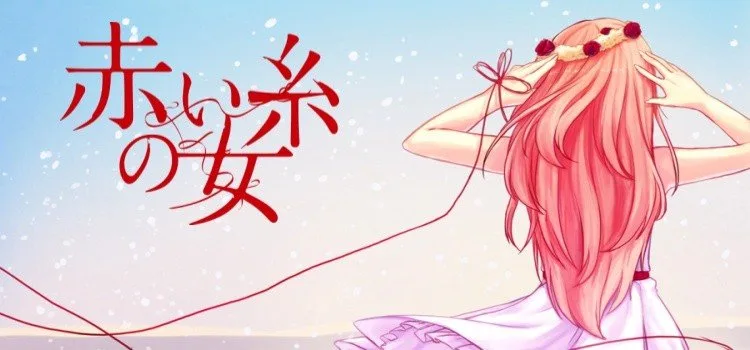
Have you heard of the legend akai ito? A famous Asian belief, widely lived in Japan, that two people are already connected by the red thread of destiny.
The word akai ito [赤い糸] literally means red thread. It is not a line you trip over on the street. It is more like a countdown that goes off at the exact moment you meet the person the story already chose — even if you are far apart, or still strangers. China and Japan do not tie that thread in the same place.
Contents 5
Origin of the Akai Ito legend
The usual saying is that the red thread can stretch or tangle, but it will never break. Time can wander; the two people still meet. In the Japanese telling, that thread usually sits on the couple's pinky fingers. The fuller name is unmei no akai ito (運命の赤い糸), the red thread of fate.
The older story is Chinese, from the Tang dynasty, and it is not originally a Japanese invention. The one who ties the cord is Yuè Xià Lǎorén (月下老人), often shortened to Yue Lao: the old man under the moon. He reads a book of marriages and carries red silk in his pack. In that version the cord is bound around the ankles.
The best-known episode follows a young man named Wei Gu (韋固). Yue Lao points to a poor little girl in a marketplace and says she is his wife. Wei Gu refuses the idea and has the child attacked. Years later he marries a beautiful woman who walks with difficulty and hides a scar. She is the same girl. The thread did not break just because he tried to cut it.
Japan took the legend in and made it domestic. You will meet it in anime, dorama, manga, and film. There is even a dorama called Akai Ito, which I recommend if you want the motif treated as a whole story rather than a one-line metaphor. The gods and deities who wander through anime are not Yue Lao, but they live in the same neighborhood of stubborn fate.
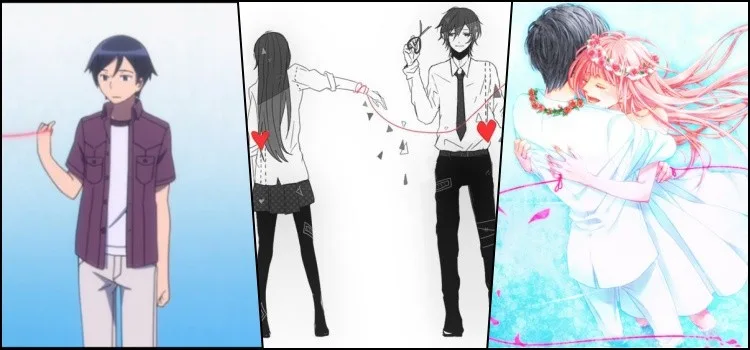
Differences between the Chinese and Japanese legends of Akai Ito
The legend is represented differently in Japan. As mentioned, instead of a cord around the ankle, Japanese versions usually put a red thread on the pinky. An older picture of it even runs from a man's thumb to a woman's little finger — the same two fingers that still show up when people joke about boyfriends and girlfriends. These days both cultures often just draw the thread on the pinkies and leave it there.
A widely retold version goes like this: a boy meets the old man under the moon and is shown the girl he will marry. He throws a stone at her and swears he will never accept that match. He grows up, never quite falls in love, then marries a woman who covers her face. When he asks why, she says that in childhood a boy threw a stone and left a scar on her eyebrow.
The older Chinese telling is harsher, and it is the Wei Gu story above: a refused child, a wound, a wedding that arrives anyway. Some retellings swap the knife for a thrown stone; the scar stays. Same punchline. Fate does not take your protest as a cancellation.
What Japan really changed is the mood. The thread becomes a romantic image you can wear in a school story, a reincarnation plot, or a confession. If you want the vocabulary for that moment, there is a map of how to say love in Japanese and a separate custom for the kokuhaku.
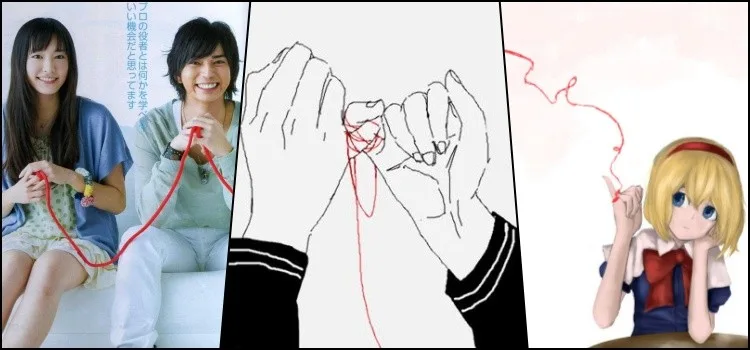
Yubikiri Genman (指切り拳万)
The Japanese pinky sits next to another custom that people often braid into akai ito: the promise Yubikiri Genman (指切り拳万). They are neighbors, not parent and child. Two people hook their little fingers and say:
指切りげんまん、嘘ついたら針千本飲ます。
Yubikiri genman, uso tsuitara hari senbon nomasu.
Pinky promise: if I lie, make me swallow a thousand needles.
- 指 — finger;
- 切り — to cut;
- げんまん / 拳万 — ten thousand fists;
- うそ — a lie;
- うそついたら — if I lie;
- 針 — needle;
- 針千本 — a thousand needles;
- 飲ます — to make someone drink or swallow.
Some children add 指切った at the end: I cut the finger. Adults usually stop at “yubikiri” and the hook of the pinkies. The rhyme is a children's oath, not a marriage myth — but once both live on the little finger, stories happily tangle them.
The red thread of destiny can also sit next to reincarnation romance, as in Darling in the Franxx. Works that play with akai ito often mix first love, love at first sight, or a love that is not supposed to happen.
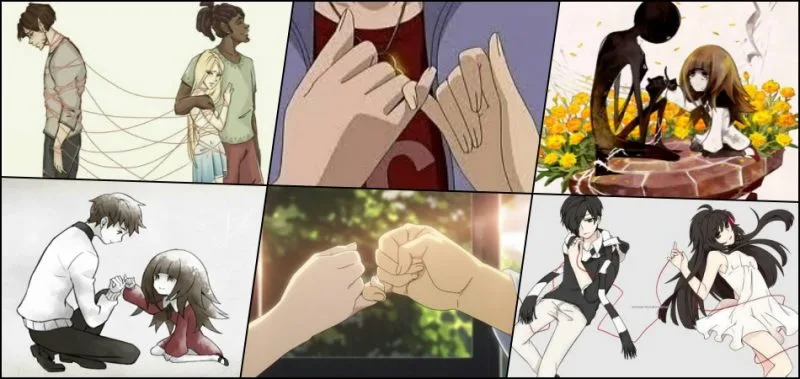
Animes, movies, and doramas related to Akai Ito
Both akai ito and yubikiri show up in anime, songs, and games. My most recent memory is the second opening of Oreimo. A few works worth sitting with:
Akai Ito — a dorama about Mei and Atsushi, classmates who share a birthday and not much else, until the red thread starts doing its job. If you want the motif with its own name on the poster, start here.
Koizora — a dorama and film born from a mobile story. Mika wants to fall in love as soon as she enters high school, then a mysterious boy starts calling. It is not a lecture on Yue Lao, but it is the kind of doomed romance Japan keeps hanging on that same invisible string.
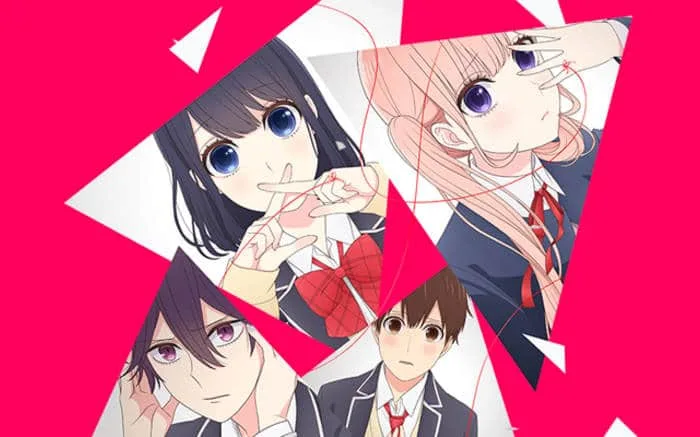
Koi to Uso — an anime that asks what happens if the state, not the moon god, chooses your spouse. If you already love someone else, does the red thread still count?
Kimi no Na wa — the 2016 film everyone dragged their friends to see. Two teenagers swap bodies across a distance they cannot explain, and Makoto Shinkai literally draws a red thread into the frame. Watch it even if you think you already know the twist.
Curiosities involving the red thread of destiny
In India there is a red thread called Rakhi, used in Raksha Bandhan. It marks a bond between a brother and a sister and works as a talisman of protection. It is a literal cord, usually tied around the wrist, and it is not trying to do the same job as Yue Lao's ankle string.
If you want the Japanese version in a shrine instead of a subtitle, Kawagoe Hikawa Shrine in Saitama is the usual stop. People go there for matchmaking, and the shrine sells a red pencil — akai enpitsu — meant as a stand-in for the thread: the more you use it, the shorter the distance. In some wedding rites there, a red cord is tied around the couple's left little fingers.
There are songs that mention or lean on the legend, such as Red Chord by Frames; Tip of My Tongue by The Civil Wars; L'espoir ~Mahō no Akai Ito~; Nankai Renai by Gumi; Dive Bar by The Tower and The Fool, and many others.
Even in the game Zelda: Skyward Sword, one of my favorite franchises, Ghirahim tells Link they are bound by a thread of fate. The Japanese line is the red string; the English script softens it, then Ghirahim offers to dye that thread red. He later received a related attack in Hyrule Warriors.
There are movies and doramas that nod at akai ito, such as Dolls, Touch, Hanamuko wa 18sai, Ashurajou no Hitomi, and others. Anime references pile up too: Black Clover, Tsuki ga Kirei, Ranma ½, Toradora, Inuyasha, Pokémon, Naruto. Can you remember one that I skipped?
When was the last time you ran into akai ito in a Japanese work? If you are more curious about how people actually date than about moon gods, start with what dating is like in Japan or the small gesture of grabbing a boy's clothing. Leave a comment if a scene comes to mind — and share it, if you must.

Community
Comments
0 comments
There are no published comments in this language yet.
Send comment