
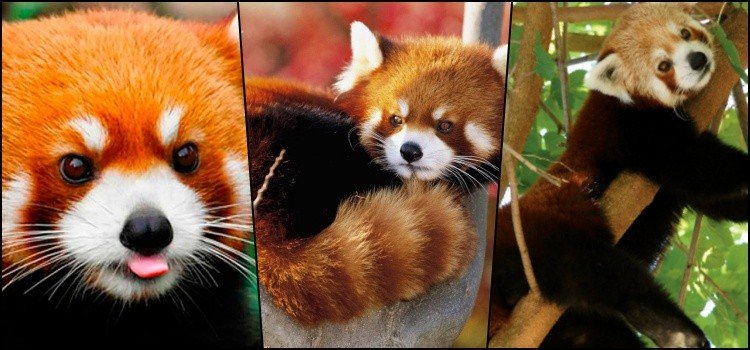
Do you know the red panda? Often confused with a fox, a bear, a raccoon, and even a cat, it still sits on millions of computers thanks to the Firefox browser. The name comes from an old nickname for this animal — firefox, or fire panda — even though the logo looks like a fox wrapped around the globe.
The red panda is the only living member of the Ailuridae family, native to the Himalayas and southern China. It is not a small giant panda and not a raccoon painted red. It is about the size of a cat, with reddish-brown fur and a long, fluffy tail. It lives in temperate forests with bamboo groves, and bamboo leaves make up most of its diet. Eggs, insects, and even small mammals only show up now and then.
How the red panda lives
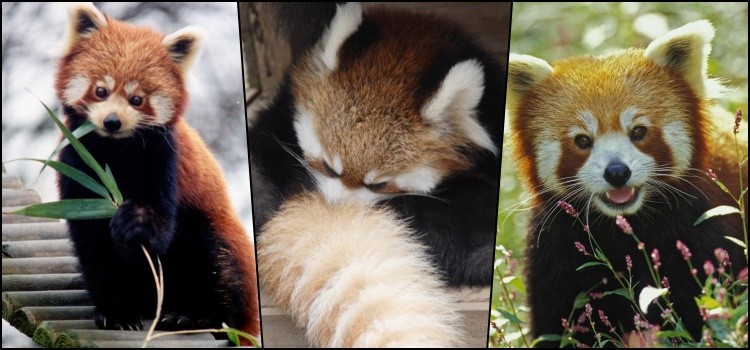
The red panda is arboreal and climbs with real skill. It uses its tail for balance and a false thumb to grip branches and bamboo. Flexible ankles even let it walk headfirst down a trunk, something few mammals can do. Head and body usually measure 51 to 64 centimeters, and the tail adds another 28 to 49 centimeters. Weight is often around 3 to 6 kilograms in Himalayan animals and can go a little higher in the Chinese form, which also tends to look a deeper red. The ringed tail is one reason people keep comparing it to a raccoon.
Bamboo can make up about 95 percent of what it eats, but the animal digests only a fraction of each mouthful. That is why so much of the day goes to eating and sleeping: the diet is low in nutrients, and a red panda may need to take in a fifth to a third of its body weight in leaves and shoots. Fruit, roots, eggs, insects, or a small mammal are extras, not the main plate.
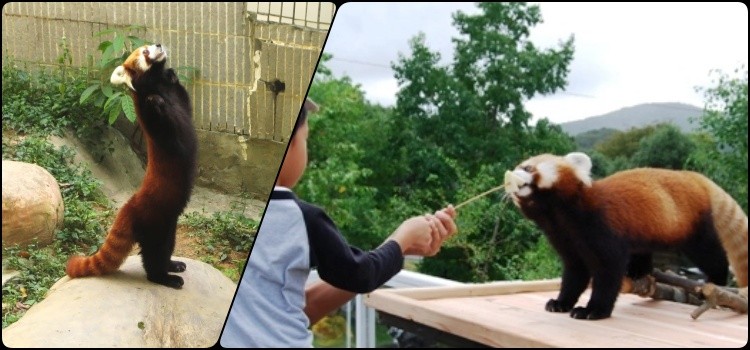
In Japan, the red panda Futa (風太) from Chiba Zoological Park became famous around 2005 for standing on his hind legs for about ten seconds. Crowds grew, souvenirs appeared, and he even turned up in a soft-drink commercial. At Akiyoshidai Safari Land in Yamaguchi, visitors can watch red pandas up close, including from a restaurant that looks onto their enclosure. In Japanese the animal is usually called ressā panda (レッサーパンダ), “lesser panda,” the same naming habit you find next to other animals in Japanese. Later, another red panda — Retsuko from Aggretsuko — turned the same face into an office worker who screams death metal after hours, which is why it also shows up among anime with animals.
Females give birth in a nest inside a hollow tree or a rock crevice after a pregnancy that can last several months, including delayed implantation. Litters are often one or two cubs, sometimes up to four, and the young stay with the mother for about a year. In the wild, many red pandas live around 8 to 10 years. In zoos they often reach about 15. The species has been listed as endangered, mainly because its mountain forest keeps shrinking and breaking into isolated patches. Besides China and the Himalayas, red pandas still live in India, Myanmar, Bhutan, and Nepal.
Turning Red, the Pixar film
In March 2022, Pixar released Turning Red, directed by Domee Shi. The film follows 13-year-old Meilin “Mei” Lee, a Chinese-Canadian girl in Toronto who transforms into a giant red panda whenever a strong emotion hits. It uses that body as a way to talk about puberty, family pressure, and a few taboos. Although the panda in the animation is giant, a real red panda is actually quite small, like a cat.
So the next time someone points at the Firefox icon and says “fox,” you can answer with the Himalayan climber that lent the name — and with Futa, who made ten seconds of standing up a nationwide joke in Japan.




Community
Comments
0 comments
There are no published comments in this language yet.
Send comment