
Most grown-ups look at a drawing of a boa constrictor digesting an elephant and see a hat. That small joke, right at the start of The Little Prince, already tells you what Antoine de Saint-Exupéry is after: not a tidy adventure for children, but a story about how easily we trade imagination for “serious” talk.
The novella follows a pilot stranded in the Sahara who meets a boy from asteroid B-612. Between plane repairs and desert thirst, the prince asks for a sheep, tells stories of a rose, and walks through adult worlds that look busy and somehow empty. The pages stay light; the questions do not.
Contents 5
Complete summary of The Little Prince
As a child, the narrator draws a boa constrictor that has swallowed an elephant. Adults only see a hat, so he sets drawing aside and becomes a pilot. Years later, after a crash in the Sahara, a small blond traveler appears and makes one request: “Draw me a sheep.” When the pilot finally sketches a box and says the sheep is inside, the prince is satisfied. He can already see what adults miss.
Bit by bit, the prince explains his home. Asteroid B-612 is tiny—three volcanoes, baobab seeds that must be pulled early, and one rose. He cleaned the planet, watered the flower, and built a glass globe against the cold. The rose was vain and demanding; he loved her and still left, unsure how to stay close without feeling small.
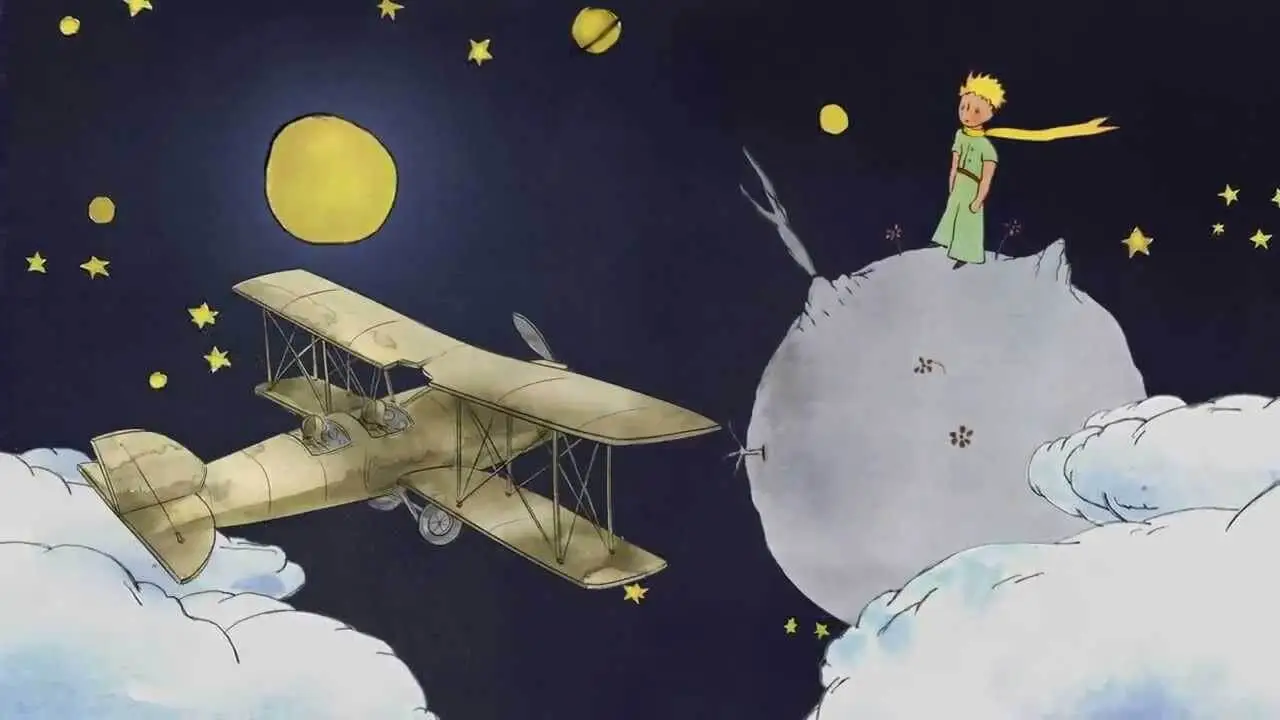
Before Earth, he visits six lonely planets, each with one adult trapped in a single idea:
- The king, who “rules” everyone, but only gives orders that reality already allows.
- The vain man, who lives for applause on a planet with no audience.
- The drunkard, who drinks to forget the shame of drinking.
- The businessman, who counts stars as property and never looks up for beauty.
- The lamplighter, lighting and snuffing a lamp every minute because “orders are orders”—the only one the prince almost respects for loyalty, even if the task is absurd.
- The geographer, who records nothing first-hand and sends explorers out while he stays put.
Those meetings sketch grown-up life as habit, vanity, ownership, and paperwork without wonder. Earth feels huge and loud after that. The prince meets a snake that can send him “home,” a desert flower, an echo on a mountain, then a garden of five thousand roses. Seeing so many identical flowers breaks him: his rose had claimed to be unique.
The fox, the rose, and what “taming” means
A fox approaches and asks to be tamed. Taming, the fox explains, is creating ties: something ordinary becomes irreplaceable because you gave it time. Wheat fields will never look the same once the fox’s golden fur is bound to them in memory. The prince understands his rose again—not because she is the only rose in the universe, but because she is the one he watered, sheltered, and listened to.
Before they part, the fox leaves the line readers never forget: what is essential is invisible to the eye. You only see clearly with the heart. He also adds the hard half of love: you become responsible forever for what you have tamed. That is why the rose is not a decoration in the book; she is a promise the prince has to answer.
On Earth he also passes a railway switchman and a merchant selling thirst-quenching pills—more adult shortcuts that save minutes and spend meaning. Later, nearly dying of thirst, the pilot and the prince find a well. Water tastes different when it is earned together. Friendship, like the fox said, changes ordinary things.
How does The Little Prince end?
Missing his rose, the prince decides he must return to B-612. The snake he met earlier will “help” him leave a body that is too heavy for the journey. He asks the pilot not to watch, warns that it may look like death, and tries to offer comfort: when the pilot looks at the stars, he will hear the prince’s laughter, and all the stars will seem to laugh.
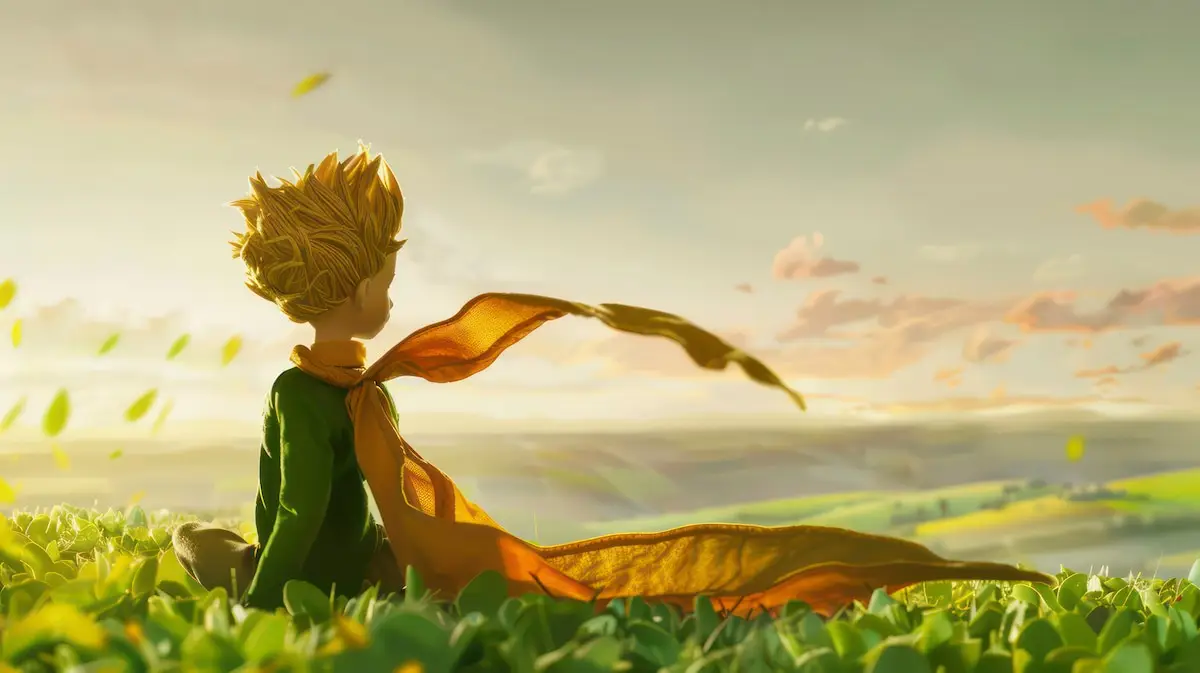
The snake bites the prince’s ankle. He falls gently, without a cry. The next morning the pilot finds no body. He repairs his plane and leaves the desert, but the story does not close with a neat certificate of what happened. Six years later, the narrator still wonders: did the sheep eat the rose? He forgot to draw a strap on the sheep’s muzzle. That single unfinished detail, he says, changes how he sees the whole sky.
The ending stays deliberately open. Some readers hear a return home; others hear a death dressed as departure; many hold both at once. What the book refuses to do is treat the farewell as trivial. The last landscape—the empty desert where the prince fell—is called both the saddest and the loveliest place in the world. Love leaves a mark that looks like absence and still lights the stars.
The Little Prince in Japan: Hoshi no Ōjisama
Japan did not only translate the book; it gave the story another life on television. In 1978–1979, the anime Hoshi no Ōjisama Puchi Puransu (星の王子さま プチ・プランス), known in English as The Adventures of the Little Prince, aired on TV Asahi. Produced by Knack Productions across 39 episodes, it kept the soft, melancholic tone that Japanese audiences already associate with the French classic.
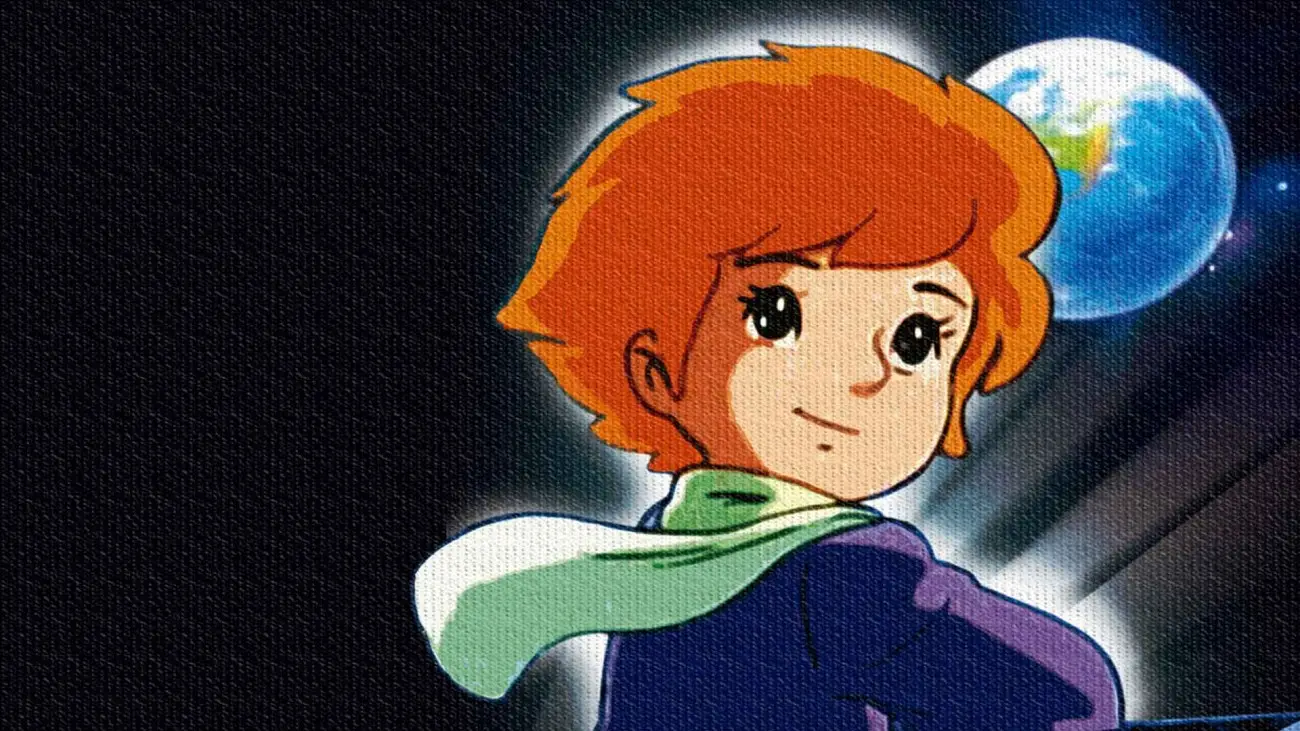
The series is freer than a page-for-page remake: the prince travels on a comet and meets new companions, but the emotional core—friendship, loneliness, responsibility—stays close to Saint-Exupéry. For many viewers outside France, that anime was the first door into the story. In Japan the title Hoshi no Ōjisama (“the prince of the stars”) still signals both the novella and that late-1970s animation, which later returned on home video and in remastered releases.
If you enjoy how Japanese animation reworks western classics into something tender and slightly odd, the same curiosity that leads to inspirational anime about dreams or fantasy journeys across other worlds also fits this little traveler from B-612.
Why the book still matters
Strip away nostalgia and the plot is still sharp. Adults misread drawings. Kings need subjects more than justice. Businessmen own stars they never admire. A fox teaches that time spent is what makes someone unique. A rose is fragile and still worth the work. The ending refuses to hand you a single “correct” moral so you can close the cover and forget it.
Reread it as a child story if you like. Reread it as a farewell, a satire of grown-up logic, or a quiet argument for responsibility. Or meet it again through the Japanese anime that carried the prince into living rooms in the late seventies. Either way, the essential part stays the same: the things that matter most are the ones you cannot count, measure, or sell—and once you have tamed them, you answer for them.


Community
Comments
0 comments
There are no published comments in this language yet.
Send comment