

Japan and China are often treated as if they were the same, but in reality they are very different countries. They share some historical connections, especially through writing and philosophy, yet their languages, customs, politics, and daily habits developed in distinct ways.
This article gives a simple overview of the biggest differences between the two countries. If you want to compare Japan with more context, it also helps to read our article on facts and curiosities about Japan and our guide to Hiragana and Katakana.
Contents 7
Differences in everyday life
In Japan, public life tends to place a strong value on order, consideration, and social etiquette. In China, public life also has its own rules and traditions, but the atmosphere often feels more direct and faster in many cities.
Politically, the two countries are also very different. Japan is a constitutional monarchy with democratic institutions, while China follows a completely different political model. That affects media, internet access, and the level of individual freedom people experience in daily life.
Differences in language and writing
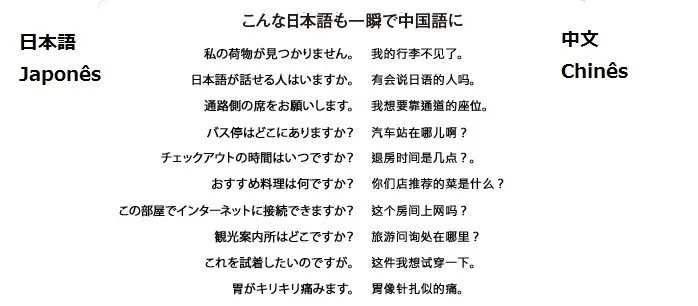
One of the most common confusions is language. Japanese is not a Chinese language, even though it was historically influenced by Chinese writing. Japanese uses kana and kanji, while Chinese is built around characters and tonal pronunciation.
If you want a deeper explanation, we already have a detailed article about the differences between Chinese and Japanese. It makes the relationship between the two languages much easier to understand.
Knowing the basics of Japanese writing also helps a lot. That is why our kana guide is useful when you want to study Japanese more seriously.
Food and cuisine
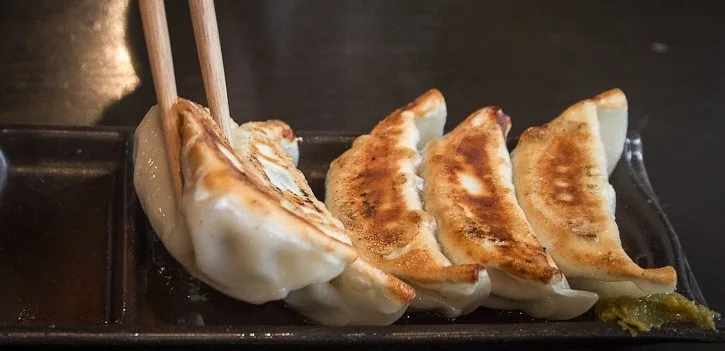
The cuisines of Japan and China share some roots, but they are not the same. Rice, noodles, and vegetables matter in both countries, yet the cooking style, seasoning, and food culture differ a lot. Many dishes that people now consider typically Japanese were adapted from Chinese cuisine over time.
Ramen, gyoza, and several other dishes became strongly associated with Japan, even when their origins are tied to China. China, on the other hand, has a much broader regional diversity in food, while Japan refined many influences into a very distinct national style.
Culture, religion, and behavior
Japan has long been shaped by Shintoism and Buddhism. China is also strongly connected to Buddhism, Confucianism, and Taoism, but the way these traditions appear in daily life is different. The role of religion, tradition, and public behavior changes a lot from one society to the other.
Japan often emphasizes harmony, restraint, and indirect communication. China is usually perceived as more direct in many social situations, and relationships often work under different expectations. That does not make one country better than the other; it only shows how each society has its own logic.
A few quick differences
- Japan is an island nation, while China is a continental country.
- Japan often celebrates the Western New Year, not the Chinese New Year.
- Japanese and Chinese names tend to follow different sound patterns and structures.
- In Japan, etiquette is especially visible in trains, greetings, and public spaces.
- China often feels faster and louder in large cities, with a different public rhythm.
If you like cultural comparisons like this, you may also enjoy our articles about Japanese and Western thinking and why Asians have slanted eyes.
Can you really tell them apart at first glance?
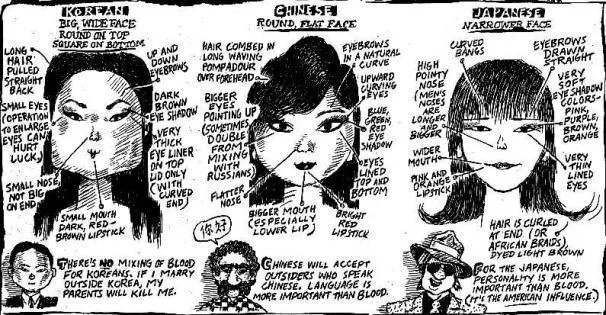
Honestly, only in a very rough way, and never with enough certainty to make broad assumptions. Clothing, speech, gestures, and context usually reveal more than facial features do. Even inside each country, regional variation is huge, so general rules always have limits.
That is why it is better to pay attention to language, behavior, and cultural cues instead of jumping to conclusions. The more closely you look, the less simple the comparison becomes.
If you want to keep exploring the topic, check our list of the 100 most popular Japanese foods. And if you like to verify words in a dictionary, Jisho is a good place to start.
Videos to help you spot the differences
Here are two videos that help show the topic from another angle. When you try to tell Japanese, Korean, and Chinese people apart, what detail do you notice first?
Did you used to think Japan and China were much more similar than they really are?




Community
Comments
0 comments
There are no published comments in this language yet.
Send comment