

If you have spent any time looking at faces from different parts of the world, you have probably noticed a small but recurring feature: in many people from Japan, Korea, China, and other parts of East Asia, the eye area tends to look narrower than in people from Europe. In this article, we will look at the anatomy behind that impression, the most popular explanations people give for it, and a few stubborn myths that are worth leaving behind — calmly, and without lumping entire populations together.
One explanation you will find repeated in pop-science videos and travel quizzes goes like this: the narrower-looking eye area is an adaptation to the icy, snowy regions of northern Asia. The palpebral fissure, the opening between the upper and lower lids, is supposedly smaller to protect the eye from cold and from the brightness reflected by snow. The hypothesis is everywhere, but it belongs to a category of claims that scientists discuss skeptically and rarely back up with hard data.
Before we go further, an important caveat: within the populations of East Asia there is enormous variation in eye shape. Some people have a pronounced epicanthic fold, others have a very faint one, and others have none at all. The same fold also shows up in South Asia, Southeast Asia, Polynesia, among indigenous peoples of the Americas, and in parts of Africa. It is not the exclusive property of a single region — it is a common anatomical variation of our species.
The eye area in East Asia
The anatomical key is a small skin fold at the inner corner of the eye called the epicanthic fold. It covers part of the lacrimal caruncle, the small pinkish area at the inner corner that is more openly visible in many people of European descent. In many East Asian populations the fold is more pronounced, which makes the eye area look narrower overall — even though the eyeball itself is no smaller than anywhere else.
There is a second anatomical detail that often goes along with it: the suprapalpebral fold, the crease of the upper eyelid, is often shallow or absent in many people of East Asian descent. In many people of European descent, that crease sits a few millimeters above the lash line and creates a clear fold; in many East Asian eyes, the lid runs smoother from brow to lash. Together, the epicanthic fold and the absent or shallow suprapalpebral fold produce the visual impression that is colloquially described as a narrower eye shape.
It is worth saying out loud: this is a variation of human anatomy, not a ranking. The same range exists in Europe — some people have a very high crease, others a flat one, and some have a light epicanthic fold, including many European babies at birth and some adults with specific genetic conditions. That alone shows how normal and widespread the shape really is.
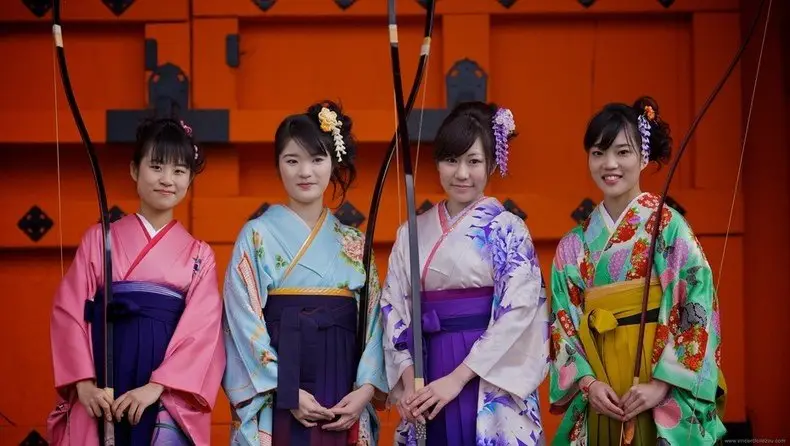
Is the "cold theory" actually holdable?
The popular idea that the epicanthic fold evolved as protection against cold and snow blindness sounds plausible on the surface. Once you look at it more carefully, a few problems show up.
First, there are many very cold regions in the world — in Northern Europe, Siberia, North America, Patagonia — whose populations show little to no epicanthic fold. If the fold were simply a climate adaptation, you would expect it to be just as pronounced in those places, and it is not. Second, the same fold appears in indigenous populations in warm regions of the Americas, in Central Africa, in Southeast Asia, and in Polynesia — under climatic conditions that are hard to reconcile with the cold theory. Many European babies are also born with a visible epicanthic fold that often fades on its own during childhood.
From a genetic point of view, eye shape is a complex trait shaped by many genes, including variants that also influence the development of the skull and the area around the eye. Which of those variants become more common in a given population depends on a mix of factors: the group's history, mixing with neighboring populations, chance, and cultural practices. Climate is only one possible influence among several, and probably not the most important one.
The personal view that the author of an earlier version of this text held is easy to sum up: the appeal of the cold theory comes more from the simplicity of its story than from its scientific substance. Anyone curious about the genetics of human diversity will quickly find more careful explanations than the snow-glare myth.

In a time when travel, study, and pop culture put populations around the world in constant contact, the averages in many countries are also changing. That does not mean that one eye shape is disappearing — it means that the diversity that was always there is becoming more visible in every population. Anyone walking around Tokyo, Seoul, or Shanghai with open eyes will see that variety every single day.
Black, brown, blue, hazel, almond-shaped, round, narrow, and "cat-like" eyes exist in every major city on earth. They are variations of the same human anatomy, not a hierarchy. If you want to dig into the topics of inheritance and human diversity, the article on common myths and stereotypes about Japanese culture offers useful background on how these stories get built, and our guide on why Japanese people may look similar to each other takes a careful look at the related question of facial features and ancestry.
What do you think? What is your own experience with the variety of human eye shapes, in Asia, in Europe, or anywhere else you have lived or traveled? Is there a theory on this topic that convinced you, or one that left you skeptical? Share your view in the comments.






Community
Comments
0 comments
There are no published comments in this language yet.
Send comment