

Some think the Japanese are perverted. Others believe Japanese morality is unusually high. Who is right? The argument is almost never about theft or violence. It is about indecency, sex, and what a society lets people see in public.
In the West, Japan picked up a dirty reputation through anime, games, manga, and the bizarre +18 things the country keeps inventing. At the same time, visitors keep meeting a country of bows, quiet trains, and people who would rather swallow a sentence than shout something crude at a stranger. Both pictures survive because they describe different rooms of the same house.

Japanese people are known for education, respect, and humility. Government surveys also keep showing a lot of young adults who simply are not dating. That is the real split: a loud erotic industry next to a public life that treats sex as something you do not drag onto the sidewalk.
Contents 4
High morals — at least where other people can see them
Japanese morality is less a list of sins carved in stone and more a reading of the room. Something is not automatically right or wrong by itself. It depends on the situation and on how other people will see it. Japan is not bound by the same religious laws that police fornication, adultery, and “shameful conduct” in much of the West. That does not mean there is no code. The code is social, and it is strict.
The useful names here are honne (本音, true feeling) and tatemae (建前, the public face). What you want and what you show are supposed to live apart. On the street, in the office, on the train, tatemae wins: no loud sex talk, no catcalling, no scene. The private mind can be another story, and that is where Westerners get lost.
While Western pop music, films, and everyday conversation often put sex in the middle of the table, Japanese people still avoid slang and sexual innuendo in public. A lot of mainstream J-pop stays on romance, seasons, work, and heartbreak without turning the chorus into a bedroom inventory.
Many visitors comment that Japanese people are extremely shy and polite. You will not hear whistles or words like cutie, delicious, hot thrown at a passerby. If someone shows the middle finger, they are probably speaking Japanese sign language.

Custom and social pressure do a lot of the work that sermons do elsewhere. Plenty of young people are not chasing “immoral” nightlife because their heads are elsewhere — exams, work, games, or simply no interest. The National Institute of Population and Social Security Research’s 2021 fertility survey found that 52.6% of unmarried women aged 20–24 reported no sexual experience, and about one in three unmarried men and women said they were not particularly interested in a relationship with the opposite sex. That is not a nation of people pawing each other on the commute.
Japan has perverts, and more than a few. They tend to be the people who went looking for it. In Brazil, the noise is in the street: music, jokes, ads, conversations that do not wait for consent. It is genuinely hard to keep a clean head there if you want one. In Japan, the volume drops the moment you leave the shop.
The Japan that looks perverted from the outside
Japanese culture runs on different standards, and some of them unsettle Westerners on first contact. Mixed baths, kanchō, sensual images in ordinary media, and a long menu of fetishes make it easy to conclude that the whole country is perverted.

Western stereotypes of a “licentious Japan” go back to the late 19th century, when the country opened and Japanese art flooded Europe. Across the 20th century, Japan also became famous for inventing things — including products nobody asked for.
That is how you get headlines about schoolgirl-scent novelties, bars where women talk frankly about masturbation, or campaigns to grope breasts as a charity stunt. Some Japanese people will also walk up to a stranger with a proposal that would freeze a Brazilian or an American on the spot. And then there is the mountain of adult anime and manga. I do not think we even need to comment on certain titles.

None of that means Japan has “no morality.” It means the public rule and the commercial rule are not the same document. Article 175 of the Penal Code still treats the distribution of obscene material as a crime, which is why genitals in Japanese porn and adult manga come with mosaics. The Constitution talks about freedom of expression; the bookstore still blacks out what the law calls waisetsu. That is a moral line, just not the Christian one Westerners expect.
Did I personally find the Japanese perverted?
When you are surrounded by Japanese people, sex rarely enters the conversation. You will not hear the slang or the music that turns every bus ride in Brazil into a music video. Public composure, though, is not the same as a city with nothing to sell.
Walk Akihabara or Nipponbashi and you will find girls in uniforms handing out flyers to massage parlors that want your wallet. In the more innocent stalls, maids invite you in, or someone tries to empty your coins into UFO Catcher machines.
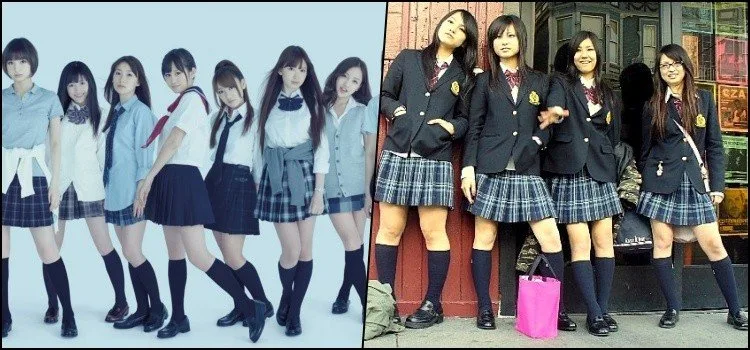
Some schoolgirls shorten their skirts without thinking twice about it. On a train, two of them sat in front of me, opened their legs, showed their panties, and giggled...
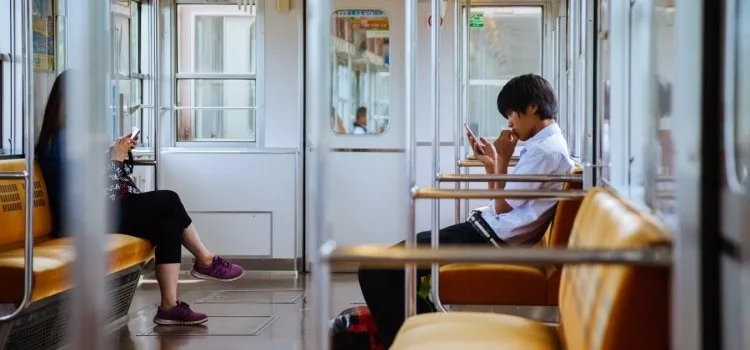
Walk into a random shop or newsstand and you will still find a fat +18 shelf. Some stores do not even bother hiding an indecent cover at the door. Fortunately, there is still censorship in Japan — the mosaic, the adult section, the social freeze if you act that material out in public.
I personally found Japan a relief for anyone who does not enjoy a perverted environment the way Brazil serves it. In Japan you have to go looking for the dirty stuff. In Brazil it finds you even when you did not ask.
So, are the Japanese perverted or not?
The idea that Japanese people are simply perverts often comes from a kind of cognitive dissonance. A Westerner lands, remembers that Japan is not a Western country, and then treats every unfamiliar habit as a moral emergency. Hasty conclusions follow.

Japan is close to being “perverted” and far from it at the same time. The culture pushes people to follow rules and keep face. That pressure leaks sideways into anime, manga, TV ads, and a commercial sex industry that can look unhinged if you only meet it through a screen.
On fetishes and erotic invention, Japan is unusually open — not because nobody has a conscience, but because honne was never supposed to be performed at the office. New ideas get tried. Some of them are stupid. Some of them sell.
It has also become a media sport to hunt for the most perverted Japanese object, clip, or street scene and share it for clicks. Fetishes and ugly behavior exist in every country. Japan just exports its weirdness with better packaging.

Indians are not globally branded as perverts for compiling the Kama Sutra. Why should Japanese people carry that label for manga, hostess bars, or a vending-machine gag? We all have a dirty side. The question is whether desire is allowed to run the public square.
I personally feel offended living in an environment where sexual slang and songs that spell out the act are popular and ordinary. I am quite sure I would call Brazilians perverted (without generalizing — not all). Japan just hides the same animal better, and then sells it in a shop you have to choose to enter.




Community
Comments
0 comments
There are no published comments in this language yet.
Send comment