
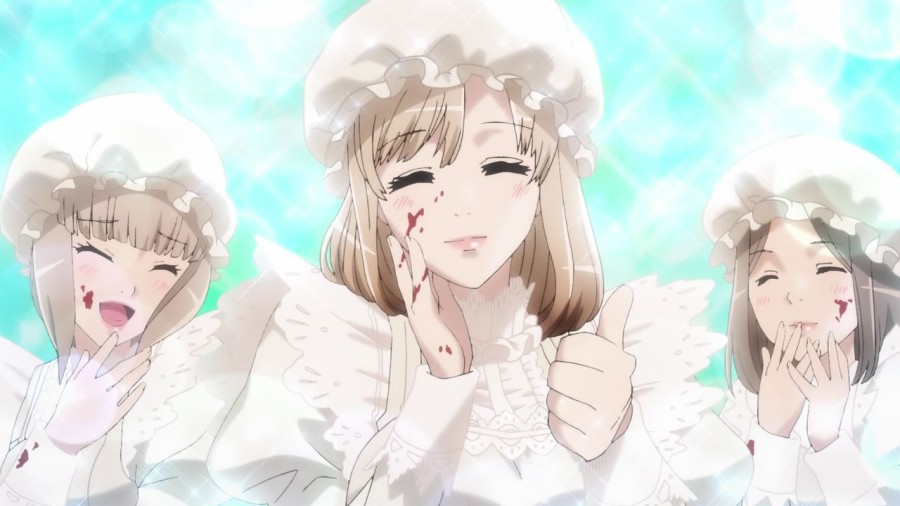
Have you seen in Japanese Animes or Streamings the characters saying ara ara? In this article, we will understand the true origin and meaning of the term ararara [あら‐あら] frequently seen in animes like Kimetsu no Yaiba and Hataraku Saibou.
あらあら、こんなに泥んこになって
araara, konnani doronko ni natte
Wow, I got all muddy!
The meaning of Ara [荒ら]
The expression ara ara is spoken when you are impressed or surprised by something. It is mainly used by women.
Ara ara does not just express a small surprise but also an adorable feeling. Sometimes it can be used sarcastically, to mock and provoke someone.
This idiomatic expression aims to present a tone of surprise, possibly containing a slightly sarcastic intent. It would sound like “Oh”, “Well well”, “Oh heavens”, and “Oh my god”.
When we consult the Japanese dictionary, we have the following definition for ara [あら]: oh; ah
In the case of the combination of ara ara, we can find words that approximately, but when combined with [し] it becomes an adjective meaning rough, ragged, hard, or wild.

Different Meanings of Ara
The term ara separately can mean many things, especially if written with different ideograms. It can refer to the name of a fish or even to a surname of a person.
In the southern region of Japan, especially in the Okinawa region, dialects like Miyako and Ryukyuan use the word ara written in hiragana to indicate the peel of a fruit.

When is Ara Ara used?
Older women often use Ara Ara when they encounter pets, children, or younger people doing something wrong and they find it funny or adorable.
The phrase can also be frequently used to suggest the sexual intentions of a female character towards a younger man.
It may carry little or no strange connotation. In any case, I would be careful with this word since memes and otaku culture have elevated the meanings of the word even more.
This expression is usually accompanied by a hand on the character’s face or mouth with closed eyes and a smile on the lips.

What is the origin of Ara Ara?
The expression is quite old and can be found in many records from around 1200, but its original meaning may differ quite a bit from the current one.
The phrase is generally used in a seductive and flirty manner, but in reality, it has always been on the lips of the people, especially among Japanese ladies. Only today, because of animes and mangas, the word has fallen more into the vocabulary of young people.
Although the exact origin of the phrase is unknown, the expression “Ara Ara” has appeared in numerous mangas and anime series and became popular on the internet after 2008 through forums like 4chan.
Although the expression has been seen in animes since before 2000, only now has the term gone viral as a meme, mainly because of TikTok and game streaming from anime characters.
Recently, characters from Kimetsu no Yaiba and Hataraku Saibou have also been responsible for further popularizing the expression ara ara.

Characters that say Ara ara
Speaking of classic and old animes, in the Anime Love Hina, the character Mutsumi Otohime often says ara ara while placing her hand on her mouth as a traditional gesture of the expression.
The characters that stand out the most for the expression are Shinobu from Demon Slayer and Kurumi Tokisaki from Date A Live and Kaguya from Kaguya Sama Love Wars. Recently, characters from Hataraku Saibou have also become popular.
Some characters frequently say ara ara, while others tend to use ara in their sentences often, but are not popular for frequently saying ara ara.

- Alicia Florence – Aria The Animation;
- Benio Yonomori – Engaged To The Unidentified;
- Elsa Granhiert – Re:Zero;
- Jahy – Jahī-sama wa Kujikenai!
- Kasumi Tendo – Ranma 1/2;
- Kongou Mitsuko – A Certain Scientific Railgun;
- Kurumi Tokisaki – Date A Live;
- Lucoa – Miss Kobayashi’s Dragon Maid;
- Macrophage – Cells At Work;
- Majo – Goblin Slayer;
- Mamako Oosuki – Okaa-san Online;
- Mirajane Strauss – Fairy Tail;
- Raphiel – Gabriel Dropout;
- Rin Kashii – Battle Game In 5 Seconds;
- Satou’s Aunt – Happy Sugar Life;
- Shinobu – Demon Slayer;
- Shizuka Marikawa – High School Of The Dead;
Compilations and Videos of Ara ara
Below are some compilations of characters saying ara ara:
Alternatives to the expression Ara Ara
This expression of surprise is very common in the Japanese language, and you have probably seen different expressions that have practically the same meaning, such as:
- あれあれあれ [are are are]
- あれー [aree]
- あらー [araa]
- あららららら
- あらあらー
- ありありー
- ありゃりゃりゃりゃ
- あれ~ あら~
- おやおや あれあれ~
- あれれ
- あれれれれれ
- ありゃりゃ
- あんりまあ
- あらやだ
- あらあらあらー
- あらあら ヒューヒュー だ ね !
- あらあら ごきげんよう。
- あらあら 見 て は 駄目。
- ダメ よ あらあら。
Meaning of Are Are
It means practically the same thing as ara ara, it is a word spoken when you are surprised or disappointed by something like “this again”?
Meaning of Araara kashiko [あらあらかしこ]
At the end of letters, it is common to find the expression ara ara kashiko which conveys the idea of something like: The words of this letter are not enough to convey my thoughts. We apologize for the inconvenience, but we appreciate your broad, warm, and sincere understanding of what I would like to convey.
Leave a Reply