
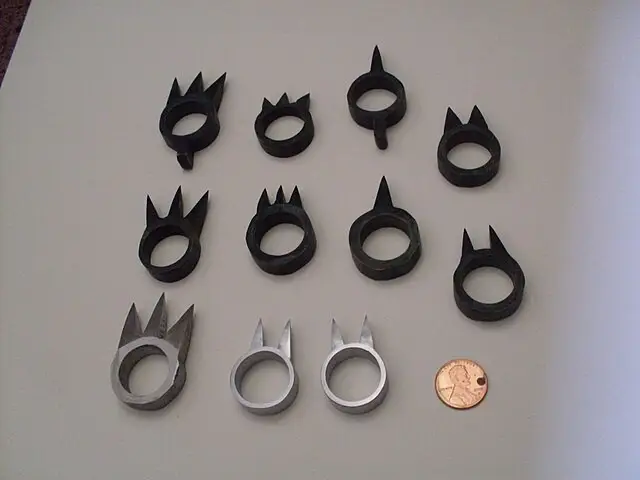
The kakute is a small metal ring fitted with spikes, usually described as a concealed weapon associated with ninja and especially kunoichi. It looks modest compared with swords or chain weapons, but that is exactly what makes it memorable: a ring can hide in plain sight, turn a grab into a puncture, and add pain or control at very close range.
Most descriptions place the kakute on the middle finger with the points turned inward toward the palm. In that position, the spikes stayed harder to notice until the user closed the hand, grabbed an arm, or struck a soft target. If you already know the broader world of ninjutsu, the logic is familiar: concealment, timing, and surprise mattered as much as raw force.
Contents 5
What was a kakute?
In the most common modern descriptions, a kakute was an iron or steel ring with one to several spikes. Rather than functioning as a primary battlefield weapon, it belonged to the category of small hidden tools that became useful only when distance had already collapsed. That is why the kakute appears so often in discussions of stealth, disguise, and sudden close-range violence.
Its design was simple, but simplicity was the point. A concealed ring could travel with the body, required little space, and did not announce itself from far away. In a setting where deception and improvised advantage were prized, a weapon like this fit the wider image of shinobi tactics far better than something large or ceremonial.
How was the ring used?
The kakute is usually described as a weapon for grappling distance. The spikes could make a grip more painful, tear exposed skin, or punish someone during a grab, choke, or short strike. Instead of relying on a wide swing, it worked through pressure, leverage, and timing.
- Hidden carry: the ring could be worn without drawing as much attention as a blade or staff.
- Close-range control: spikes made grabs and clinches more dangerous for the opponent.
- Surprise attacks: the weapon made the most sense when used before the target realized it was there.
- Pain and distraction: even a small puncture could break focus and create an opening.
Many retellings also say the spikes were sometimes coated in poison. That claim is deeply tied to the popular image of ninja weapons, but the surviving evidence is much thinner than the legend itself. It is safer to treat poison as part of the traditional lore around the kakute, not as something that can be documented in every historical case.
Why is the kakute often linked to kunoichi?
The kakute is frequently associated with kunoichi, the women connected to ninja lore, because a ring could blend into ordinary dress more easily than larger weapons. That does not mean every woman in covert work used one, but it helps explain why the image endured. Jewelry already belonged to the body, so a dangerous ring carried a built-in disguise.
This association also shows how much ninja culture depended on presentation. A hidden weapon was not only about damage; it was about entering a space without inviting suspicion. That same tension between ordinary appearance and sudden violence is one reason the kakute still stands out among the many tools discussed in articles about ninja weapons.
History and myth: how much do we really know?
The hardest part of writing about the kakute is separating documented martial history from later storytelling. Detailed records about ninja activity are uneven, and many familiar details come from later manuals, martial arts lineages, museum interpretation, and modern pop culture. The weapon was real enough to appear in discussions of concealed arms, but exact claims about who used it, how often, and in which situations should be handled with care.
That caution matters because ninja history is full of exaggeration. Popular culture loves absolute statements about secret assassins, poisoned tools, and supernatural skill, while historians usually work with fragmentary evidence and later reconstructions. If you want a broader view of that gap, the article on myths about the ninja of feudal Japan helps explain why the legend grew so much larger than the surviving record.
Why the kakute still fascinates people
The kakute survives in memory because it captures an idea people immediately understand: danger hidden inside something small and ordinary. It is not the biggest or most destructive weapon linked to ninja tradition, but it may be one of the clearest examples of how concealment itself became part of the weapon.
That is why the ring keeps reappearing in books, museum collections, martial arts discussions, and modern fiction. The kakute sits at the intersection of material history and ninja legend, which makes it more interesting than a simple list of spikes and measurements ever could.





Community
Comments
0 comments
There are no published comments in this language yet.
Send comment