
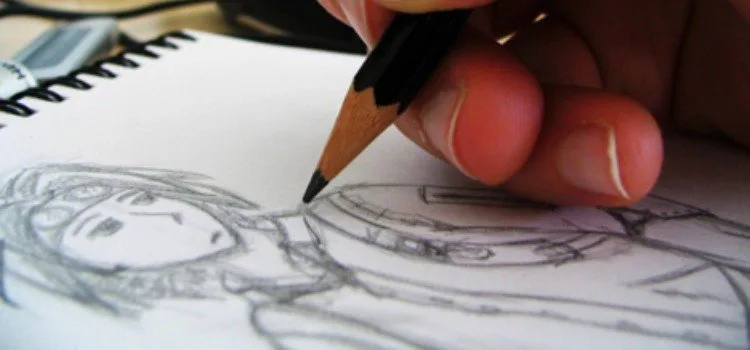
Do you dream of becoming an illustrator but don't know how to draw? Or do you already know how to draw something, but keep hitting the same difficulties? Maybe you feel a bit lost, thinking it's impossible because you "don't have the gift." After all, those who "are born with the gift" pick up a pencil and start drawing as babies, right?
Well, that's completely wrong! Of course there are people who can draw well from a very young age, but there are also those who only learn after they grow up and become good artists just the same. So forget this story of "gift" and go for it. Don't know how to draw? Stuck on the same parts? Let's try to solve that.
If you live in a city with an art scene, you will find drawing courses that teach from the first lines. They are not as numerous as language courses, for example, but community colleges, adult-education programs, and local art centers keep beginner studios open. Comic shops and libraries sometimes run shorter workshops. Consider location, cost, and schedule, then go check out the room. if possible, ask to attend a class.
Now, if there is no drawing school where you live, or if you don't have enough money to pay for a course, it gets a bit more difficult, but not impossible. Don't get discouraged. There is a way to learn to draw well without spending much.
Contents 4
Drawing tutorials on the internet
The internet is a great place to find cheap or free ways to learn. Search and you will find online classes, character walkthroughs, and videos that promise beautiful results in twenty minutes. Be careful: there are no miracles. A slick tutorial only helps if you put in the effort. Reading a hundred drawing tips does nothing if you never pick up paper and pencil. First, make a commitment to yourself to do your part. Are you ready? Then let's go.
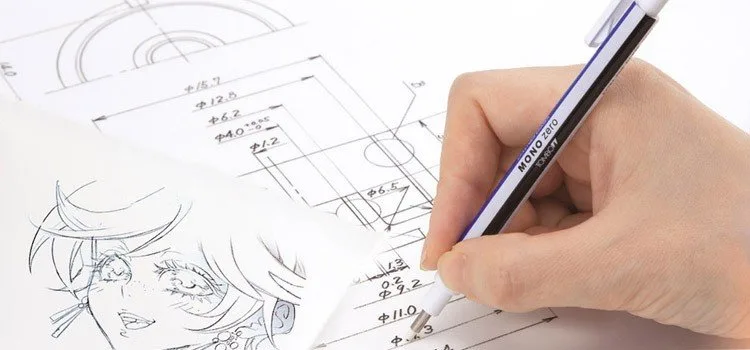
You also need to separate what works for you from what was made for someone else. A drawing tutorial aimed at professionals will probably not help yet, because it skips the boring parts you still need: a steady line, simple shapes, basic proportion. People who are starting need more basic information. Look for beginner playlists that start with lines and forms, not with a finished character.
Many people turn to YouTube, and you can really find a lot there. The useful part of video is watching how someone holds the pencil, how they ghost a stroke before committing, and where they start a face. Copying a character you like can keep you excited, which helps. A lesson that only shows a pretty result, with no construction underneath, will leave you stuck the moment you try a new pose.
The downside of an online class or a tips video is that afterwards you don't have the exercises on paper to use as a reference. You would have to play the video again, pause, and often the paused frame is too soft to see the details. To solve this, some channels sell booklets of their activities. That can be a good option if you already like the videos enough to invest. Before you pay, check recent comments from people who bought the booklets and actually received them. It's always good to be careful when shopping online.
Another problem is that the video you wanted may be in a language you do not speak. When the teacher explains a measurement that never appears on screen, you lose the point. Unless you already follow that teacher, start with English beginner lessons. the library is large enough now that you rarely need to wait for a translation.
Free drawing courses
Random clips leave gaps. A course with a sequence is easier to finish because each lesson assumes the last one. Two free programs come up constantly for people starting from zero.
Drawabox is a written, exercise-heavy path: confident lines, boxes in perspective, and the habit of drawing through forms. It is free, it is slow, and it feels strict. That strictness is the point. You are training control, not collecting pretty sketches.
Stan Prokopenko's Drawing Basics on Proko, with many lessons also on YouTube, treats drawing as a visual language: line quality, shape, perspective, value, and edges. Dozens of lessons stay free. the full course is paid, so check the site before you budget. A pencil and paper are enough for the free track. If you already want to work on a tablet, Ctrl+Paint is a clearer first library than jumping into a professional paint program.
Manga sites and comic blogs still help as a second layer: they collect references, talk about pencils, paper, and inking tools, and show how a page is built. You do not need a suitcase of supplies on day one. Paid platforms such as Domestika's Japanese art and manga courses can come later, once you know you will finish a structured class.
If manga is what you want to draw
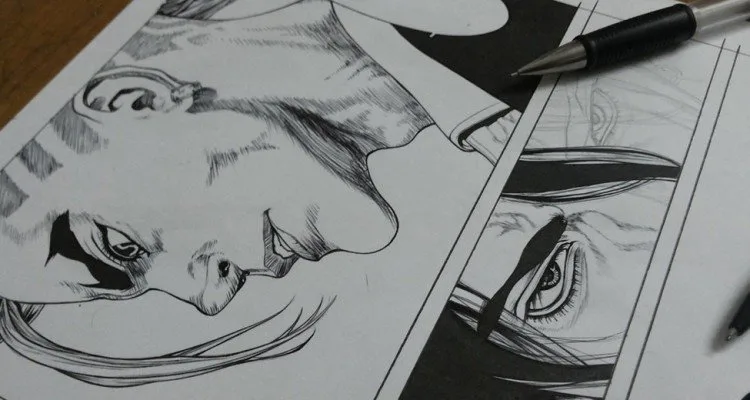
Copying panels you love is a legitimate beginner method, the way an apprentice copies a master. Do that as study, not as work you post as original. Manga faces look simple until the eyes sit a millimeter off and the whole head collapses. Instructors such as Mark Crilley keep sending people to life drawing even when the end style is stylized: you need real proportions before you can break them on purpose.
A city life-drawing drop-in, a plaster cast, or a friend sitting still for ten minutes will teach more about the skull than another clip about anime eyes. Once the construction holds, the style choices make sense: bigger eyes, a smaller mouth, hair that ignores gravity. Digital manga drawing apps can wait until the hand is less shy. they will not replace that construction work.
Other tips and techniques for drawing
If you are just starting, a blunt drill helps more than a finished character. Put two dots on the page, call them A and B, and draw a straight line between them freehand. Repeat it. This will train your stroke much more than you imagine.
Another useful exercise is simply to observe the strokes of other artists. Look at how everything was done, and try to research what methods that artist used. Then copy the order of the marks on a new page. A sketchbook habit keeps that observation from vanishing overnight.
And, of course, the most valuable tip of all is practice. Practice often, even on days when the drawing looks worse than yesterday. Only practice and effort move you toward the artist you want to become.
In short, whatever method you choose, an in-person class, an online course, or studying alone through tutorials, what matters is that it works for you. And, above all, that you stay committed to doing your part.
Now take a deep breath and go after your dream!


Community
Comments
0 comments
There are no published comments in this language yet.
Send comment