

Japan is internationally recognized as one of the safest countries in the world, with a remarkably low violent crime rate. Anyone studying crimes in Japan quickly discovers that homicide is statistically rare compared to most industrialized nations. Even so, the country's modern history includes several disturbing criminal cases where solitary individuals or pairs committed multiple murders over extended periods.
Japanese serial killers rarely match the high victim counts often seen in Western criminal history. What makes these cases notable is frequently the quiet, seemingly conventional lives that perpetrators led before their offenses came to light. From the Meiji era through postwar disruption to late twentieth-century incidents, this overview explores the most notorious serial killers in Japan, examining their crimes, trials, and legal ramifications.
Contents 6
Fukiage Satarō: Crimes of the Meiji and Taishō Eras
Fukiage Satarō was a serial predator and murderer whose crimes spanned the late Meiji and Taishō periods. Born in Kyoto in 1889, he grew up in severe poverty and was compelled to work from early childhood. His youth was marked by recurrent arrests for theft, during which he used prison terms to teach himself Japanese kana, mathematics, and classical Chinese literature.
Between 1906 and 1924, Fukiage committed dozens of sexual assaults and targeted young girls across Kyoto and surrounding regions. In September 1906, he murdered an eleven-year-old girl near the Kinkaku-ji temple complex. After serving prison time, during which he read classical philosophical texts by Confucius, Mencius, Socrates, and Nichiren, he was released in 1922. Between June 1923 and April 1924, he assaulted and killed six more victims aged eleven to sixteen.
Following his arrest in July 1924, Fukiage confessed to multiple killings before attempting to alter his statements. While detained, he compiled a reflective text titled Shaba [娑婆], a Buddhist term referring to the mundane, suffering-filled secular world. The Supreme Court of Japan confirmed his death sentence in July 1926, and he was executed later that year at the age of thirty-seven.

Yoshio Kodaira: Violence in Wartime and Postwar Japan
Yoshio Kodaira was an infamous murderer and rapist whose criminal activity unfolded across the tumultuous decades of pre-war military service and postwar devastation. Born in 1905 in Tochigi Prefecture, Kodaira joined the Imperial Japanese Navy in 1923 and was deployed during the Jinan Incident of 1928, where he killed several soldiers and engaged in severe wartime abuses against civilians.
Kodaira returned to civilian life in Japan and married in 1932. When his wife separated from him, he launched a violent attack against her family, bludgeoning his father-in-law to death with an iron rod and injuring six relatives. Convicted of manslaughter, he served an eight-year sentence and gained release in 1940.
During the chaotic months immediately before and after Japan's surrender in World War II, Kodaira carried out a series of brutal predatory attacks in Tochigi Prefecture and Tokyo. Between May 1945 and August 1946, he lured women and teenage girls under the pretense of offering employment or food supplies, subsequently assaulting and strangling at least seven confirmed victims. Arrested in August 1946 after intense public outcry, he was convicted, sentenced to death, and executed at Miyagi Prison in October 1949.
Futoshi Matsunaga and Junko Ogata: The Kitakyūshū Case
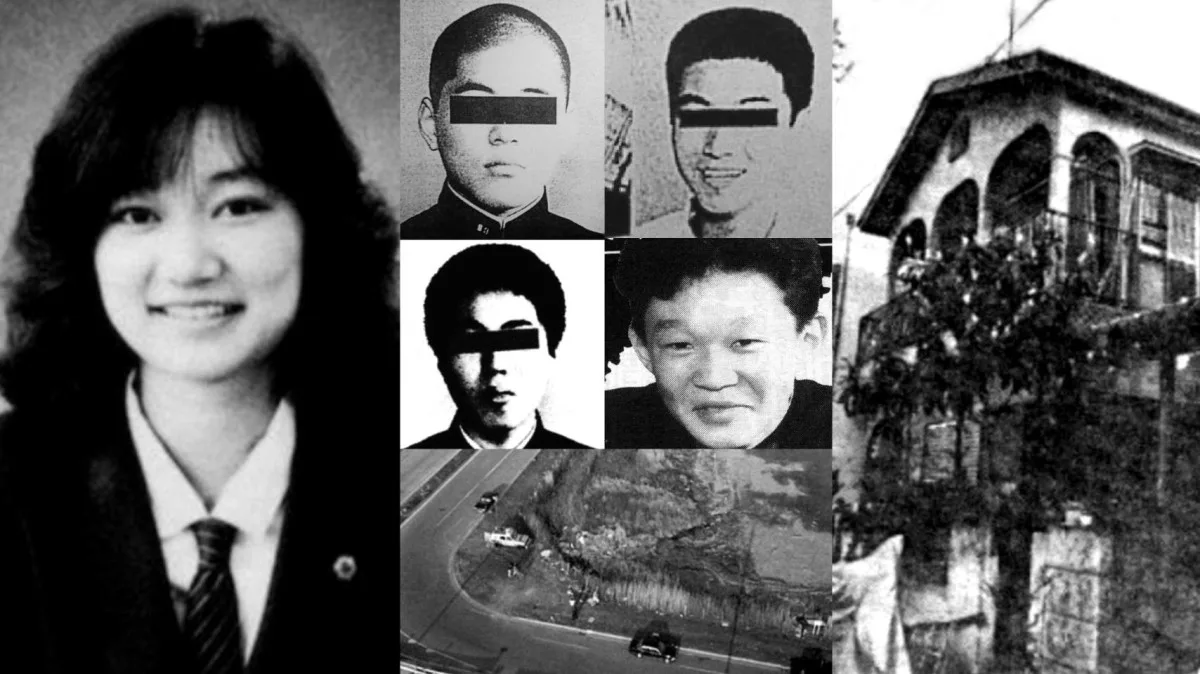
The Kitakyūshū serial murder incident remains one of the darkest chapters in modern Japanese criminology. Born in 1961 in Fukuoka Prefecture, Futoshi Matsunaga presented a charismatic exterior while engaging in deceit, financial exploitation, and severe domestic abuse. In the early 1980s, he formed an abusive partnership with former classmate Junko Ogata, isolating her from family and using escalating physical coercion to dominate her.
In 1985, Matsunaga established a fraudulent futon sales business, coercing employees and clients into heavy debt through psychological intimidation and electric shock torture. By the early 1990s, Matsunaga and Ogata had extorted roughly 180 million yen from unsuspecting victims, triggering police warrants that forced the pair into hiding.
Between 1996 and 1998, Matsunaga trapped several individuals, including six members of Ogata's own family, inside an apartment in Kitakyūshū. Rather than administering physical blows himself, Matsunaga used psychological manipulation and electric shocks to compel family members to turn on one another. The ordeal resulted in seven deaths before a surviving teenage captive escaped in 2002 and alerted authorities. In 2005, the Fukuoka District Court sentenced Matsunaga to death by hanging, while Ogata received a life sentence following recognition of the severe abuse and coercion she had endured.

Hiroaki Hidaka: Murders and Enjo-Kōsai in Hiroshima
Hiroaki Hidaka was born in Miyazaki Prefecture in 1956. Once regarded as a promising student, he struggled after failing university entrance examinations, eventually dropping out of Fukuoka University and accumulating substantial personal debts through drinking and gambling. Moving to Hiroshima in 1989, he found work as a taxi driver and married, though his household collapsed when his wife required psychiatric hospitalization.
Between April and September 1996, Hidaka targeted and murdered four women in Hiroshima, robbing them to pay off compounding loans. His victims included hostesses, acquaintances, and a sixteen-year-old student engaged in Enjo-kōsai, the practice of compensated dating that gained widespread media attention in 1990s Japan.
Hidaka utilized his taxi to pick up victims before strangling them and abandoning their remains in secluded mountain areas. Police arrested him in September 1996 after connecting him to the disappearance of the young student. The Hiroshima District Court sentenced Hidaka to death in February 2000. Choosing not to lodge an appeal, he remained on death row until his execution by hanging in December 2006.
Other Infamous Serial Killers in Modern Japan
Several other serial murder cases have left a lasting impression on Japanese society, shaping how police and the press approach criminal profiling. Unlike countries where serial homicides span decades, Japanese law enforcement has historically mobilized extensive resources to apprehend suspects quickly once a pattern emerges.
Notable historical and postwar cases include:
- Tsutomu Miyazaki (4 victims): Active between 1988 and 1989 in Tokyo and Saitama, Miyazaki abducted and murdered four young girls. His arrest in 1989 and the subsequent discovery of thousands of videotapes in his room triggered intense nationwide debates over media influence and youth subcultures. He was executed in 2008.
- Norio Nagayama (4 victims): In 1968, nineteen-year-old Nagayama committed a series of shooting murders across Tokyo, Kyoto, and Hokkaido using a stolen handgun. His trial became a defining moment in Japanese legal history, establishing judicial criteria for the death penalty. He was executed in 1997.
- Seisaku Nakamura (9 to 11 victims): Known as the Hamamatsu deaf murderer, Nakamura attacked families and women in Shizuoka Prefecture between 1938 and 1942 before his arrest and wartime execution in 1944.
- Akira Nishiguchi (5 victims): A con artist and fugitive who murdered five people in 1963 while evading nationwide police manhunts under various disguises. His case inspired several books and films. He was executed in 1970.
- Hiroshi Maeue (3 victims): In 2005, Maeue used internet suicide bulletin boards to lure three vulnerable individuals under the guise of group suicide, subsequently suffocating them. His case led to stricter monitoring of Japanese web forums. He was executed in 2009.
Juvenile and isolated violent incidents have also sparked broad social reflection, such as the 2004 Sasebo elementary school case commonly referenced as the Nevada-Tan case, highlighting the challenges of mental health, juvenile rehabilitation, and early intervention in peaceful communities.
Criminal Justice, Capital Punishment, and Public Safety in Japan
The rarity of serial homicides in Japan amplifies their societal impact. When such crimes occur, they evoke profound soul-searching about social isolation, mental healthcare, and police communication. The Japanese judicial system responds to premeditated multiple murders with uncompromising severity.
Since the landmark 1983 Supreme Court ruling in the Norio Nagayama case, Japanese judges adhere to the Nagayama standards to determine whether capital punishment is warranted. These criteria weigh nine distinct factors: the degree of viciousness, motive, method of killing, number of victims, impact on bereaved relatives, social effect, age of the perpetrator, prior criminal record, and post-crime attitude. In practice, taking more than one or two human lives during deliberate predatory acts almost invariably leads to a death sentence.
Executions in Japan are carried out by hanging under strict administrative confidentiality, with condemned inmates notified only hours before enforcement. Despite these grim historical anomalies, Japan remains exceptionally safe due to effective community policing through local Kōban police boxes, rigorous firearms prohibitions, and cohesive neighborhood structures. Historical crime cases serve as sobering reminders that even the most peaceful societies require ongoing vigilance and proactive legal safeguards.





Community
Comments
0 comments
There are no published comments in this language yet.
Send comment