
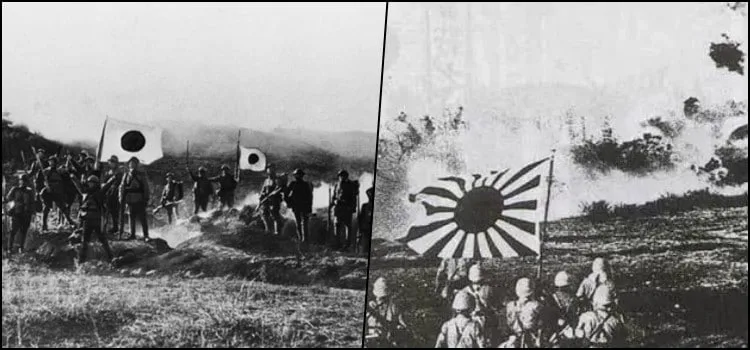
Nanjing was where one of the greatest catastrophes of the war against Japan unfolded. After Imperial troops took the Chinese capital in December 1937, the occupation did not settle into barracks and checkpoints. For weeks the city was murdered, looted, and burned while its best Chinese units were already gone.
Most Japanese military records of the killings were kept secret or destroyed after the 1945 surrender, which is why no single death toll will ever close the argument. The photographs, diaries, and foreign witnesses who stayed behind still explain why the massacre remains an open wound between China and Japan.
Contents 11
Japan's Invasion of Chinese Territory
In August 1937, the Japanese army invaded Shanghai, where they encountered strong resistance and suffered heavy casualties. The battle was bloody: both sides fought at close range in streets and warehouses. By mid-November, Japan took Shanghai with the help of naval bombardment.
The General Staff Headquarters in Tokyo initially decided not to expand the war, citing those losses and low troop morale.
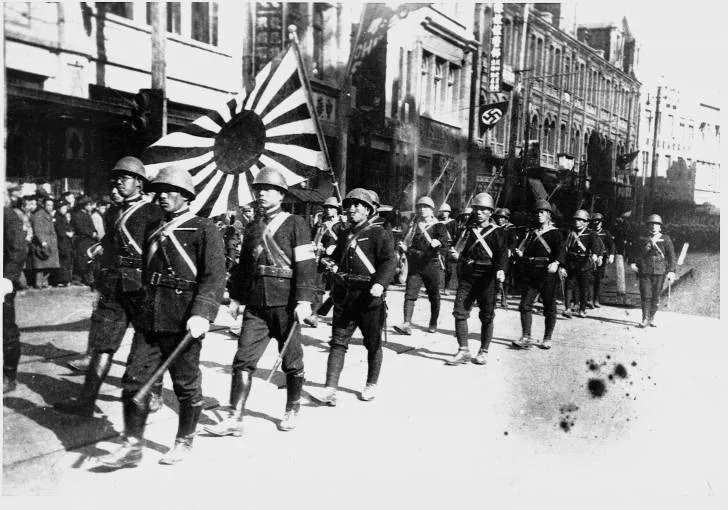
On December 1, headquarters ordered the troops to capture Nanjing anyway. After losing Shanghai, Chiang Kai-shek knew the fall of the capital was a matter of time.
Chiang Kai-shek's Plan
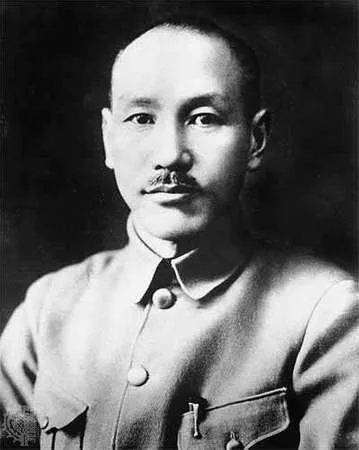
He and his staff realized they could not risk the annihilation of their elite troops in a symbolic, hopeless defense of the capital. To keep an army for later battles, most of those units were withdrawn. Chiang's longer bet was a war of attrition in the interior of China, wearing Japan down far from the coast.
Commander Tang Shengzhi still announced that the city would not surrender and would fight to the death. Tang gathered about 100,000 soldiers, mostly inexperienced, including troops exhausted from Shanghai. To stop civilians from fleeing, he ordered the port guarded, as Chiang had instructed.
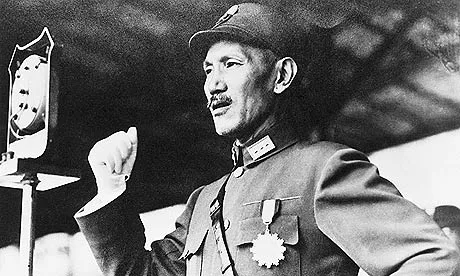
The defensive force blocked roads, destroyed boats, and burned nearby villages, cutting off evacuation. That refusal to let the city empty, after the best units had already left, sealed Nanjing's fate.
The capital had been bombarded for days. The Chinese troops still inside were demoralized and began to drink before the fall everyone could see coming. Japanese units kept advancing, broke the last lines of resistance, and reached the gates on December 9.
At noon that day, Japanese aircraft dropped leaflets demanding surrender within 24 hours. Members of the International Committee contacted Tang and proposed a three-day ceasefire: Chinese troops would withdraw without fighting, and Japanese units would hold their positions. No workable reply came in time.
The Capture of the City of Nanjing
The Japanese waited for an answer to the surrender demand. None arrived by the December 10 deadline. General Iwane Matsui waited another hour before ordering Nanjing taken by force.
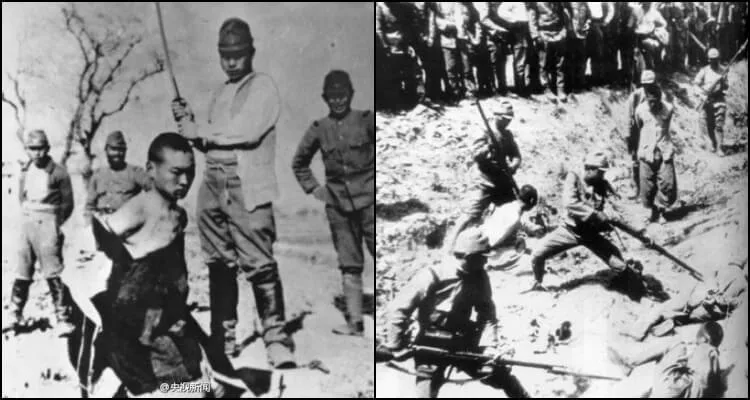
The army attacked the walls from several directions: the 16th Division hit three gates in the east, the 6th Division struck from the west, and the 9th Division pushed into the ground between them.
On December 12, under heavy artillery and aerial bombardment, Tang Shengzhi ordered a retreat. After that it was chaos. Some Chinese soldiers stole civilian clothes to blend in. Others were shot by their own supervising units while trying to flee. Japanese troops entered the walled city on December 13.
The Massacre Committed by Japanese Troops
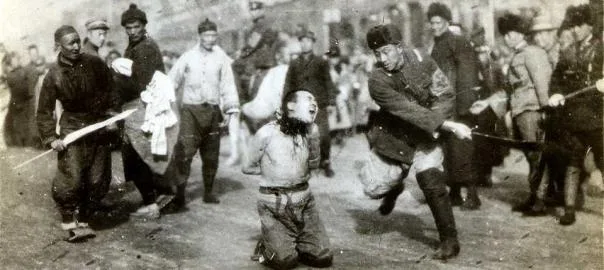
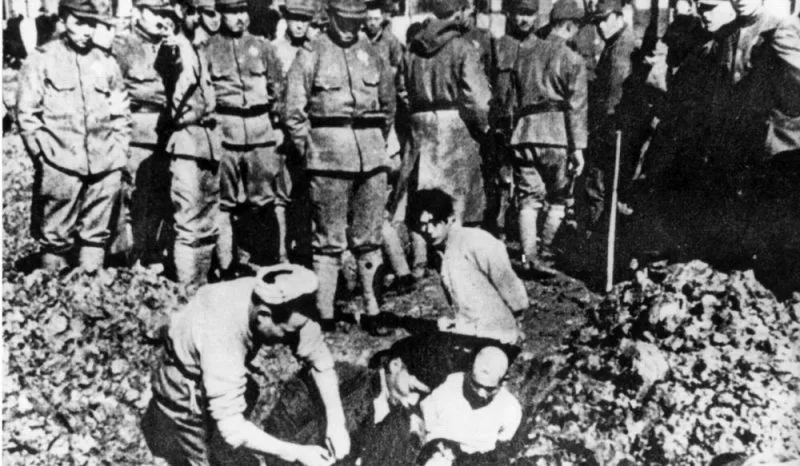
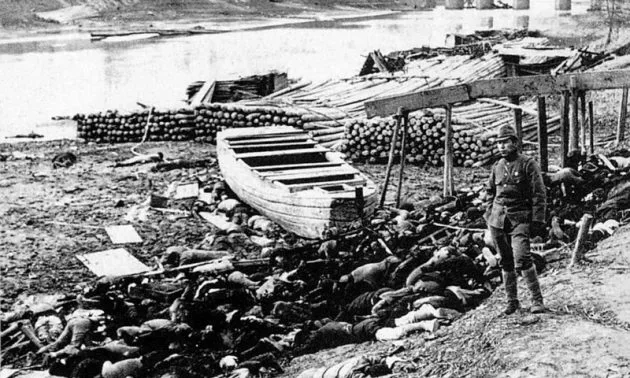
Eyewitnesses — foreigners who stayed and Chinese who survived — reported murder, theft, arson, and other war crimes in the first hours after the city fell. Some of those foreigners had remained on purpose, to shield civilians. Other records come from survivor testimony, journalists, and field diaries kept by Japanese officers themselves.
Most estimates of the dead sit between 100,000 and more than 300,000 civilians and disarmed soldiers. The International Military Tribunal for the Far East later spoke of more than 200,000. China's official figure is 300,000. The spread is not a rumor mill: it depends on whether the count stops at the city walls, includes the surrounding countryside, and treats executed prisoners of war as part of the same crime. A floor of 40,000 appears in some older, city-only tallies; it is not the range most historians now use for the massacre as a whole.
In December 1937 the Tokyo Nichi Nichi Shimbun covered a "contest" between two officers, Toshiaki Mukai and Tsuyoshi Noda.
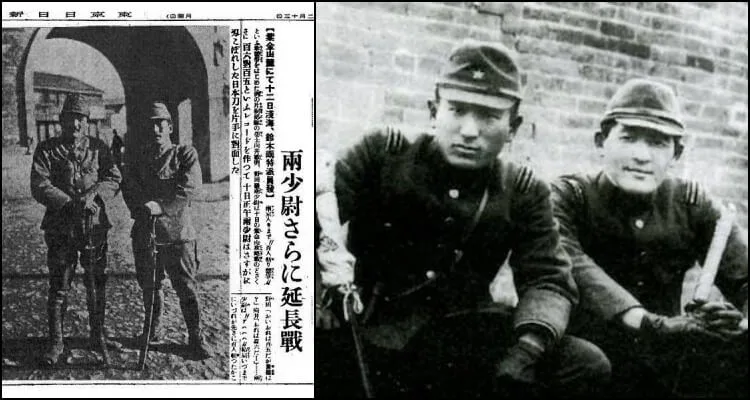
The two men competed to be the first to kill 100 people with a sword before the capture of Nanjing. Both passed that mark during the battle, so the paper treated the score as a draw and they started again, this time toward 150. After Japan's surrender in 1945, Mukai and Noda were arrested, tried as war criminals, found guilty, and shot.
The Nanking Safety Zone and John Rabe
While Chiang's government left the capital, a small group of Western businessmen and missionaries drew a neutral district in the west of the city: universities, embassy compounds, hospital grounds. It was roughly the size of New York's Central Park. The chairman of the International Committee for the Nanking Safety Zone was John Rabe, a German Siemens manager and Nazi Party member who had lived in China for nearly thirty years. That party badge, perversely, was one of the few things Japanese officers still hesitated to ignore.
By the time Japanese troops walked through the gates, some 200,000 to 250,000 civilians had packed into those camps. The Japanese command said it would respect the zone. It did not, not fully. Soldiers still pulled men out as alleged combatants and dragged women from the refugee lines. What the committee could do was stay, protest, and write: daily letters to the Japanese embassy, hospital logs, diaries. At Ginling College, the American missionary Minnie Vautrin held thousands of women and girls behind a campus gate that Japanese patrols kept testing.
The Safety Zone is credited with saving a large share of the civilians still in Nanjing. It did not stop the killing outside its fences, and it did not make the camps themselves safe. That gap — a refuge that worked, and still failed people inside it — is why Rabe's name sits next to the massacre in almost every serious account.
Rape of Women and Children
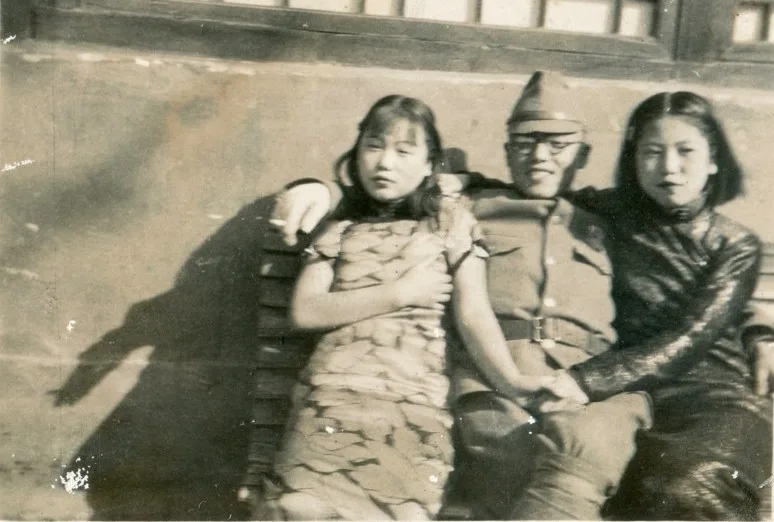
Estimates of women raped in Nanjing usually sit around 20,000, with some ranges running much higher. Soldiers went door to door looking for girls and women. Many victims were killed immediately afterward, often after mutilation. Young children were not spared.
Those assaults are not the same thing as the later "comfort women" system, even though the two crimes sit in the same war. Comfort stations were army-run brothels, built in occupied territory in part because officers feared the diplomatic cost of another Nanjing. Equating the two flattens both: the six-week rampage in the capital, and the longer traffic in women forced into military brothels across Asia.
Withdrawal of Troops, End of Occupation, and Trial
At the end of January 1938, the Japanese army forced refugees in the Safety Zone to return home, claiming to have "restored order." After a collaborating government was set up later that year, street violence in Nanjing dropped, though it did not vanish overnight.
On February 18, 1938, the International Committee of the Nanking Safety Zone was renamed the Nanking International Relief Committee, and the Safety Zone as such ceased to function. The last refugee camps closed in May 1938.
In February 1938 both Prince Asaka and General Matsui were called back to Japan. Matsui retired. Asaka stayed on the Supreme War Council until the end of World War II and was promoted to general in August 1939, without another field command.
After Japan's surrender in 1945, commanders tied to Nanjing went on trial. Mukai and Noda were judged by the Nanjing War Crimes Tribunal and sentenced to death. Iwane Matsui was indicted by the Tokyo Tribunal and hanged. Hisao Tani, one of the officers held responsible for the massacre, was tried in Nanjing, sentenced to death, and executed on April 26, 1947.
Immunity for Prince Asaka
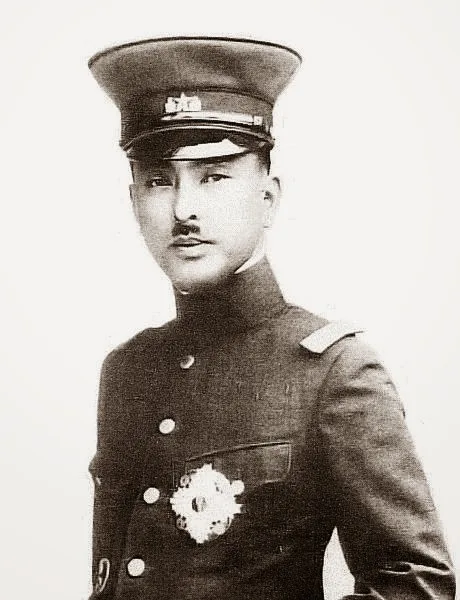
Prince Asaka Yasuhiko had taken command of the Shanghai Expeditionary Army before the final assault and is the officer most often tied to the order to kill captives. In 1946 he was interrogated about Nanjing, and the testimony went to the International Prosecution Section of the Tokyo Tribunal.
Asaka denied that any massacre had taken place and said he had never received complaints about his troops. After the war, like the rest of the imperial family, he was granted immunity by General Douglas MacArthur and never stood trial.
Who Were the True Responsible Parties?
After September 1945, Japanese war criminals were tried in Tokyo and in Nanjing. The names that keep returning in the Nanjing file are these:
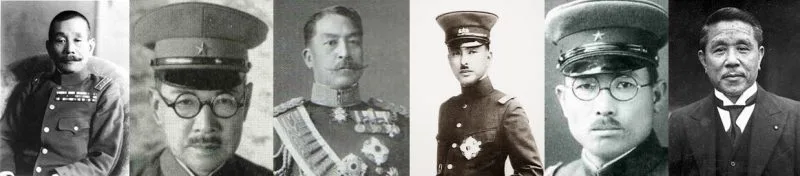
The men held responsible
- General Iwane Matsui — overall commander of the Central China campaign. Matsui said he was ill at the capture and took no effective action to stop his troops. The Tokyo Tribunal held that illness did not remove his duty to control them. He was sentenced to death and hanged on December 23, 1948.
- Lieutenant General Hisao Tani — tried in Nanjing. Tani denied the charges and blamed Korean soldiers in Japanese service. He was found guilty of instigating massacre and rape, sentenced to death, and executed on April 26, 1947.
- Prince Kan'in Kotohito — chief of the Army General Staff. He died in May 1945, before the tribunals, and was never tried.
- Prince Asaka — in field command during Matsui's illness; granted immunity with the imperial house and never tried.
- Lieutenant General Isamu Chō — Asaka's aide, treated as an accomplice. He died by suicide during the Battle of Okinawa in June 1945.
- Kōki Hirota — foreign minister at the time of the massacre, and a former prime minister. He was the only civilian sentenced to death at the Tokyo Tribunal. The court held that he received reports of the atrocities and failed to insist that the Cabinet stop them. He was hanged on December 23, 1948.
The massacre also sits beside other wartime crimes in Japan's record, including the biological warfare program of Unit 731.
Controversies and Denial of the Massacre
Japanese nationalist groups still practice a kind of historical revision that denies a massacre took place, or shrinks it into a messy battle. The Japanese government itself acknowledged Nanjing after the war. That official line convinces Beijing very little, in part because of Yasukuni Shrine, where the names of convicted war criminals are enshrined and where Japanese politicians still pay public respects.
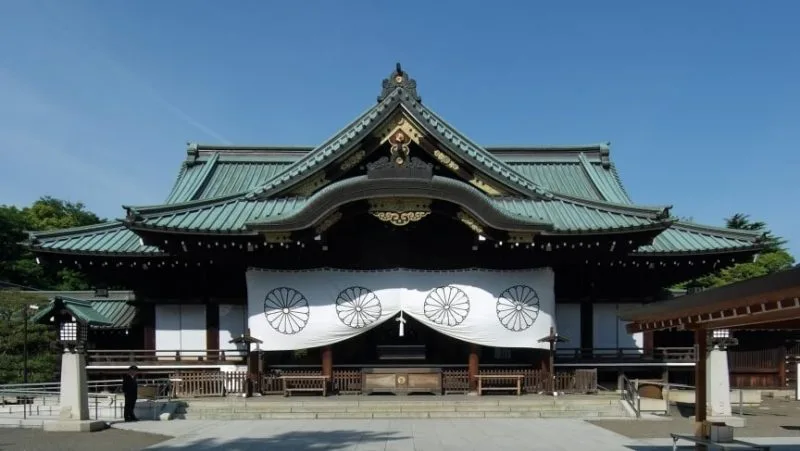
Those visits keep feeding the strain between China and Japan: a government statement of regret on one side, a shrine visit on the other. No emperor of Japan has gone to Yasukuni since 1975, though the emperor and empress still attend the annual National Memorial Service for War Dead. A similar wound sits in the relationship between Korea and Japan, where memory of forced labor and military sexual slavery has never cooled.
Wartime propaganda cut the other way too. Cartoons and newsreels such as Tokio Jokio turned the enemy into a joke at home while the killing in Nanjing was still being filed, photographed, and denied. The argument over numbers has never been only arithmetic. It is about whether a capital's civilians were slaughtered in full view of the world — and whether a country is still willing to say so in public.

Community
Comments
0 comments
There are no published comments in this language yet.
Send comment