
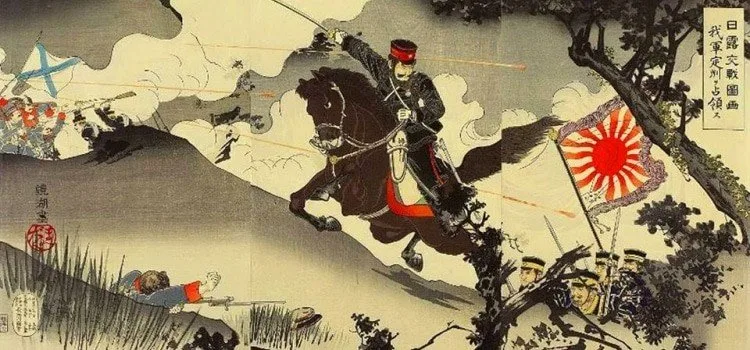
Japan is often mentioned in the Second World War, but what was Japan's involvement in the First World War?
In 1914 Tokyo already had a military alliance with London. That treaty did not drag Japanese infantry into the mud of Flanders. It did give Foreign Minister Katō Takaaki a lawful excuse to go after Germany's leased port in China while Europe was busy tearing itself apart.
Japan entered the war on the side of the Entente. The fighting that followed was almost entirely against German colonies in East Asia and the Pacific — Tsingtao, in Shandong, and a scatter of islands north of the equator — not against the Triple Alliance, a club Japan never belonged to.
Contents 5
The Anglo-Japanese Alliance was the door, not the whole motive
After the Russo-Japanese War of 1904–1905, Japan had forced the West to take it seriously as a modern empire. The Anglo-Japanese Alliance, first signed in 1902 and later renewed, was the diplomatic proof of that status. Britain asked for help against German cruisers in Chinese waters on 7 August 1914. The alliance's original scope was East Asia, so Tokyo was not legally bound to fight a European war. Katō wanted to fight anyway: German rights in Shandong were the prize, and a seat among the Allies was the political return.
Elder statesman Yamagata Aritomo hesitated. The army still admired German staff culture. Katō won the argument. Japan sent Germany an ultimatum on 15 August, then declared war on 23 August 1914 in the name of Emperor Taishō. Austria-Hungary followed two days later, after Vienna refused to pull the cruiser Kaiserin Elisabeth out of Qingdao.
Tsingtao, Shandong, and the German Pacific
The one real land battle was the Siege of Tsingtao (Qingdao), the German leased territory on Jiaozhou Bay. Japanese troops landed in Shandong in early September 1914, with a smaller British contingent beside them. The fortress surrendered on 7 November 1914. In the same autumn the Imperial Japanese Navy occupied Germany's Micronesian islands — the Marianas, Carolines, and Marshalls — with almost no resistance.
From the seaplane carrier Wakamiya, Japan also flew some of the first naval-launched air raids against land and ships in the bay. It was a short campaign by European standards. For Tokyo it was enough: the German foothold in China had changed hands, and the navy had a Pacific chain it would later hold as a League of Nations mandate.
- 7 August 1914 — Britain asks Japan to hunt German cruisers in Chinese waters.
- 15 August 1914 — Tokyo issues an ultimatum to Germany.
- 23 August 1914 — Japan declares war on Germany.
- 7 November 1914 — Tsingtao surrenders to the Anglo-Japanese force.
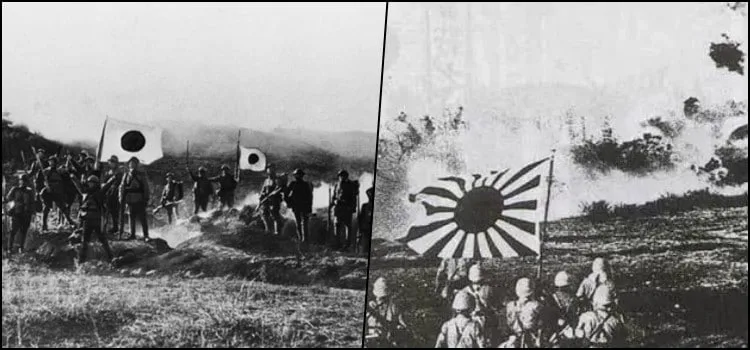
The Twenty-One Demands
With Europe pinned to the Western Front, the Ōkuma cabinet pressed China. On 18 January 1915 Japan presented President Yuan Shikai with the Twenty-One Demands: confirmation of the new position in Shandong, deeper rights in South Manchuria and eastern Inner Mongolia, a share in the Hanyeping mines, and — in the secret Group 5 — Japanese advisers over Chinese finance, police, and government. That last group would have turned China into a protectorate in all but name.
Chinese protest, a boycott of Japanese goods, and pressure from the United States and Britain forced Tokyo to drop Group 5. Yuan signed the remaining agreements on 25 May 1915. The episode did not wait for the 1930s to poison the relationship: it is the wartime document that already shows what Japan wanted from a distracted world.
Destroyers in the Mediterranean, 1917
Japan did not send an army to Europe. In 1917, after Britain asked again and after Germany resumed unrestricted submarine warfare, the navy did send a flotilla. The Second Special Squadron, under Rear Admiral Satō Kōzō, reached Malta in April 1917 with the cruiser Akashi and a growing force of destroyers.
From Malta the ships escorted Allied troop convoys between Alexandria, Taranto, and Marseille. They made hundreds of escort runs and shepherded on the order of seven hundred thousand soldiers. On 11 June 1917 the destroyer Sakaki was torpedoed off Crete by the Austro-Hungarian submarine U-27; fifty-nine Japanese sailors were killed. It was a distant, unglamorous war, and it is the part most English-language memory still skips.
Versailles, and the war this was not
At the Paris Peace Conference Japan sat with the victors. It kept German rights in Shandong — a decision that detonated the May Fourth Movement in China — and received the South Seas Mandate over the islands north of the equator. A racial equality clause proposed for the League of Nations covenant failed. Tokyo left 1919 both more powerful and more resentful of the club it had just joined.
The First World War is not a straight road to Pearl Harbor. The Nanjing Massacre belongs to 1937 and the Second Sino-Japanese War; the attack on Pearl Harbor belongs to 1941. What 1914–1918 did leave behind was a habit: use a European crisis to lock in Chinese and Pacific gains, then discover that the Western Allies still would not treat Japan as an equal. The later wars grew from that habit, from the army's politics in the 1930s, and from oil and embargoes that did not exist when Tsingtao fell.


Community
Comments
0 comments
There are no published comments in this language yet.
Send comment