
Hello, how are you? Anyone who regularly follows anime has almost certainly encountered the name Masashi Kishimoto. If someone in the anime community hasn't heard of him yet, chances are they either rarely watch Japanese animation or have just taken their very first steps into this fascinating world.
No matter which group you belong to, if you want to know who Masashi Kishimoto is and how he navigated his journey to the top of the manga industry, you are in the right place. He is undeniably one of the most famous mangakas on the planet, and I personally hold him in the same high regard as legends like Akira Toriyama.
Let's dive straight into what matters: taking a close look at the creator who brought the Naruto manga to life, establishing one of the most influential and enduring pop culture phenomena of modern times.
Contents 7
The Global Success of Naruto
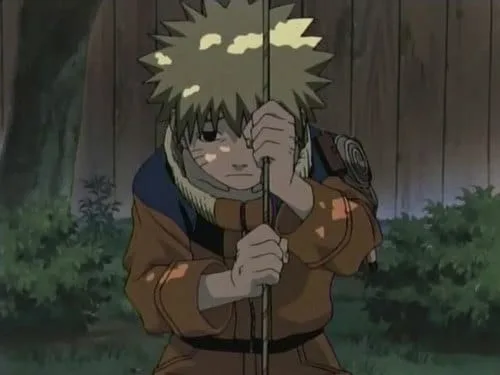
To truly understand the master, it helps to begin with his defining achievement. Because Naruto is by far his most recognizable work, the ninja saga stands at the center of any discussion about his career. In September 1999, the weekly serialization of Naruto began in the pages of Weekly Shonen Jump, quickly blossoming into an international powerhouse.
The epic journey of Naruto Uzumaki resonated with readers for more than fifteen years, reaching its official conclusion on November 10, 2014, across 700 chapters collected into 72 volumes. Worldwide circulation has surpassed 250 million copies, including over 150 million in Japan alone, cementing the series among the best-selling manga titles in history.
That level of success left a profound mark on multiple generations of fans across the globe. Beyond its imaginative ninja universe, Naruto succeeded through emotional depth, relatable character conflicts, and timeless philosophical themes touching on loneliness, resilience, empathy, and bonds between friends.
Childhood, Influences, and the Path to Drawing
Masashi Kishimoto was born in Okayama Prefecture on November 8, 1974. He is the older twin brother in the family, growing up alongside his younger twin, Seishi Kishimoto, who would later become a professional mangaka as well. Early in childhood, Masashi developed a fascination with cartoon characters from animated television series such as Dr. Slump and Doraemon.
During his elementary school years, he regularly watched Kinnikuman and Dragon Ball with his brother. Over time, Kishimoto developed immense admiration for Akira Toriyama, enjoying both his manga work and his distinctive visual designs for the classic role-playing video game franchise Dragon Quest.
Thanks to a generous classmate, Kishimoto borrowed and read the latest issues of Japanese manga publishers and magazines like Shonen Jump. While attending high school, his focus shifted toward baseball and basketball, temporarily pulling him away from illustration. However, seeing a movie poster illustrated by Akira Toriyama reignited his creative spark and drove him back to his sketchbook with renewed determination.

Art College and the Search for an Artistic Style
During his final years of schooling, Kishimoto dedicated long hours to drawing and enrolled in an art college, firmly committed to pursuing a career as a professional manga creator. He initially intended to create a chanbara manga centered on samurai swordsmen, believing that Weekly Shonen Jump lacked titles in that specific subgenre.
Around that period, however, groundbreaking works appeared in print, including Hiroaki Samura's Blade of the Immortal and Nobuhiro Watsuki's Rurouni Kenshin, the latter serialized in Shonen Jump itself. Recognizing that established authors were already mastering the samurai genre, Kishimoto realized he needed to develop a distinctive visual voice rather than merely mimicking existing trends.
In his second year of art college, he began submitting manuscripts to manga competitions. Many of his early experimental drafts leaned toward darker seinen themes aimed at older readers, which conflicted with the energetic, hopeful tone expected in mainstream youth magazines. A turning point arrived when he studied the work of character designer Tetsuya Nishio on the anime adaptation of Ninku, as well as classic storytelling structures from animated films like Run, Melos!. These influences helped him refine his character proportions and dynamic action staging.
The Editorial Partnership and the Road to Serialization
Kishimoto's breakthrough began in 1995 when his short pilot manga Karakuri earned an honorable mention at the Hop Step Award hosted by Shueisha. This achievement connected him with Weekly Shonen Jump editor Kosuke Yahagi, beginning a demanding yet essential creative collaboration that shaped his professional discipline.
The journey was far from easy. Under Yahagi's guidance, Kishimoto spent years developing story concepts only to face repeated rejections. In 1997, he published an early one-shot version of Naruto in the seasonal issue Akamaru Jump Summer, featuring a fox-spirit premise that caught reader curiosity. Soon after, Shueisha gave him an opportunity to serialize a fully revamped version of Karakuri in Weekly Shonen Jump in 1998, but the series struggled in weekly reader surveys and was canceled after just a few weeks.
Following that setback, Kishimoto considered shifting toward the seinen market in hopes of finding better fortune. Yahagi intervened, encouraging him to give the shonen genre one final, all-out attempt. Embracing that challenge, Kishimoto and Yahagi restructured Naruto from the ground up, reimagining the protagonist as an orphaned boy striving for recognition in a complex ninja society. They polished storyboards for the first three chapters, finally securing an official serialization slot in Weekly Shonen Jump in late 1999.
After Naruto: Spin-Offs, Movies, and New Projects
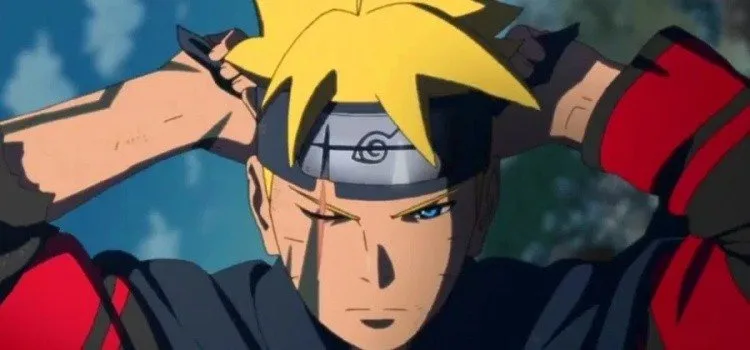
Following the emotional conclusion of Naruto in late 2014, Kishimoto remained active in expanding the franchise. As part of the fifteenth-anniversary celebrations, he wrote and illustrated the miniseries Naruto: The Seventh Hokage and the Scarlet Spring in 2015. He also served as chief creative supervisor and character designer for the canonical feature films The Last: Naruto the Movie and Boruto: Naruto the Movie, while illustrating several companion light novels.
In spring 2016, the sequel series Boruto: Naruto Next Generations launched. The manga was originally illustrated by Kishimoto's longtime chief assistant Mikio Ikemoto and scripted by Ukyo Kodachi, with Kishimoto supervising the overarching narrative. In November 2020, Kishimoto stepped in to handle writing duties directly starting from chapter 52.
Beyond the ninja world, Kishimoto wrote the science-fiction manga series Samurai 8: The Tale of Hachimaru from 2019 to 2020, collaborating with his former assistant Akira Okubo on illustrations. In 2023, he also published Minato: The Whorl within the Spiral, a special one-shot exploring the backstory of Naruto's father, Minato Namikaze, after the character won a global popularity poll.

Awards and Fascinating Facts About Masashi Kishimoto
Alongside his major publishing milestones, several personal details and industry honors highlight Kishimoto's creative path:
- He is a passionate fan of the Star Wars franchise, an affinity reflected in the philosophical themes of mentorship, destiny, and redemption found in his stories.
- Kishimoto married in 2003 and has children. Due to his relentless weekly publishing schedule on Naruto, he was only able to take his honeymoon in 2015, after the main series concluded.
- His twin brother Seishi Kishimoto is an accomplished manga artist in his own right, best known as the creator of 666 Satan (released internationally as O-Parts Hunter) and Blazer Drive.
- The beloved noodle shop from the series has a real counterpart: the real-life Ichiraku Ramen was inspired by a restaurant near Kishimoto's former university in Kyushu.

Throughout his career, Masashi Kishimoto has earned distinguished honors and critical recognition:
- Hop Step Award (1995) presented by Shueisha for his early manga pilot Karakuri.
- Quill Award (2006 in the United States) for Best Graphic Novel for Naruto Volume 7, marking the first time a manga series won the prize.
- Agency for Cultural Affairs Newcomer Award (2014) from the Japanese Ministry of Education, Culture, Sports, Science and Technology (MEXT), recognizing his contribution to media arts.
Notable one-shots and published works outside the main series include:
- Karakuri (1996 pilot in Monthly Shonen Jump, serialized in Weekly Shonen Jump in 1998).
- Bench (October 2010), a baseball-themed one-shot published in Weekly Shonen Jump.
- Mario (May 2013), an atmospheric crime drama one-shot published in Jump SQ.
- Minato: The Whorl within the Spiral (July 2023), a highly praised one-shot published in Weekly Shonen Jump.
What We Can Learn from Masashi Kishimoto's Journey
Looking back at Masashi Kishimoto's career, it becomes clear that creative mastery rarely happens overnight. His trajectory was defined by repeated setbacks, discarded drafts, and honest critiques from demanding editors who pushed him to do better.
What truly separated Kishimoto was his willingness to learn from failure and refine his craft. Instead of walking away when Karakuri was canceled, he studied panel composition, pacing, and emotional connection until he forged characters like Naruto, Sasuke, and Kakashi, who went on to touch the hearts of millions around the world.
For any manga enthusiast or creative aspiring to tell meaningful stories, Kishimoto's journey stands as a powerful reminder: enduring work is built on discipline, humility, and the determination to sit back down at the drawing desk after every disappointment.




Community
Comments
0 comments
There are no published comments in this language yet.
Send comment