
Have you ever wondered what the name of the place at the door is, where Japanese people take off their shoes before stepping into a home? In this article, we look at the genkan more closely — what it is, where it comes from, and which small rules are worth knowing as a visitor in Japan.
Contents 4
What is a genkan?
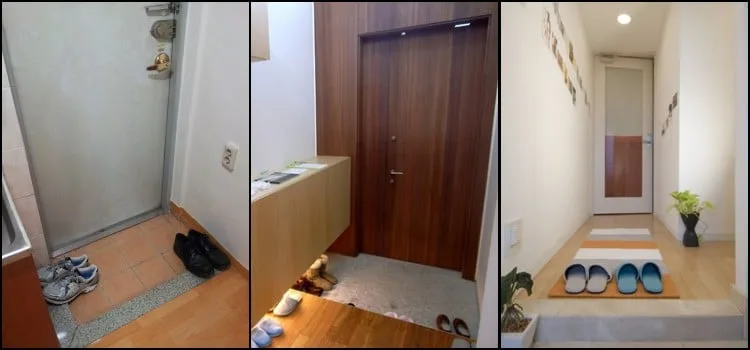
Genkan (玄関) is a small hall or recessed area at the entrance of houses, apartments, and other Japanese buildings. It can be a narrow strip or a full vestibule, with a corridor, a porch, or even a dedicated little room.
The word is built from two kanji: 玄 (gen) carries the sense of deep, dark, mysterious, while 関 (kan) points to threshold, connection, barrier. A genkan is, quite literally, the threshold between outside and inside — and that separation is what makes it matter in daily life.
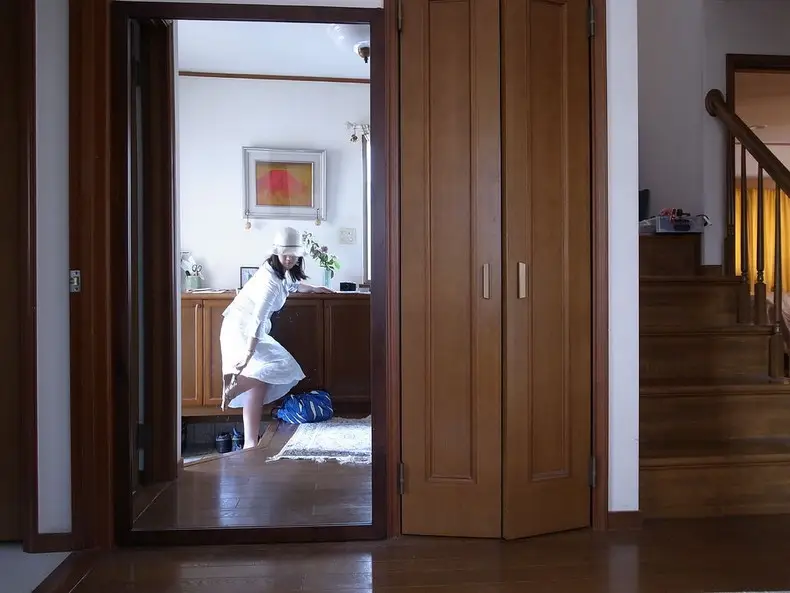
The main job of the genkan is to keep dirt and dust out of the living space. It almost always sits a step lower than the floor inside — sometimes only a few centimetres, sometimes with a clear step. On that lower level, you take off your outdoor shoes and switch into indoor slippers before stepping into the home itself.
Removing your shoes at the door is part of standard Japanese etiquette, both in homes and in many traditional public spaces. The genkan also works as a polite boundary: visitors who would rather not come inside can stay standing on the lower level for a quick chat.
When you leave your shoes, it helps to turn them so the toes point back toward the door — that way you can slide into them easily on the way out. Most genkan have a small rack or cabinet, often called a getabako, where the household keeps everyday footwear.
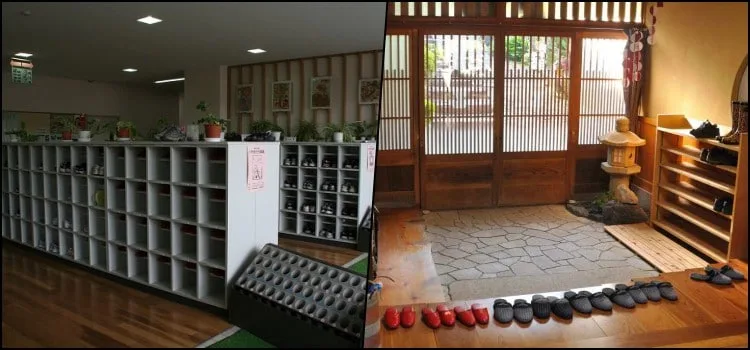
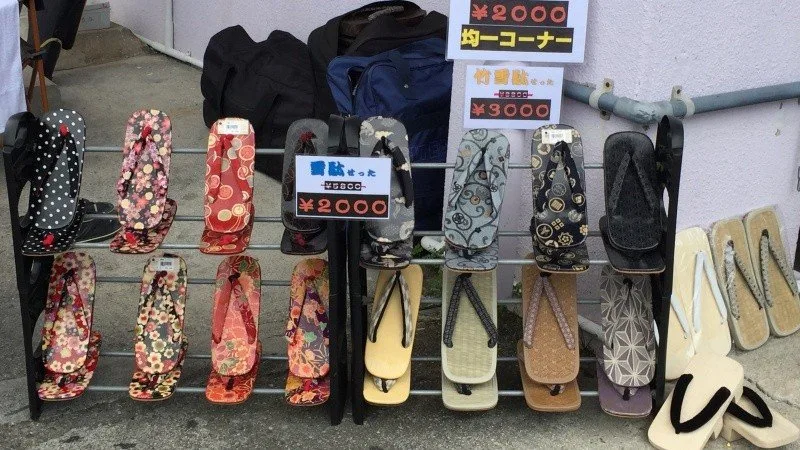
To move further inside, you usually put on a pair of indoor shoes called uwabaki or a pair of slippers called surippa. Walking barefoot, or in socks, on the lower genkan floor is something most people try to avoid.
Shoes and etiquette in the genkan
The genkan is present in virtually every Japanese home, and also in schools, government buildings, traditional inns, castles, traditional restaurants, bathhouses, and any space that uses tatami — or simply wants to keep outdoor dirt outside.
Public spaces like schools are usually set up with lockers where students swap their outdoor sneakers for indoor shoes. In many of these places, the footwear of choice is the uwabaki [上履き] or surippa [スリッパ] mentioned above.
The genkan is also the spot where a delivery driver, a neighbour dropping something off, or anyone in a hurry can have a short conversation without actually stepping inside. It can sit at the very front of the building or open onto an internal corridor, and many homes have a door before the genkan and another one after it.
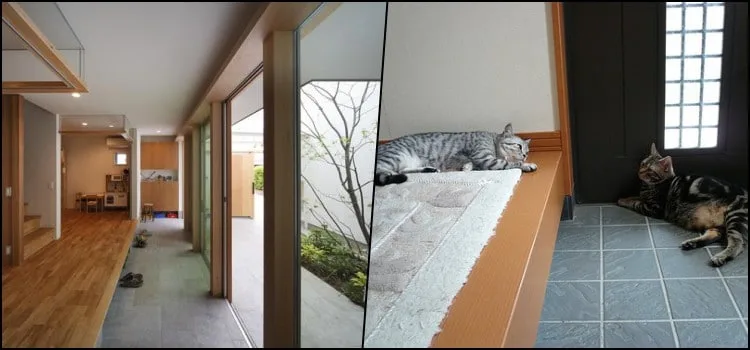
In a typical layout, a step leads up from the genkan into the main living area. That same low space, unfortunately, is also a favourite entry point for cats looking for an open kitchen door and an unattended snack.
There is a quiet routine built around this part of a Japanese home. When you arrive, a short greeting at the door is standard; when you are invited in, you remove your shoes, step up onto the shikidai (the wooden floor), and in more traditional houses, you may be shown to a yoritsuki — a small receiving room reserved for guests.
One extra rule worth knowing: the bathroom usually has its own pair of slippers, and you change into them at the bathroom door. Walking out of the bathroom in those slippers into the rest of the house is a small faux pas — most people switch back to the regular pair right at the threshold.
A short history of the genkan
The habit of leaving outdoor shoes at the door goes back a long way. In prehistoric Japan, dwellings were often built on raised platforms, and keeping the raised floor clean meant stepping out of footwear before going up. That habit survived the centuries and is still in place today, even in very modern, Western-influenced homes.
The genkan as a clearly defined space is closely tied to Zen temple architecture, where the word itself came to suggest a threshold into deeper understanding. Over time, samurai residences adopted the same layout for their entry halls, and from there it spread into ordinary houses, where it eventually became the norm.
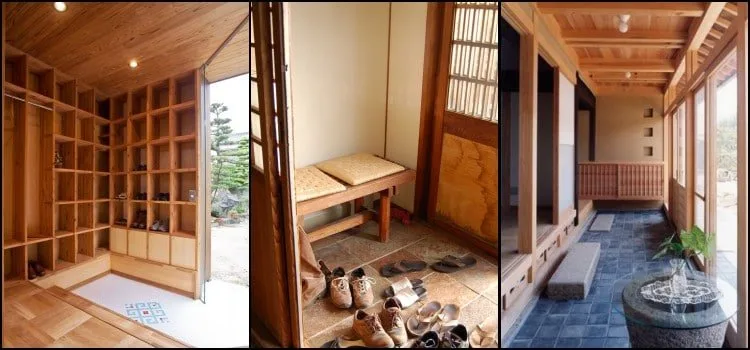
There is real symbolism in the line between outside and inside, and different periods of Japanese history favoured different types of genkan. In older homes, this entry area was often considered the most carefully finished part of the house — the first impression a guest would have of the family inside.
Besides shoes, the genkan is the right place to leave umbrellas, coats, hats, and anything else that has been outside with you. It is also worth remembering that swapping shoes does not stop at the front door: some homes have separate slippers for the bathroom, as mentioned above, and tatami rooms are usually entered in socks or barefoot, with slippers taken off at the edge of the mat.
Practical tips for visitors
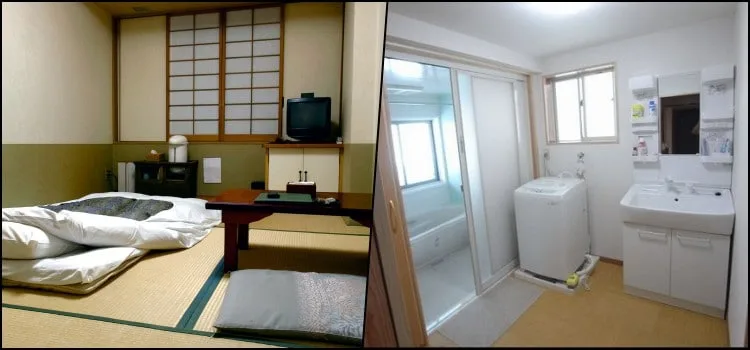
Western homes often have something like a genkan, even when it goes by another name — a mudroom, an entry closet, a small bench by the door. If you have the space, carving out even a narrow version of one at home can be surprisingly useful: a spot to drop coats, bags, umbrellas, and outdoor shoes so the rest of the house stays calmer and cleaner. If you are curious about how this connects to the way Japanese homes are planned more broadly, our look at whether Japanese houses are really that small and the rundown of 14 classic features of Japanese houses go deeper into that side of things.
If you are heading to Japan and renting an apartment for a longer stay, our piece on whether Japanese apartments are small or just practical also touches on how the genkan shapes everyday routines at home.
A few small things are worth keeping in mind as a guest. Take your shoes off facing the door, so you can step back into them easily on the way out. Keep socks in good shape — holes or strong smells are noticed, because the genkan is exactly where people look down. And if a slipper is offered at the entrance of a temple, a traditional restaurant, or a friend's home, take it: refusing it politely is fine, but walking past it usually feels awkward to everyone in the room.
Have you ever set up a small entry zone in your own home, or noticed a genkan in action while travelling in Japan? It is one of those everyday details that says more about a culture than it first looks.



Community
Comments
0 comments
There are no published comments in this language yet.
Send comment