
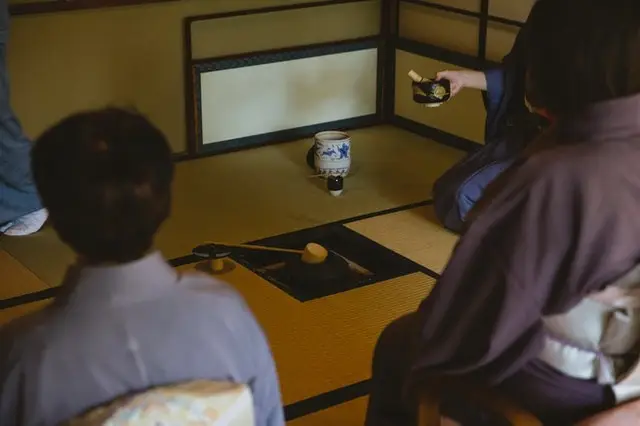
The Japanese culture is very influential around the world, and many people adopt its lifestyle, beliefs, and even spiritual rituals and customs of the country. One of the rituals that has been widely discussed on social media is the "Hishaku."
Today's text will address and further develop this Japanese purification ritual, exploring its meaning and how it is performed, as well as explaining how this tradition survived the pandemic and the equipment used in the celebration.
Contents 9
What is Hishaku?
The hishaku is a purification ritual originating from Shintoism, a native religion of Japan that emphasizes the importance of purity and spiritual cleanliness. Generally performed at shrines and temples throughout Japan, the hishaku is an integral part of a broader ritual known as "Chozu." This ritual is an essential preparation, where participants purify their bodies and minds before entering the sacred space to perform their prayers and offerings to the kami, the spirits or deities revered in Shintoism.
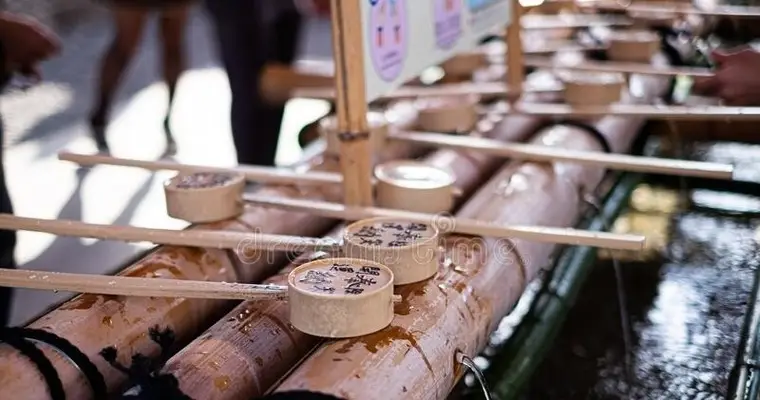
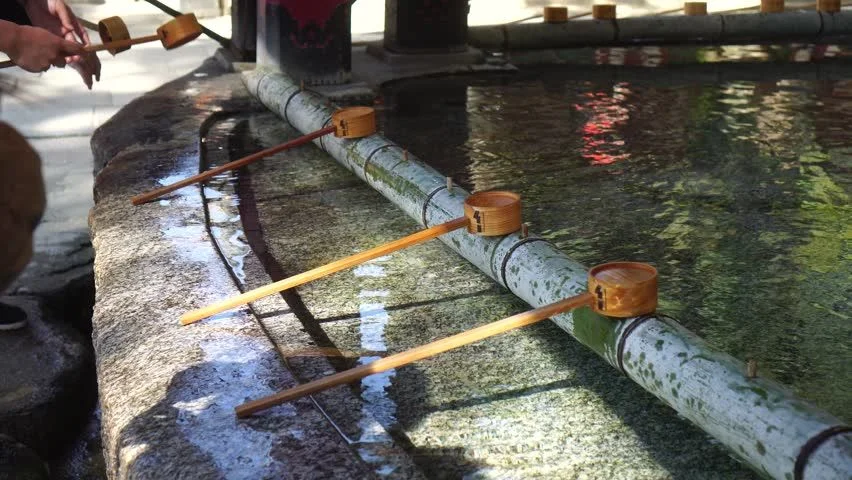
The hishaku, specifically, refers both to the act of purification and to the instrument used in this process—the wooden ladle. This object is traditionally made of bamboo or another type of wood considered pure and is used to pour water over certain parts of the body. This act symbolizes the cleansing of physical and spiritual impurities, preparing the faithful for a respectful and sacred encounter with the divine.
Procedure of the Hishaku Ritual
The hishaku ritual is meticulous and symbolic, with a specific sequence that must be followed to ensure its effectiveness:
- First, water is poured into the left hand.
- Next, the right hand is purified.
- Water is placed in the mouth for internal cleansing.
- Finally, water is poured over the handle of the ladle, symbolizing the purification of the instrument used in the ritual.
Spiritual and Emotional Benefits
Practitioners and followers of Shintoism report various positive sensations and spiritual benefits resulting from the hishaku, including:
- Emotional balance: The purification helps stabilize feelings and emotions, promoting internal balance.
- Sensation of peace and tranquility: The ritual induces a state of calm and peace, distancing stress and agitation from daily life.
- Greater contact with oneself: Provides a moment of introspection and self-knowledge.
- Unique encounter between body and mind: Creates harmony between the physical and spiritual, aligning thoughts and actions.
Origin of Hishaku
The hishaku, as an object and ritual practice, has its origins deeply intertwined with the traditions of Shintoism, the native religion of Japan that celebrates the sacredness of nature, ancestors, and kami (spirits or deities). Since ancient times, Shintoism has incorporated purification rituals (known as "Misogi" and "Harai") aimed at cleansing spiritual impurities, known as "kegare."
Historical and Cultural Context
The hishaku ritual developed as part of Chozu, which is a simplified process of Misogi, adapted for daily practice at shrines. Traditionally, Misogi involved bathing in sacred rivers or waterfalls, but with urbanization and the evolution of religious practices, it became necessary to find more accessible forms of purification for visitors to shrines and temples.
Evolution of Purification Instruments
The wooden ladle, or hishaku, was adopted as a practical tool for this purpose. Its use allows for the performance of symbolic cleansing gestures, pouring water over the hands and mouth, without the need to fully submerge in water. This adaptation was crucial for integrating the purification ritual into the daily routine of practitioners, facilitating its execution in public and private spaces.
Symbolic Importance
The hishaku is more than just a functional utensil; it carries a deep symbolic meaning. Traditionally made of bamboo, a material considered pure in Shintoism, it symbolizes the connection with nature and the passage of purification. Bamboo, due to its resilience and flexibility, is seen as an example of purity and moral strength.
By incorporating the practice of hishaku into rituals and daily life, the Japanese maintain a vital connection with their spiritual and cultural traditions, reaffirming their respect and reverence for the kami and the natural environment.
Resilience and Adaptation During the Pandemic
The tradition of hishaku demonstrated remarkable resilience during the COVID-19 pandemic. The nature of the ritual, which emphasizes cleanliness and purification, found new meaning in a world concerned with hygiene and health.
Shrines and temples adapted their practices to ensure the safety of participants, implementing measures such as social distancing and disinfection of hishakus, ensuring that the tradition continued to be a source of comfort and spiritual renewal, even in times of crisis.
Conclusion
The hishaku is not just a ritual; it is a gateway to a deeper understanding of Japanese culture and spirituality. It continues to be a vital practice in the lives of many, offering a connection to the past and a path to purification and inner peace.
In a rapidly changing world, rituals like the hishaku remind us of the importance of maintaining harmony with our traditions and with ourselves.





Bobby Beeman
The slender bamboo pole was originally used for the handle in order to show the bendable humility and caution as well as the loyal restraint of the person using it. We like the bamboo must be bendable, able to go with the storms and spring back up again in humility. Without humility the ladle means nothing. The whole tool is not accepted by those gone on before. The purity of the individual using is not. Therefor in my opinion not an accepted ritual. See the magazine Martial Arts Training issue 01046 September 1993 Article Ancient Winds
Reply