

All countries have their social problems, some more than others. Social issues such as income inequality, declining birth rates, and an aging population are some of the problems faced by the Japanese. Today we will look at 30 social problems faced in Japan.
Contents 19
1 - Poverty in Japan
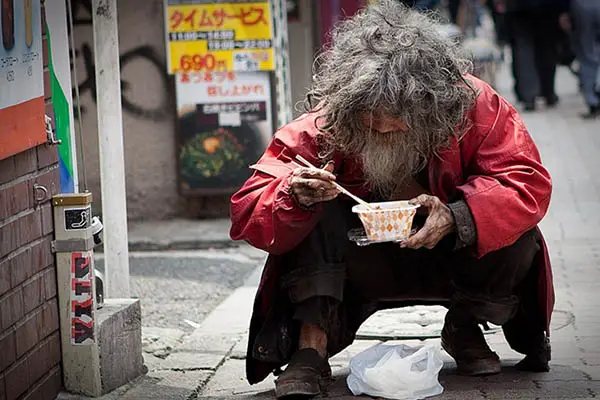
I believe many people think that poverty is only a problem in developing countries, but poverty has also become a social issue in Japan.
According to a survey by the Ministry of Health, Labor and Welfare, about 16% of Japanese, 1 in every 7 Japanese, earn less than 120,000 yen per month, considered low-income poor.
In particular, more than half of single mothers are relatively poor, which has become a serious social problem in Japan in recent years.
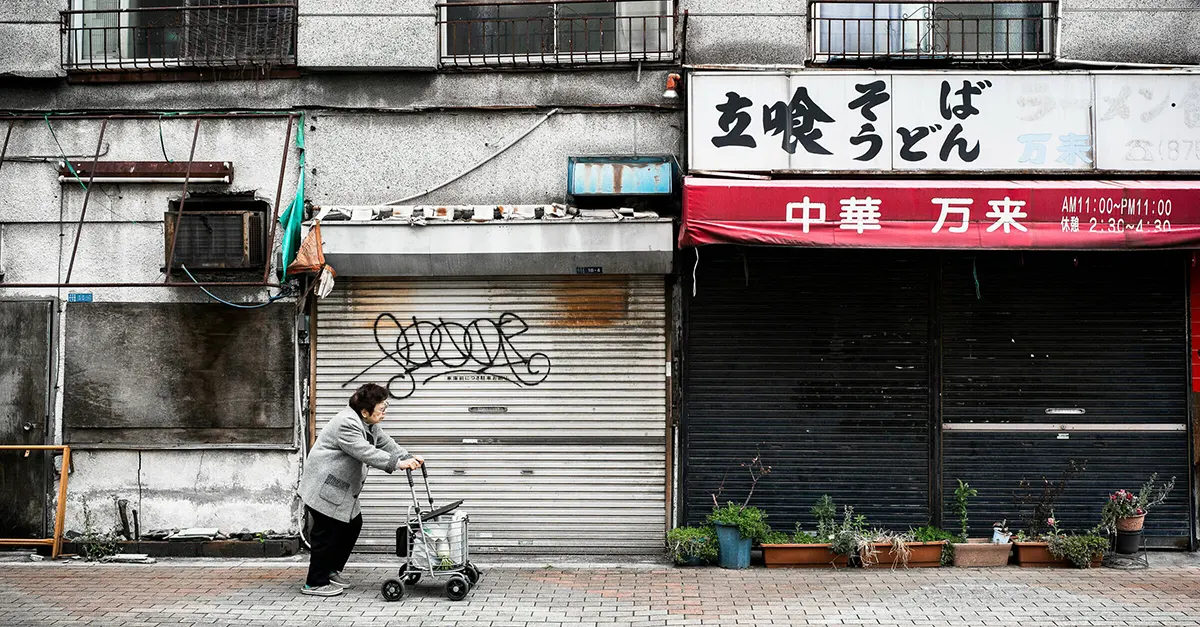
Furthermore, the relative poverty of the elderly is also a major social problem, with over 70 years old, about 26%, or more than a quarter of the population, falling into relative poverty. There are reports of elderly Japanese committing crimes to be arrested and have sustenance.
We also recommend reading:
- Poverty in Japan – Are there poor Japanese?
- The Invisible Homeless in Japan
- Kamagasaki – All about the Largest Slum in Japan
2 - Birth Rate and Aging Population
"Low birth rate and aging population" refers to a low proportion of children and a high proportion of the elderly population.
The birth rate in Japan is declining for various reasons, including late marriages, women entering the workforce, and lower education levels.
Moreover, the aging population is also increasing due to advances in medicine and greater health awareness.
The backdrop of the declining birth rates and aging population problem is that a decline in the workforce can lead to social problems, such as the failure of pensions and health systems, which will be discussed later.
In addition to these systems, this situation can also evolve into various other social problems, such as a labor shortage causing economic decline in Japan.
3 - Declining Japanese Population
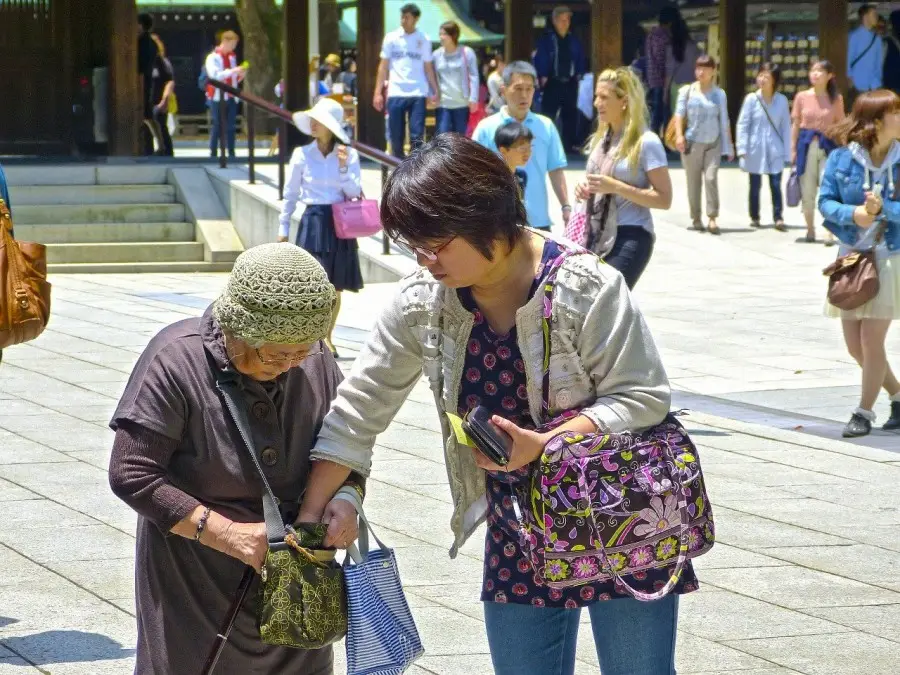
As a result of the low birth rate, in Japan, more people die than are born.
The population of Japan peaked at 128.08 million in 2008, but has already begun to decline, being considered a social problem. Research reveals that by 2053, Japan's population will fall to around 100 million eligible individuals.
It is said that a declining population leads to a contracting economy and lower economic growth rates, as consumption will decrease. Additionally, if the population decreases, it can cause collapse not only in the economy but also in education and health.
4 - Pension Collapse
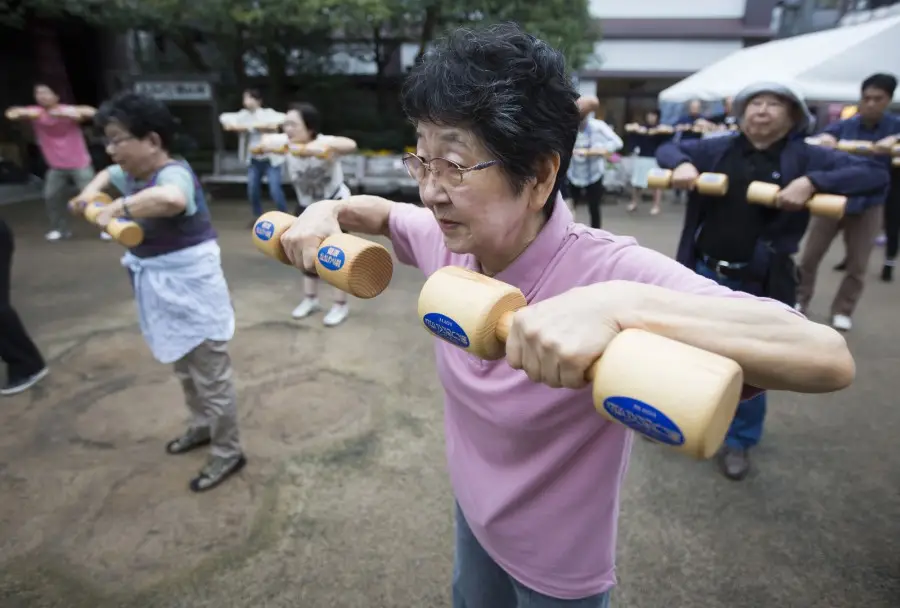
A pension is received when a person reaches a certain age. Currently, people can receive pensions after the age of 65, but this pension system is expected to collapse and become a social problem in the future.
The pension system is based on contributions collected from the current working-age population (known as the working-age population) and paid as pensions to those entitled to retirement.
Currently, three working-age individuals support one retiree, but if the decline in birth rates and the aging population continue, there will be two working-age individuals supporting one retiree, and this may decrease to one person, creating a collapse in the pension system.
5 - Harassment
Moral harassment, power harassment, and sexual harassment have long been a social problem in Japan, reported in newspapers and on TV, but even now that it has become a social issue, it still happens quite frequently.
In simple terms, harassment is "harassment" that causes serious harm to another person, whether the harasser realizes it or not, and can be physical or verbal. These different types of harassment can occur at work, in schools, in maternity, and even with pregnant women.
- All about chikan, sexual harassment in Japan
- Is Japan Safe for Women?
- Ijime – Bullying in Japanese schools
6 - Suicide in Japan
Suicide in Japan is a long-standing problem that has been addressed over the years. Each year, the suicide rate has been falling, but it is still a significant social problem in Japan that affects many young people and even children.
Even in 2021, more than 20,000 Japanese commit suicide each year, so it is not a small number. Furthermore, according to the World Health Organization (WHO), the number of suicides in Japan ranks 18th among 172 countries, which is why it is still recognized as a serious social problem.
We recommend reading the following articles:
- How Japan halved its suicide rate?
- The truth about suicides in Japan
- September 1st, the day with the highest suicide rate among Japanese teenagers

7 - Elderly Care in Japan
According to a survey by the Ministry of Health, Labor and Welfare, as of 2016, 51.2% of home care is provided by elderly caregivers.
Children are increasingly abandoning their parents and leaving them in the hands of others. Some do not even leave caregivers with their parents or grandparents, causing accidents, fires, and even deaths.
There is a high demand in Japan for elderly care; in addition to nursing homes, Japan even has daycare centers for elderly care.

8 - LGBT in Japan
Although Japan has historically supported homosexuality, and its religion does not prohibit such practice, there is still some prejudice in certain places regarding LGBTQI+.
Human rights violations and discrimination, such as job refusal simply for being LGBT, being bullied or violated at work, or in school, have become a social problem in Japan.
It is said that there are seven or eight LGBT individuals for every 100 people in the world, which means that based on Japan's total population, approximately 10 million people are considered LGBT.
Discrimination against LGBT individuals is a social problem in Japan, but it is also a global social problem, with some countries punishing people simply for saying they are homosexual.

9 - Children Waiting for Daycare in Japan
Despite the low birth rate in Japan, as both parents tend to work, the demand for full-time daycare is quite high, leaving many children on waiting lists.
It is said that there are currently about 20,000 children waiting for admission in Japan, but the number could exceed 70,000 if counting those who are not on the waiting list for any school.
As mentioned, the problem is not only the infrastructure to accommodate the children, but also mothers in the workforce, population concentration in urban areas, and others.
10 - Food Self-Sufficiency in Japan
Self-sufficiency refers to the consumption of food produced in Japan. We know that since Japan is a small island, a large part of the food is imported from abroad.
Only 38% of the food consumed is produced in Japan, leaving the country 62% dependent on imports from abroad. This social problem can cause food shortages and high prices for certain products.
11 - Food Loss and Waste in Japan
Food loss is a social problem where edible food is discarded without being consumed. In Japan, more than double the amount of food is wasted compared to the UN's suggestion.
Food losses are also generated during production and processing, but many foods that approach their expiration date or have reached the end of their shelf life are also thrown away from points of sale.
The population also has a responsibility for food waste when cooking or ordering a plate larger than their stomach. The selling price can also cause waste.
13 - Shoplifting in Japan
Although Japan is a relatively safe and honest country, thefts still occur in the country. In fact, Japan is one of the countries with the highest number of shoplifting incidents.
These petty thefts result in an annual loss of more than 45 billion yen (about 350 million dollars). At least robberies and thefts are super rare, most thefts happen secretly.
14 - Gender Inequality
In Japan, in 1986, a law for Equal Employment Opportunity was established, but even so, 30 years later, there is gender wage inequality in the Japanese labor market. Japan ranks 110th in the social equality ranking of 149 countries.
The average male salary in Japan is 335,000 yen, while the female average is only 246,000 yen. Additionally, 48% of Japanese companies do not have women in high positions such as managers. There is a significant gender inequality in Japan.
15 - Japan's Debt
Japan has a huge debt, exceeding 1.1 quadrillion yen, or 8.3 trillion dollars, more than double the size of its economy.
The COVID pandemic also worsened the situation, causing the yen to depreciate even more.
What differentiates the Japanese debt from that of other countries is the high level of household savings, securing deposits in the system, where the entirety of the bonds is in the hands of local creditors, mainly national banks.

16 - Empty Cities and Abandoned Houses
Although some people think of Japan as a country without space where people live in cubicles, the reality is different; many houses are empty, and some cities are becoming abandoned. All because young people want to concentrate in large metropolises.
1 in every 10 houses in Japan is abandoned, empty, with no residents. It is estimated that Japan has more than 8 million abandoned houses out of 60 million existing.
Empty houses cause problems for neighbors due to their deterioration, animals, and insects, as well as crimes such as illegal occupation and arson.
Many cities have the potential to disappear in the coming decades. Not just remote areas like Hokkaido, but even provinces like Tokyo. Many cities are paying people to live in the area.

17 - Labor Shortage in Japan
The labor shortage has already become a social problem, especially in some industries, such as the restaurant industry and the construction industry.
For this reason, Japan needs so much foreign labor. In Japan, there are many jobs for few people. Unfortunately, certain areas also require too many qualifications to hire.
Shortage of Doctors in Japan
Healthcare in Japan has never been top quality; although hospitals are perfect and organized, some doctors are heavily criticized for incorrect diagnoses or negligence.
Lack of Successors
The shortage of successors has become a social problem due to the decline in the birth rate, but there are also many who say they do not want their children and grandchildren to inherit their debts.
Moreover, if the number of successors among farmers and fishermen decreases, this can directly lead to social problems, such as food self-sufficiency.

Other Social Problems in Japan
If we address each social problem in detail, it will take an eternity. To conclude, let's list other social problems in Japan below:
- Abnormal Weather;
- Volcanoes and Earthquakes;
- Microplastics;
- Senior Drivers;
- Contamination by Foreign Materials;
- Aging Infrastructure;
- Black Companies;
- Leakage of Personal Information;
- Food Disguise;
- Frauds and Scammers;
- Hikikomori;
- Income Inequality;


Community
Comments
0 comments
There are no published comments in this language yet.
Send comment