
Is Japan safe for women? Does harassment happen in daily life? Japan is recognized globally for having some of the lowest violent crime rates in the world, yet questions about women's safety frequently arise when international visitors hear about commuter train molestation and covert photography. Evaluating whether Japan is safe requires moving beyond sensational stereotypes to examine both daily transit realities and the practical safeguards available to women.
Contents 8
Do women face harassment in Japan?
In terms of serious violent crime, such as armed assault, robbery, and murder, Japan is statistically one of the safest nations in the world. Street muggings and violent attacks are exceedingly rare, and women frequently walk home alone late at night without incident. However, regarding offenses such as non-consensual touching, groping, and intrusive photography, the reality is more complex.
The most common form of harassment occurs on crowded public transportation, particularly during morning and evening rush hours. The phenomenon of groping on trains, known in Japan as chikan [痴漢], has been documented for decades. In densely packed train carriages where passengers are pressed tightly against each other, offenders take advantage of the physical congestion to touch or rub against women unnoticed.
Some men also attempt to proposition women in commercial districts or near stations, asking them to accompany them to love hotels or offering money. This behavior occurs regardless of whether women are wearing ordinary business attire, casual outfits, or school uniforms.
Not even men escape unwanted contact; I remember being in an onsen in Tokyo, and a man started coming towards me and put his hand on my leg. Of course, I left and moved away immediately. If this happens to men, imagine what women have to endure in vulnerable situations.
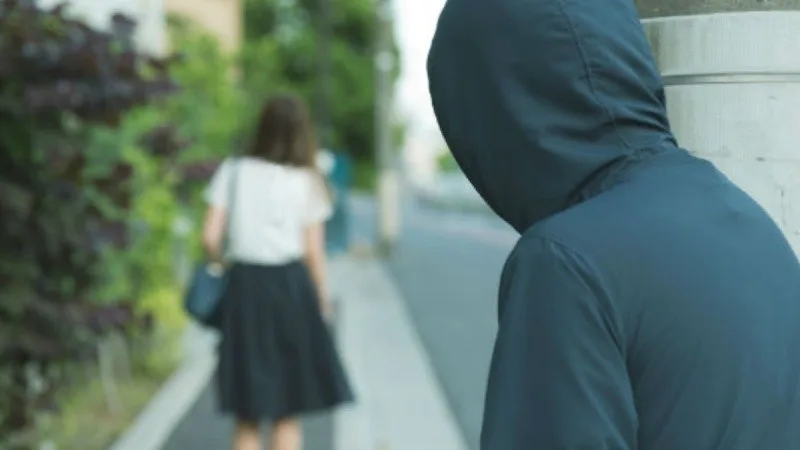
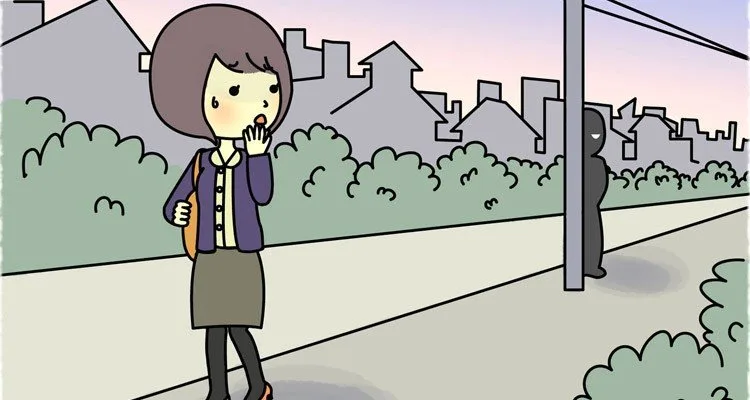
Other troubling behaviors include surreptitious photography, upskirting on station staircases and escalators, and individuals who stalk women from transit hubs to their homes. While physical violence remains uncommon because perpetrators fear strict legal repercussions, these violations of personal space and privacy represent a genuine concern.
Why are many women harassed in Japan?
The prevalence of transit harassment in Japan stems from a combination of infrastructure and social dynamics. Millions of residents rely entirely on extensive rail networks every day. Unlike regions where personal cars dominate daily commuting, major metropolitan hubs like Tokyo and Osaka experience severe rush-hour crowding that creates anonymity for offenders.
Cultural factors also influence how harassment unfolds. Japanese social norms place great emphasis on harmony and avoiding public confrontation, often referred to as avoiding meiwaku (troubling others). Consequently, victims may freeze, worry about making a scene, or fear drawing negative attention to themselves in a silent carriage. Perpetrators exploit this hesitation, believing that victims will remain quiet rather than disrupt the commute.
Foreign women are sometimes perceived as less vulnerable to unsolicited attention from perverts in Japan, partly because offenders assume foreigners are more likely to react loudly and confront them directly. However, foreign residents and tourists can still encounter harassment and should remain aware of their environment.
Interestingly, street catcalling is remarkably rare in Japan compared to many Western countries or South America. Women walking through urban neighborhoods are rarely subjected to aggressive whistles, crude comments, or persistent sidewalk following. The friction points for harassment in Japan are overwhelmingly centered on crowded trains and secluded transit bottlenecks rather than open public streets.
Statistics and Safety Context
When reviewing international crime data, Japan consistently records remarkably low rates of violent sexual offenses. Comparative figures published by international monitoring agencies such as the United Nations Office on Drugs and Crime (UNODC) and Japan's National Police Agency indicate that reported rape offenses in Japan hover around 1.1 to 1.4 cases per 100,000 residents annually. By comparison, reported rates in many Western nations exceed 25 to 30 cases per 100,000 residents.
Similar to Japan's long-term downward trends in various crime categories and its successful interventions regarding the suicide rate over the past two decades, official violent crime statistics have steadily declined. These figures confirm that tourists and residents are at minimal risk of violent street victimization.
At the same time, criminologists and legal experts caution that official police statistics reflect only reported crimes. Underreporting of sexual harassment and assault remains a significant factor in Japan, where social stigma, concerns over family reputation, and fear of secondary interrogation by authorities can discourage victims from coming forward.
To provide broader perspective, consider the historical comparisons of reported serious sexual assault cases per 100,000 inhabitants compiled across various nations:
- Australia: 91
- Sweden: 58
- United States: 28
- Brazil: 27
- Belgium: 26
- Northern Ireland: 23
- Israel: 17
- France: 16
- Chile: 13
- Finland: 12
- Austria: 9.3
- Germany: 8.0
- Switzerland: 8.0
- Italy: 7.0
- Czech Republic: 4.6
- Poland: 4.0
- Portugal: 3.0
- Hungary: 2.0
- Turkey: 1.5
- Japan: 1.1
These numbers highlight that violent crime is remarkably low in Japan, while emphasizing why travelers should differentiate between violent danger and everyday transit vigilance.

How can women avoid harassment in Japan?
Navigating public transit in Japan is straightforward once you know the practical precautions implemented by transit authorities and local police.
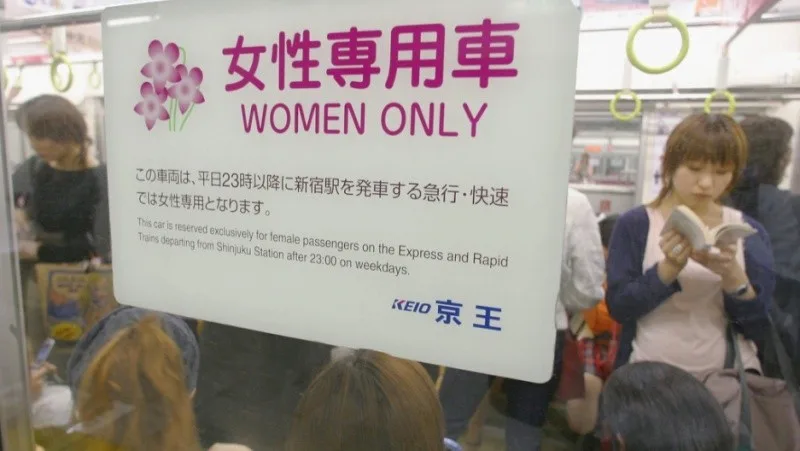
Most major railway lines in metropolitan areas operate designated women-only passenger cars (*josei sen'yō sharyō*, 女性専用車両) during morning rush hours. These carriages are marked with bright pink window stickers and platform floor decals. Utilizing these cars provides a comfortable, harassment-free environment during the most crowded hours of the morning.
When riding standard carriages during peak hours, adopting smart positioning helps protect your personal space. Try standing with your back against a train door, partition wall, or window so that no one can position themselves behind you. Keeping your backpack in front of your chest also creates a physical barrier.
If you experience harassment or see someone else in distress, drawing attention is the most effective deterrent. Saying firmly "Yamete!" (Stop it!) or shouting "Chikan!" alerts surrounding commuters and railway personnel. Station staff are trained to intervene immediately and hold perpetrators until police arrive.
Technology also provides discreet assistance. The Tokyo Metropolitan Police Department developed the free Digi Police smartphone application. It features a dedicated SOS repellent screen that flashes a large message in Japanese: "There is a molester. Please help." Showing this screen silently to nearby passengers alerts them without requiring you to speak. The app also includes an audible buzzer alarm if needed.
For immediate assistance on the street or in public spaces, dial 110 for the police emergency hotline, which provides access to English-speaking interpreters. You can also walk into any local koban [交番], the neighborhood police boxes recognizable by their round red lanterns, which are staffed around the clock.
On escalators and multi-story open stairwells in department stores and train stations, be mindful of people standing immediately below you with mobile phones in hand. Standing sideways or holding a bag behind you provides simple privacy protection.
Japan's Efforts to Improve Women's Safety
Japanese society, law enforcement, and civic organizations have introduced multiple structural measures to enhance women's safety over the past decade.
One prominent technical measure is the mandatory camera shutter sound built into all smartphones sold in Japan. Even when a phone is switched to silent mode, the camera produces an audible clicking noise whenever a photo is captured. This industry standard was established specifically to deter secret photography and upskirting in public places.
On the legal front, Japan achieved a major milestone in 2023 with the enactment of the Photo Voyeurism Prevention Act (*Satsueizai*, 撮影罪). Previously, unauthorized photography was regulated only under regional prefectural nuisance ordinances. The new national law criminalizes the act of secretly photographing or filming sexual body parts or underwear, as well as distributing such footage, imposing penalties of up to three years imprisonment or fines of up to 3 million yen.
The hospitality and travel industries have also adapted. Many capsule hotels, business hotels, and hostels now offer dedicated female-only floors with keycard access, private lounges, and enhanced security. Women traveling solo can seek out these accommodations for peace of mind. When visiting hot springs, those seeking privacy can reserve private family baths (*kashikiri-buro*) rather than entering traditional mixed onsens alone.
Grassroots advocacy and the growing feminist movement in Japan have driven substantial public discourse around gender equality, workplace harassment, and transit safety, prompting authorities to install higher-definition surveillance cameras on train platforms and inside train cars.
Invitations, Personal Boundaries, and Legal Consent
When socializing with new acquaintances, coworkers, or locals, understanding social dynamics and personal boundaries is essential.
A persistent rumor among some travelers claims that visiting someone's private residence in Japan legally implies automatic consent to intimate relations. This claim is completely false. In July 2023, Japan's parliament enacted landmark reforms to the Penal Code, formally replacing the category of forcible sexual intercourse with non-consensual sexual intercourse. The revised statute explicitly identifies eight circumstances where a lack of consent is recognized, including intoxication, panic, impairment, and the abuse of authority or social status.
Under Japanese law, entering a home or accepting hospitality never waives your right to bodily autonomy. Japanese law enforcement takes non-consensual sexual offenses seriously, and foreign victims can report incidents to the police and receive assistance through embassy liaison channels.
At the same time, practical caution is prudent in any country. If you do not intend to share an intimate relationship with someone, declining invitations to private apartments, hotel rooms, or secluded after-parties is the safest way to avoid misunderstandings or vulnerable situations. Meeting in public cafes, restaurants, and izakayas allows you to enjoy friendly company while maintaining independent control over your transport and schedule.
Staying Safe in Urban Nightlife Districts
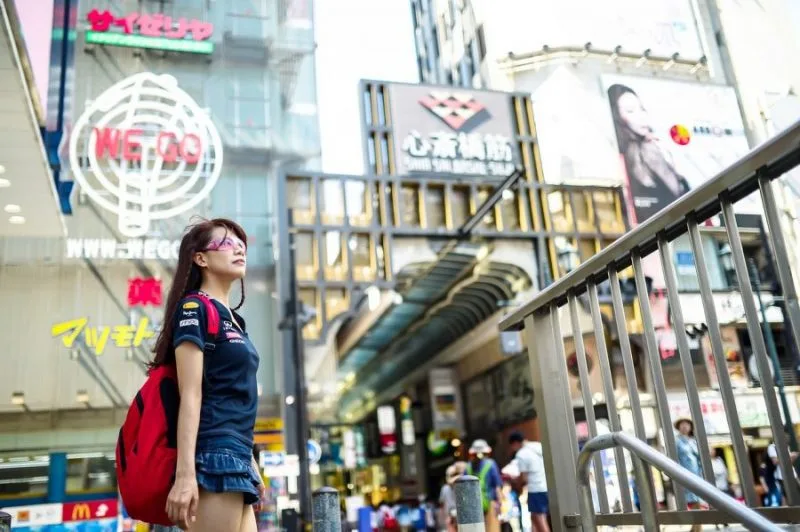
While Japan is remarkably safe overall, major metropolitan nightlife hubs require normal situational awareness. Entertainment districts such as Shinjuku's Kabukicho and Roppongi in Tokyo, or Dotonbori in Osaka, attract large crowds, international tourists, and late-night revelers.
The primary risks in these entertainment zones involve financial scams, aggressive touting, and excessive alcohol consumption. Aggressive touts on the street often attempt to lure visitors into unregulated bars with promises of cheap drinks, leading to exorbitant charges or spiked beverages. Exploring nightlife in Japan safely means ignoring street solicitors, drinking responsibly, and keeping personal belongings secure.
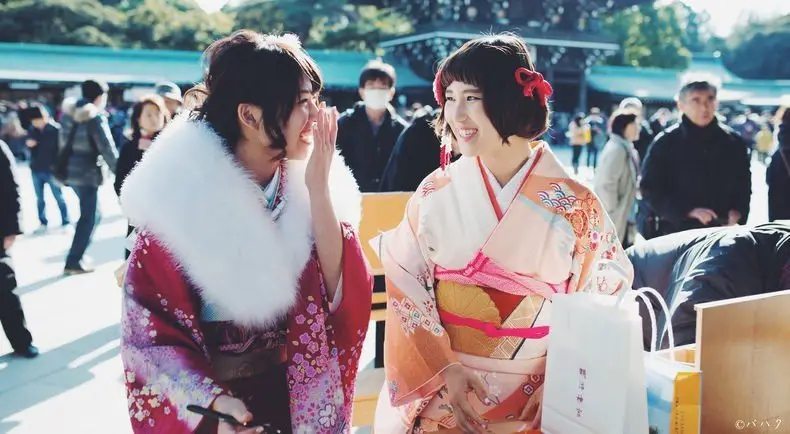
Street etiquette also reflects cultural norms. While walking alone at night is common and safe, staying on well-lit main avenues rather than dark alleyways is always good practice. Observing local social customs, such as speaking quietly in public spaces or noticing how people cover their mouth when laughing, helps visitors feel in tune with their surroundings.
Practical Perspective on Women's Safety in Japan
Japan remains one of the most welcoming and peaceful destinations in the world for women traveling alone, studying, or working abroad. Its low violent crime rates, efficient infrastructure, and courteous civic environment offer a level of day-to-day comfort that few other countries can match.
Recognizing that transit harassment and voyeurism exist empowers travelers with practical awareness rather than fear. By utilizing women-only carriages during morning commutes, downloading the Digi Police application, keeping emergency numbers like 110 accessible, and trusting your intuition in social situations, you can navigate Japan with genuine confidence and ease.



Community
Comments
0 comments
There are no published comments in this language yet.
Send comment