

The first Xbox arrived in Japan on February 22, 2002. Microsoft had prepared the launch with a large budget, Bill Gates travelled to events in person and the company courted Japanese developers. Almost a quarter of a century later, one thing is clear: no Xbox generation has come close to the success of Sony and Nintendo in Japan. The reasons are more varied than the popular talk of Japanese disinterest suggests.
Contents 7
A hard start: February 2002
The Japanese market was crucial for Microsoft. Winning there means signing Japanese developers for exclusive games, and those games in turn make a console attractive in the country. The Xbox launched with that logic but without a decisive advantage: the brand was unknown, the console was large and expensive, and the PlayStation 2 already had an enormous installed base.
Even so, there were small successes. Dead or Alive 3 and Metal Wolf Chaos were Xbox exclusives developed by Japanese studios. In total the first Xbox sold 472,992 units in Japan according to Famitsu data. That was not a disaster, but a fraction of the PlayStation 2, which sold millions of units in the same period.
Xbox 360: the serious attempt
With the Xbox 360, Microsoft changed its approach. The console launched in December 2005, well before the PlayStation 3, and Peter Moore, then in charge of the Xbox business, invested specifically in Japanese role-playing games. Mistwalker developed Lost Odyssey and Blue Dragon, Tales of Vesperia launched as an exclusive at first, and The Idolmaster also debuted on the Xbox 360. It remains the company's most consistent Japan push to date.
It brought the Xbox 360 about 1.6 million units in Japan. Worldwide the console reached roughly 84 million units, of which Japan was only a small part. In the second half of the generation Microsoft cut back investment in Japanese titles, while Nintendo dominated with the DS and Wii and Sony brought the PlayStation 3 back into contention. The early lead disappeared.
Xbox One: late and without a plan

The Xbox One launched in November 2013, but in Japan only in September 2014. Almost a year of delay meant nine months in which the PlayStation 4 and Wii U filled the shelves. In its first week in Japan the Xbox One sold 23,562 units, according to Famitsu. That was a weaker start than the Xbox 360, and the gap grew from there.
Across the whole generation the Xbox One reached about 142,000 units in Japan. In some weeks it sold only a little more than a hundred units, often in double digits. Marketing was barely visible, Japanese exclusives were missing, and the price with Kinect made entry expensive. For some buyers the 4K Blu-ray player was the only reason to buy an Xbox One at all.
Why the market is not simply uninterested
The explanation that "Japanese players do not want an Xbox" falls short. Japanese players buy plenty of games, just on devices they trust. Several factors work together here.
The first is content. In Japan the library decides the purchase, and that includes RPGs, visual novels and series that appear on PlayStation and Nintendo. Microsoft proved during the 360 era that it could finance such games. In the Xbox One generation that commitment was missing, and with it the reason to consider the console at all.
The second is retail. Japanese electronics stores are small and shelf space is limited. A console that does not get space is not seen. Several retailers have dropped the Xbox from their range in recent years. Microsoft therefore sells part of its consoles directly through its own store, which lowers everyday visibility even further.
The third is trust. Nintendo and Sony have been part of Japanese everyday culture for decades, and their brands are tied to childhood and the living room. For many buyers an Xbox is an import product whose online services, language and community feel less familiar. Barriers like that do not disappear with a marketing budget; they fade over years.
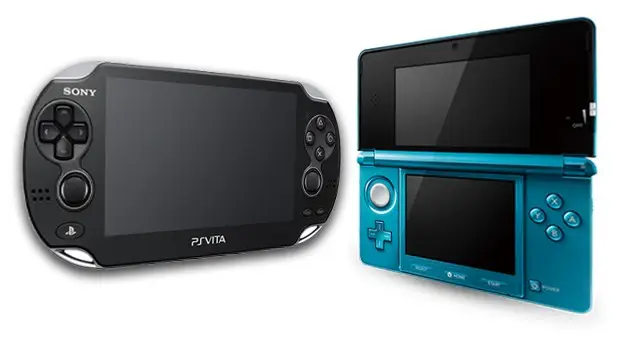
The fourth is the shift in the market itself. Handhelds and smartphones have shaped gaming in Japan since the DS era, and the home console market has shrunk overall. Many people who play in Japan today play on mobile, on PC or on a Switch. The Xbox therefore competes not only with Sony and Nintendo but with a different consumption pattern.
Xbox Series X|S: progress and a price problem
The current generation started in November 2020. The Xbox Series S was cheaper than the competition and sold reasonably well in Japan at first, until Microsoft could no longer meet demand. According to Famitsu, the series reached 700,142 consoles by May 2026: 326,910 Series X, 31,136 Series X Digital Edition and 342,096 Series S.
That puts the current generation well ahead of the Xbox One and almost level with the first Xbox. Measured against the market, it remains small. In the same period the PlayStation 5 reached about 7.57 million units and the Switch 2 about 5.83 million. For comparison: over 20 years Microsoft has sold around 2.35 million Xbox consoles in Japan.
In August 2024 Microsoft raised Japanese prices. The Series X then cost 66,978 yen, the 1 TB Series S 49,978 yen and the 512 GB model 44,578 yen. In 2025 sales fell by about 75 percent to just over 30,000 consoles for the year. That is the weakest figure in years and shows how sensitive the small Japanese Xbox market is to price.
What Microsoft does differently today
Today's strategy relies less on hardware and more on services. Game Pass bundles subscriptions, cloud gaming makes games available without a console, and the PC is a growing market in Japan where Microsoft is present with Windows and its own store. Partnerships with Japanese publishers and regular appearances at the Tokyo Game Show have been added.
Distribution has also shifted: Microsoft now releases its games on more platforms, reaching Japanese players without an Xbox console. For the brand that is an opening, for the console business a shift. People who buy an Xbox in Japan now do so less out of necessity and more out of interest in Game Pass or in specific titles.
Conclusion: a door that does not open by itself
The history of Xbox in Japan is a history of missed chances on both sides rather than one of indifference. Microsoft arrived late, invested half-heartedly at times, neglected retail and raised prices at the end. The Japanese market, meanwhile, rewards familiar brands, Japanese content and devices that fit everyday life.
Together, both explain why the Xbox remains a niche there. The Series X|S has shown that more is possible than in the Xbox One years. Whether that becomes lasting success depends less on a single console than on whether Microsoft keeps content, prices and retail presence consistent over years.
Readers who want to follow the development of Japanese gaming culture can find articles on the history of video games in Japan, the rise of Sony and Nintendo character names in Japanese.





Community
Comments
0 comments
There are no published comments in this language yet.
Send comment