

The Japanese entertainment industry has a glossy image: idols shining on stage, agencies that treat their talents like family, and audiences queuing for a few seconds of handshake. That image has another side. Since the 1980s, media and survivors have reported abuse of power, sexual assault, opaque contracts and an industry that looked away for a long time. This article puts the best-known cases in context and explains the structural problems behind them.
Contents 8
The image of purity
Japanese idols are marketed not only as performers but as projection surfaces. Female idols are expected to appear romantically unattached and inexperienced. Many groups have rules against relationships, and agencies control what the public learns about private lives. Anyone caught can lose jobs, advertising contracts or membership.
For people in their twenties, that is a real sacrifice, because relationships at that age are normal. The rules are not the same everywhere, and some groups have relaxed them. The basic pattern remains: the business model depends on an image that collides with the real lives of the people involved. Critics call it a form of control that goes far beyond an ordinary employment contract.
The Kitagawa case
The biggest scandal in recent history concerns Johnny Kitagawa, the founder of the agency Johnny & Associates. There were already reports of sexual abuse of boys under his contract in 1988 and 1999. Japanese media largely ignored the story, and Kitagawa sued the magazine that first reported it in detail. In 2023, the picture changed.
A BBC documentary and statements by a former trainee brought the cases back into the public debate. An independent investigation concluded in August 2023 that Kitagawa had repeatedly abused boys from the early 1970s until the mid-2010s. According to reports, 478 people claimed to be victims, 325 sought compensation, and 150 could be confirmed as former contract talents. The agency renamed itself SMILE-UP, and its artists moved to STARTO ENTERTAINMENT in 2024.
The power of the agencies
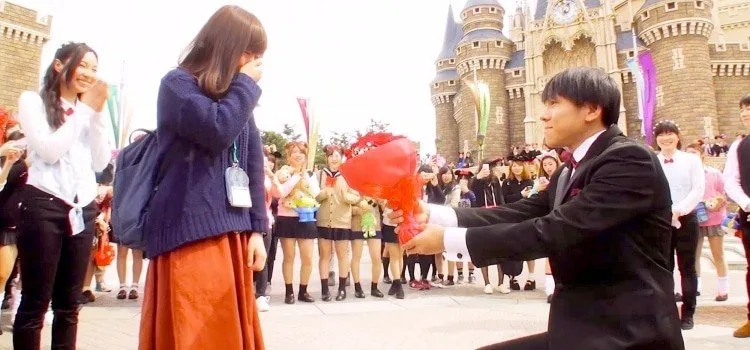
Japanese talent agencies work differently from American management firms. They often bind young people for the long term, pay a fixed salary and keep the lucrative income from advertising and merchandise. In return, they organise appearances, housing and the whole career. That can mean protection, but it also creates dependence.
Anyone who rebels against the agency risks their career. Media companies, in turn, rely on stars from the big agencies and therefore report cautiously. The Kitagawa case shows how far that can go: for decades there was hardly any critical coverage in Japan, even though the allegations were known. This structural closeness between agencies, television and the press is the core of the problem.
The Fuji TV scandal
In December 2024, Japanese magazines reported sexual harassment allegations against former television host Masahiro Nakai. The reports suggested that executives at Fuji Television were involved in covering them up. It triggered one of the broadcaster's biggest crises. 75 advertisers pulled their commercials, and in January 2025 president Koichi Minato and chairman Shuji Kano resigned.
Nakai ended his entertainment activities on January 23, 2025. A third-party committee published its report on March 31, 2025 and criticised the corporate culture. The case shows that the problem is not limited to a single agency. It also affects the broadcasters that benefit from closeness to the stars and prefer to resolve conflicts internally.
Violence from fans

Not every danger comes from above. On May 25, 2014, a 24-year-old man attacked two members of the group AKB48 and a staff member with a saw at a handshake event in Takizawa, Iwate Prefecture. The two idols and the staff member were seriously injured and taken to hospital. The attacker was later sentenced to prison.
Afterwards, organisers increased security at fan events. The underlying problem remains: formats that sell physical closeness to idols are hard to protect. Fans who see their idol as personal property sometimes react aggressively when the image changes. Organisers and agencies carry a responsibility that was underestimated for a long time.
Work and money

Many idols work long hours and earn little. Reports describe low fees, frequent appearances and a workload that leaves hardly any time for school, study or private life. The big money comes from advertising and merchandise, and the talents often see only a small share of it.
On top of that comes emotional labour. Handshake events, fan letters and appearances require friendliness towards strangers even when someone is tired or ill. That is rarely recognised as work. In recent years, some talents have spoken publicly about exhaustion and mental strain, and a few agencies have adjusted contracts and working hours.
What is changing
The scandals have moved things. SMILE-UP pays compensation to victims, STARTO ENTERTAINMENT has announced new rules for dealing with young talents, and the Fuji TV case has made the advertising industry more sensitive. Public pressure and independent investigations have achieved more in a short time than decades of reporting.
At the same time, gaps remain. There is no comprehensive law regulating the idol industry, and the power of the agencies is still large. Victims report long proceedings and a public that quickly moves on. Whether the reforms last depends on whether media, advertisers and courts keep paying attention in less spectacular cases too.
Conclusion
The dark side of Japanese entertainment is not one scandal but a structure. It consists of an image that pins young people to purity, agencies with enormous power, media that depend on stars, and an audience that buys into the system.
None of that means the whole industry is criminal. Millions of people work there, many with joy and fair conditions. Looking at the scandals helps to see the industry realistically and makes it easier to take victims seriously. People who admire idols can still demand that their rights be protected.
Readers who want more background can find articles on the Yakuza in Japan, on the everyday life of Japanese idols and on the dark side of idol fandom.





Community
Comments
0 comments
There are no published comments in this language yet.
Send comment