
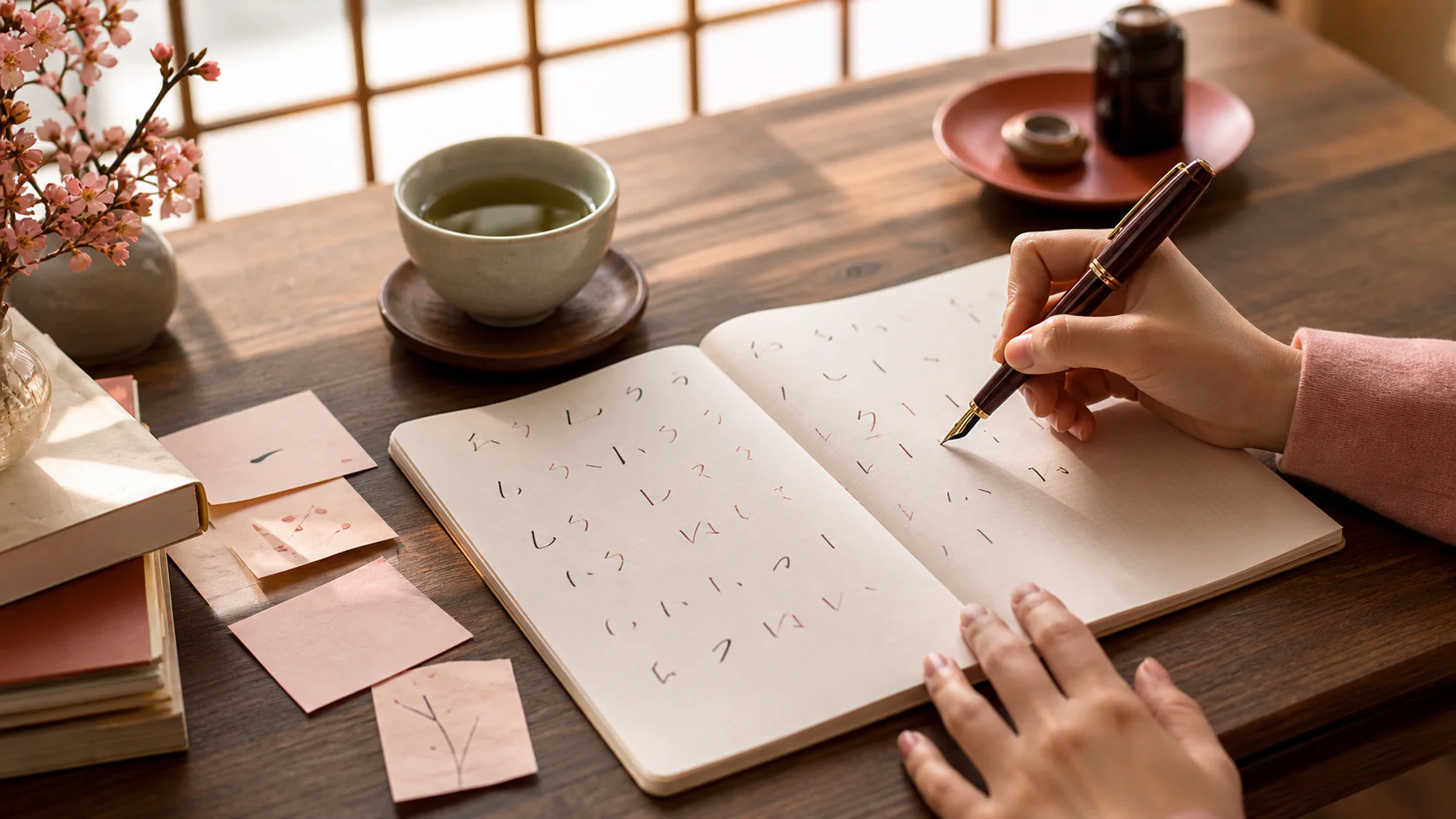
The Japanese expression "てみる" (temiru) is used to indicate that you are trying or experimenting with an action. It is formed by the verb "見る" (miru), which normally means "to see" or "to look." However, when "miru" is used after a verb in the て (te) form, as in "てみる," the meaning changes to "to try" or "to experiment."
To understand this logically, imagine that you are trying something new. First, you "see" if it is possible to perform the action. That is, you check if you can do what you are trying. This process of seeing if you can perform an action is what "temiru" represents – the act of trying or experimenting.
It is important to note that when using "temiru," it is not necessary to write the verb "miru" (見る) in kanji. Writing "temiru" only in hiragana can avoid confusion for those who are learning Japanese, preventing them from thinking it refers to the verb "to see" in its literal sense.
Contents 3
Testing Temiru
日本語を教えてみます。
Nihongo o oshiete mimasu.
I will try to teach Japanese.
これ食べてみる?
Kore tabete miru?
Do you want to try eating? It can imply: Do you want a bite?
少し考えてみます.
Sukoshi kangaete mimasu.
I will think a little about it.
The verb "temiru" can be conjugated to express different intentions. For example, you can use the "たい" (tai) form to indicate that you want to try something. Thus, "やってみたい" (yatte mitai) means "I want to try."
However, not all sentences with the expression "みたい" (mitai) should be translated as "want to try." Sometimes, "mitai" can simply express the desire to experience something or the appearance of something. Therefore, the interpretation will depend on the context of the sentence.
やってみたい。
Yatte mitai.
I want to try!
会ってみたい
Atte mitai
I would like to (try, experience) meet you.
みんなを笑いの 渦 に巻き込んでみたい。
Minna o warai no uzu ni makikonde mitai.
I want to (try) put a smile on everyone's face.
てます - Temasu
There are several other ways to use the verb "to see" in Japanese, besides "てみる" (temiru). For example, "みせる" (miseru) means "to show" and is used to indicate that you are showing something, rather than trying to do something.
It is important to remember that "temiru" is just one of many ways to express the act of trying or experimenting in Japanese. Another relevant verb is "試す" (tamesu), which means to try, test, or experiment. The verb "tamesu" is often used to test or investigate something in a more detailed or methodical way.
When "tamesu" is combined with "temiru," forming "こころみる" (kokoromiru), the meaning becomes "to try" or "to test the result/performance of an action." Here are some examples:
- 脱走を試みる (Dassō o kokoromiru) – To try to escape (from prison)
- 能力を試す (Nōryoku o tamesu) – To test the ability
These forms offer different nuances to the concept of trying or experimenting in Japanese.
脱走を試みる.
Dassō o kokoromiru.
To try to escape. (from prison)
能力を試す.
Nōryoku o tamesu.
To test the ability. See other verbs that can mean to try or experiment:
ラーメンを試食する。
Rāmen o shishoku suru.
To experiment with ramen. (to taste)
彼は全力を尽くした
Kare wa zenryoku o tsukushita
He tried his best.
Video Lesson
To conclude and complement this article, we will leave a video lesson from Sensei Luiz Rafael along with phrases for you to study:
使ってみるとわかる。
Tsukatte miruto wakaru.
If you try to use it, you will understand.
- 使う(つかう):to use
- わかる:to understand
食べてみると、思っていたより美味しかった。
Tabete miru to, Shitau tte ita yori oishikatta.
When I tried eating, it was tastier than I thought.
- 食べる(たべる):to eat
- 思う(おもう):to think, to find
- より:more than
- 美味しい(おいしい):tasty
その問題は解いてみると簡単でした。
Sono mondai wa hodoite miruto kantandeshita.
When I tried to solve this problem, it was easy.
- その:this
- 問題(もんだい):problem, question
- 解く(とく):to solve
- 簡単(かんたん):simple
- でした:was
どんな仕事でもやってみる価値がある。
Don'na shigoto de moyatte miru kachigāru.
No matter what the job is, it is worth trying.
- どんな:the type of
- 仕事(しごと):work
- やってみる:to try
- 価値(かち):value, merit
- ある:to have, to exist






Community
Comments
0 comments
There are no published comments in this language yet.
Send comment