The last thing that comes to mind when thinking of Japan is terrorist attacks perpetrated by some group of fanatics.
Not even a country as safe as Japan is immune. On the morning of March 20, 1995, members of Aum Shinrikyo boarded Tokyo Metro trains at rush hour carrying plastic bags of liquid sarin wrapped in newspaper.
They were heading for Kasumigaseki and Nagatachō, the seat of the Japanese government. They were not foreign militants. They were Japanese, and they had already tested the same nerve agent the year before.
Contents4
Who carried out the attack
Aum Shinrikyo (オウム真理教) is a Japanese cult founded by Shoko Asahara in 1984. Asahara, born Chizuo Matsumoto, built the group around yoga, a mix of Buddhist and Hindu language, and a violent reading of Christian apocalypse. This was not everyday Shinto or Buddhist practice in Japan. It was a closed doomsday sect.
Aum Shinrikyo, which later split into Aleph and Hikari no Wa in 2007, has been classified as a terrorist organization by several countries, including Russia, Canada, Kazakhstan, and the United States. In Japan the successor groups remain legal, but they stay under public-security surveillance.
In 1992, Shoko Asahara published a book in which he declared himself "Christ," the only enlightened master of Japan, and identified as the "Lamb of God."
He outlined a prophecy of the day of judgment, which included a Third World War, and described a final conflict that would culminate in a nuclear Armageddon. Killing outsiders, in that doctrine, was framed as a spiritual rescue.
Matsumoto, 1994: the first sarin attack
Tokyo was not the first time Aum used sarin. On the night of June 27, 1994, members released the nerve agent from a truck in a residential neighborhood of Matsumoto, in Nagano Prefecture. The target was a group of judges hearing a land case against the cult.
Eight people died — seven in the immediate aftermath, and an eighth in 2008 — and hundreds were injured. Japanese police did not fully connect Matsumoto to Aum until after the subway attack. That earlier gassing was, in practice, a field test.
The attack on the Tokyo Metro
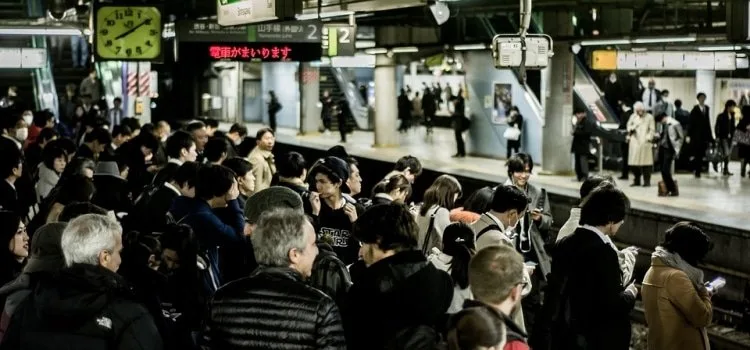
On Monday, March 20, 1995, five members of Aum Shinrikyo launched a chemical attack on the Tokyo subway, one of the busiest passenger transport systems in the world, during the morning rush hour.
The chemical agent used, liquid sarin, was contained in plastic bags that each perpetrator wrapped in newspaper.
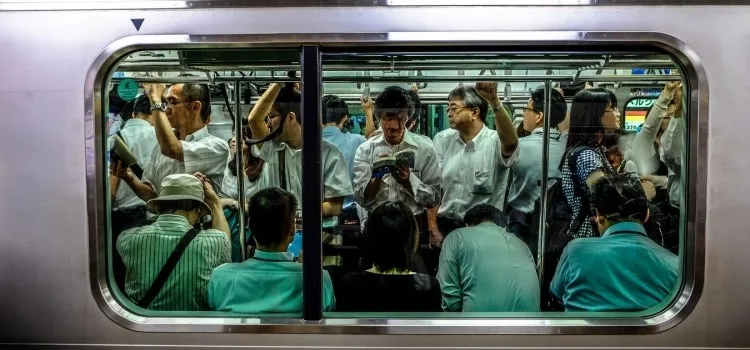
The five packages were left on trains of the Chiyoda, Marunouchi, and Hibiya lines — then operated by the Teito Rapid Transit Authority, today's Tokyo Metro — heading toward Kasumigaseki, where several ministries sit. Anyone who has used trains in Japan knows how dense that commute is: the bags were sitting at people's feet.
A single drop of sarin the size of a pinhead can kill an adult. Carrying their sarin packages and umbrellas with sharp tips, the perpetrators boarded their designated trains.
At different stations, the sarin packages were discarded and punctured several times with the sharp tip of the umbrella.
Each perpetrator then exited the train and left the station to meet their accomplice with a car. Leaving the punctured packages on the ground allowed the sarin to escape into the train and the stations.
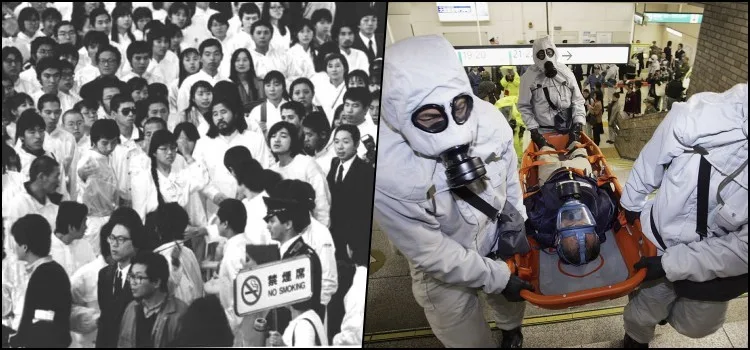
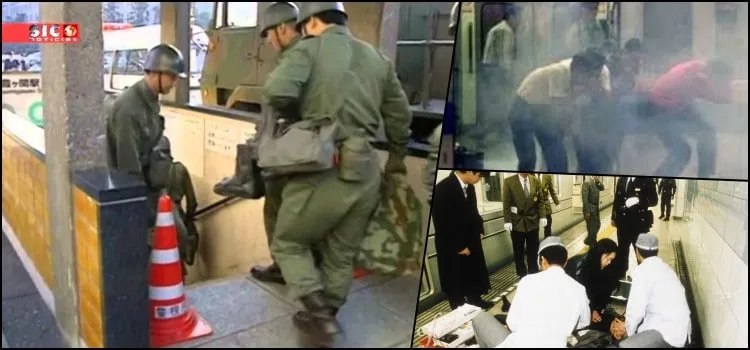
The sarin gas affected passengers, subway workers, and those who came into contact with them. Station staff who tried to pick up the leaking bags were among the people exposed. Two subway employees died after trying to remove them.
Sarin is the most volatile of nerve agents. This means it can evaporate quickly and easily from a liquid to a vapor and spread into the environment.
People can be exposed to the vapor even if they do not come into contact with the liquid form of sarin.
Because it evaporates so quickly, sarin poses an immediate but short-lived threat — unless clothing, platforms, and train interiors keep carrying it from one person to the next.
On the day of the attack, ambulances transported 688 patients, and nearly 5,000 people arrived at hospitals by other means.
17 were considered critical, 37 serious, and 984 moderately ill with vision problems.
The death toll on the day of the attack was eight. It later rose. Early counts spoke of 12 dead. The figure most often used now is 13 people killed, with thousands injured.
After the sarin gas attack
By mid-afternoon, the slightly affected victims recovered from vision problems and were discharged from the hospital.
Most of the remaining patients were well enough to go home the next day, and within a week only a few critical patients remained in the hospital.
The attack provoked major disturbances and widespread fear in a society that had previously been perceived as virtually crime-free.
Some time after the attack, Aum lost its status as a religious organization, and many members were arrested.
The Japanese parliament rejected a request to ban the group. However, public security received funding to monitor the group and reduce the activities of those involved.
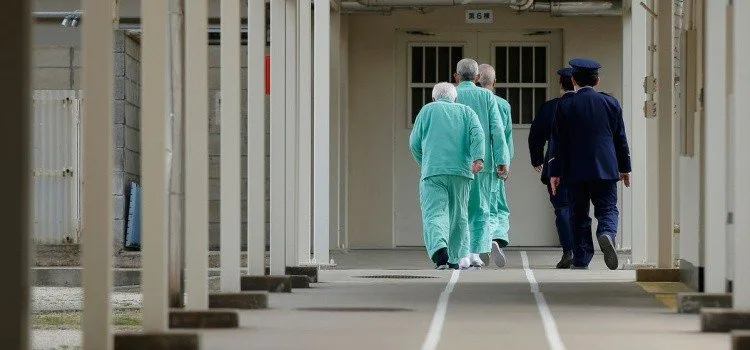
Subsequently, 189 members were charged: 5 were sentenced to life imprisonment, 13 were sentenced to death, 80 were sentenced to varying terms, 87 had suspended sentences, 2 were fined, and one was found innocent.
In July 2018, Shoko Asahara and the other condemned members were executed by hanging. The successor groups, Aleph and Hikari no Wa, still exist under surveillance.
Thirty years on, survivors still live with damaged eyesight, fatigue, and trauma. Memorials continue at Kasumigaseki Station. For the people who were on those trains, the chemical attack is not a closed chapter — even if, for much of the country, the memory has started to fade.
Japan still has a reputation for safety. March 20, 1995 is the reminder that the threat that broke it came from inside: a homegrown cult, plastic bags, and a Monday commute.
Kevin Henrique has written about the Japanese language, culture, anime, games, and travel since founding Suki Desu in 2014. He first visited Japan in 2016.
Community
Comments
0 comments
There are no published comments in this language yet.

 In 1992, Shoko Asahara published a book in which he declared himself "Christ," the only enlightened master of Japan, and identified as the "Lamb of God."
He outlined a prophecy of the day of judgment, which included a Third World War, and described a final conflict that would culminate in a nuclear Armageddon. Killing outsiders, in that doctrine, was framed as a spiritual rescue.
In 1992, Shoko Asahara published a book in which he declared himself "Christ," the only enlightened master of Japan, and identified as the "Lamb of God."
He outlined a prophecy of the day of judgment, which included a Third World War, and described a final conflict that would culminate in a nuclear Armageddon. Killing outsiders, in that doctrine, was framed as a spiritual rescue.
 Each perpetrator then exited the train and left the station to meet their accomplice with a car. Leaving the punctured packages on the ground allowed the sarin to escape into the train and the stations.
The sarin gas affected passengers, subway workers, and those who came into contact with them. Station staff who tried to pick up the leaking bags were among the people exposed. Two subway employees died after trying to remove them.
Sarin is the most volatile of nerve agents. This means it can evaporate quickly and easily from a liquid to a vapor and spread into the environment.
People can be exposed to the vapor even if they do not come into contact with the liquid form of sarin.
Because it evaporates so quickly, sarin poses an immediate but short-lived threat — unless clothing, platforms, and train interiors keep carrying it from one person to the next.
On the day of the attack, ambulances transported 688 patients, and nearly 5,000 people arrived at hospitals by other means.
17 were considered critical, 37 serious, and 984 moderately ill with vision problems.
The death toll on the day of the attack was eight. It later rose. Early counts spoke of 12 dead. The figure most often used now is 13 people killed, with thousands injured.
Each perpetrator then exited the train and left the station to meet their accomplice with a car. Leaving the punctured packages on the ground allowed the sarin to escape into the train and the stations.
The sarin gas affected passengers, subway workers, and those who came into contact with them. Station staff who tried to pick up the leaking bags were among the people exposed. Two subway employees died after trying to remove them.
Sarin is the most volatile of nerve agents. This means it can evaporate quickly and easily from a liquid to a vapor and spread into the environment.
People can be exposed to the vapor even if they do not come into contact with the liquid form of sarin.
Because it evaporates so quickly, sarin poses an immediate but short-lived threat — unless clothing, platforms, and train interiors keep carrying it from one person to the next.
On the day of the attack, ambulances transported 688 patients, and nearly 5,000 people arrived at hospitals by other means.
17 were considered critical, 37 serious, and 984 moderately ill with vision problems.
The death toll on the day of the attack was eight. It later rose. Early counts spoke of 12 dead. The figure most often used now is 13 people killed, with thousands injured.
 Subsequently, 189 members were charged: 5 were sentenced to life imprisonment, 13 were sentenced to death, 80 were sentenced to varying terms, 87 had suspended sentences, 2 were fined, and one was found innocent.
In July 2018, Shoko Asahara and the other condemned members were executed by hanging. The successor groups, Aleph and Hikari no Wa, still exist under surveillance.
Thirty years on, survivors still live with damaged eyesight, fatigue, and trauma. Memorials continue at Kasumigaseki Station. For the people who were on those trains, the chemical attack is not a closed chapter — even if, for much of the country, the memory has started to fade.
Japan still has a reputation for safety. March 20, 1995 is the reminder that the threat that broke it came from inside: a homegrown cult, plastic bags, and a Monday commute.
Subsequently, 189 members were charged: 5 were sentenced to life imprisonment, 13 were sentenced to death, 80 were sentenced to varying terms, 87 had suspended sentences, 2 were fined, and one was found innocent.
In July 2018, Shoko Asahara and the other condemned members were executed by hanging. The successor groups, Aleph and Hikari no Wa, still exist under surveillance.
Thirty years on, survivors still live with damaged eyesight, fatigue, and trauma. Memorials continue at Kasumigaseki Station. For the people who were on those trains, the chemical attack is not a closed chapter — even if, for much of the country, the memory has started to fade.
Japan still has a reputation for safety. March 20, 1995 is the reminder that the threat that broke it came from inside: a homegrown cult, plastic bags, and a Monday commute.




Community
Comments
0 comments
There are no published comments in this language yet.
Send comment