
In Japan, Kyojuu Tokusou Juspion was one of many tokusatsu shows of the 1980s. In Brazil it became a television phenomenon that shaped a generation and opened the door for other Japanese series. For Brazilians, the name “O Fantástico Jaspion” still brings back a hero in armour, a giant robot and an unforgettable theme song.
This article explains what the series is, what it is about, why it took off in Brazil and what has survived of it.
Contents 8
What Jaspion is
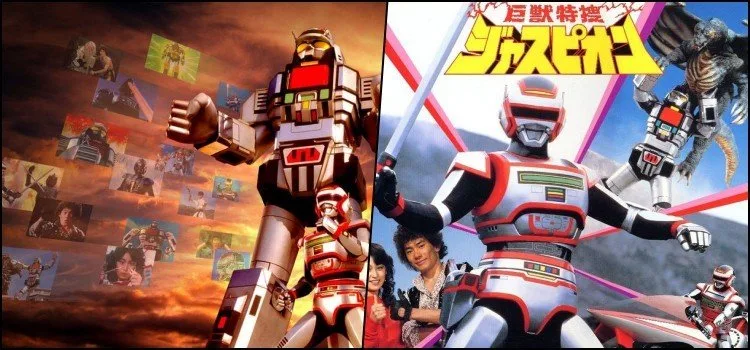
Kyojuu Tokusou Juspion (巨獣特捜ジャスピオン) aired on TV Asahi from 15 March 1985 to 24 March 1986 and ran for 46 episodes of 25 minutes each. Toei Company and Asatsu-DK produced it, Saburō Yatsude created it, Shozo Uehara developed the concept and Yoshiaki Kobayashi directed. Michiaki Watanabe composed the music and Tōru Ōhira was the narrator.
In Brazil the series was released as “O Fantástico Jaspion”. According to producer Susumu Yoshikawa, the name Juspion is a blend of “Justice” and “Champion”.
The story
The space hermit Edjinn reads a prophecy in the galactic Bible: when the dark god Satan Goth awakens, giant enraged monsters will ravage the universe. Edjinn sends his pupil Juspion to stop Satan Goth and the so-called MegaBeasts. Juspion travels with his friends Anri, an android, and Miya, an alien girl, aboard the battleship Daileon.
Eventually he lands on Earth, which turns out to be a prolific source of MegaBeasts. There he meets Satan Goth and his son MacGaren. Juspion is equipped with the Metal Tech armour made from the rare mineral Edjinium, a Sensor Eye, a Plasma Blazer Sword and a Beam Scanner Gun. The mothership Daileon can transform into the giant robot Daileon, and it carries the tank Garbin and the motorcycle Iron Wolf.
A hero of the Metal Hero line
Jaspion belongs to Toei's Metal Hero line, which began in the early 1980s with series such as Space Sheriff Gavan. The mix of space, armour, a monster of the week and a giant robot was the formula of the genre at the time. Jaspion wears silver armour and fights with a combination of sword, gun and hand-to-hand combat, a pattern that appealed to children around the world.
The music
The Japanese opening song is “Ore ga Seigi da! Jaspion” (“I am Justice!”), written by Keisuke Yamakawa, composed by Michiaki Watanabe and performed by Ai Takano. The ending ballad “Space Wolf Juspion” is also performed by Takano. In Brazil the series aired with a Portuguese dub, and the melody became many viewers' first contact with Japanese television music.
The road to Brazil
The Brazilian businessman Toshihiko Egawara, founder of Everest Video, licensed the series for the home video market, with records released by Top Tape. Under the title “O Fantástico Jaspion”, it arrived on VHS from mid-1987 with all 46 episodes dubbed in Portuguese between 1986 and 1987. Once the tapes proved popular, television channels became interested.
Several networks turned it down at first. On 22 February 1988, the series finally premiered in prime time on Rede Manchete, the same day as another Toei tokusatsu, Dengeki Sentai Changeman, on the same channel.
Why Brazil loved the hero
Jaspion was the first tokusatsu series from the 1980s to air in Brazil, where viewers had mostly seen reruns of older shows such as National Kid and Ultraman. It connected with a young audience and reached ratings above Globo's “Xou da Xuxa” at the time, with up to 15 points, a record for Rede Manchete. The success opened the door for more tokusatsu and anime in Brazil.
Merchandise followed, from backpacks and lunch boxes to toys, clothes and comics with original stories by Brazilian artists. The dub also helped: magic words such as “Berebekan Katabanda” and the cry “Kikerá!” are still quoted today.
Villains and MegaBeasts
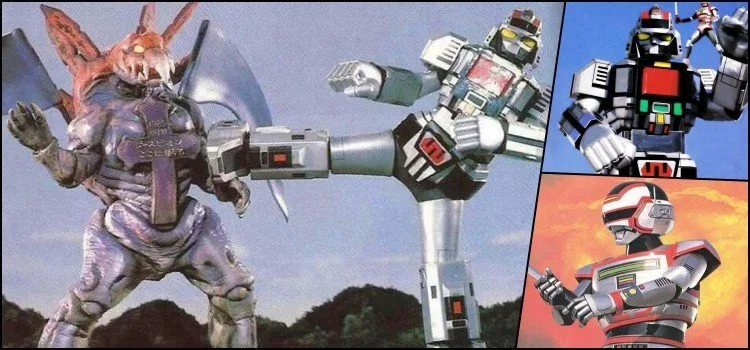
Satan Goth and his son MacGaren are the centre of the threat. Their monsters usually appear as MegaBeasts in each episode and must be defeated by Jaspion. When the fight grows too large he turns to his final tool: Daileon transforms into the giant robot and ends the battle with a double punch from space.
What Jaspion left behind
The series stayed in the Brazilian memory for decades and later aired on other channels. Focus Filmes released a DVD edition with all episodes, the original Japanese audio with Portuguese subtitles and the Brazilian dub. The successor series Jikuu Senshi Spielban was marketed in Brazil as “Jaspion 2: Spielvan”.
In February 2018 a Brazilian remake film was announced with Toei's support. In 2020 the publisher JBC released the manga “O Regresso de Jaspion”, which continues the story after the series ended. A Toei representative once explained the success by saying that Brazilians, with their easy-going character, were curious about the clear and futuristic drama.
For European viewers, Jaspion is above all an example of how a Japanese series can take on a life of its own in another country. In Germany the show stayed a niche phenomenon; in Brazil it belongs to the childhood of several generations.
Read more: tokusatsu: history and heroes, nostalgia of tokusatsu, the best superhero anime, the planets in Japanese and how to find the name of an anime or series.





Community
Comments
0 comments
There are no published comments in this language yet.
Send comment