

Detective Conan, known internationally as Case Closed, is one of those anime that looks easy to skip until you actually spend time with it. The episode count is huge, the earliest TV material clearly shows its 1990s roots, and the premise sounds almost too simple. Then the first good case lands, the deduction clicks, and you understand why this series lasted for decades.
This remains one of my favorite recommendations for viewers who enjoy mysteries, recurring rivalries, and a cast that becomes more rewarding over time. Detective Conan works both as a chain of self-contained cases and as a longer chase involving the Black Organization that changed Shinichi Kudo's life.
If you usually like suspense, detective fiction, or anime with a strong weekly rhythm, this series has much more to offer than its age suggests.

Contents 5
What Detective Conan Is About
The story starts with high school detective Shinichi Kudo. After he witnesses a suspicious deal involving two men in black, he is attacked and forced to take the experimental poison APTX 4869. He survives, but wakes up in the body of a child. To stay hidden while he investigates the group behind the attack, he adopts the name Conan Edogawa.
Conan ends up living near Ran Mouri and quietly solving cases through her father, Kogoro Mouri. That setup gives the anime its familiar rhythm: clues, misdirection, locked-room tricks, and the final explanation that pulls every detail into place. At the same time, the larger story keeps returning through recurring enemies, allies, and revelations.
The official manga description from Weekly Shonen Sunday still captures the core appeal well: Shinichi keeps solving impossible cases while trying to recover his true identity and expose the organization that transformed him.
Why The Series Still Works
The biggest strength of Detective Conan is balance. It can spend one episode on a clean standalone mystery and then slide back into a bigger conspiracy without losing the appeal of either side. That makes the series easier to enjoy than its size suggests.
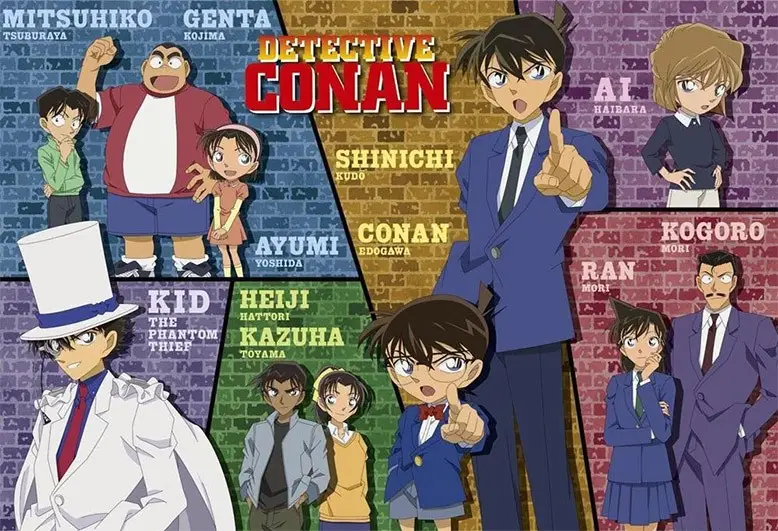
I also like how much the supporting cast matters. Ran, Kogoro, Heiji Hattori, Ai Haibara, Kaito Kid, and the regular police characters are not just background faces around Conan. They change the tone of each arc, add tension or humor when needed, and keep the formula from becoming dry.
Another reason the anime lasts is atmosphere. Detective Conan can feel cozy, funny, tense, and slightly melancholic in the same stretch. The soundtrack helps, but so does the way the series uses hotels, train stations, mountain lodges, school trips, city neighborhoods, and seasonal events as part of the mystery itself.
If you enjoy anime that teaches you a little about places and everyday settings in Japan while still telling a strong story, this is one of the easiest long series to sink into. It also sits naturally beside other titles on my list of anime worth watching at least once.
What May Frustrate New Viewers
The size of the franchise is the obvious barrier. If you look at the episode count first, Detective Conan can feel more like homework than entertainment. It becomes much easier to enjoy when you stop thinking about catching up and start treating it as a series you can live with over time.
The other issue is repetition. The show has patterns that fans accept quickly: Kogoro receiving credit, dramatic reveal scenes, gadgets that stretch plausibility, and a timeline that only works if you do not examine it too closely. None of that ruins the series for me, but it explains why some viewers bounce off early.
The earliest TV episodes also have an older visual style that may be a hurdle for viewers who mostly watch modern digital anime. If that is your case, starting with a newer movie or a recent batch of episodes can be an easier way in before returning to the beginning.
Why Detective Conan Stayed So Popular
Detective Conan did not survive this long because of one clever premise alone. Its staying power comes from reliable mystery structure, a huge recurring cast, and a format that is easy to recognize after just a few episodes. The manga has been running since 1994, and the anime is still a major weekly title in Japan.
Official channels also keep the franchise active through movies, anniversary campaigns, and international streaming pushes. That helps explain why the series remains visible even after so many years.
Outside Japan, Conan can feel oddly underrated compared with battle shonen giants. I think that happens because the series asks for a different kind of patience. It is less about constant escalation and more about enjoying deduction, rhythm, tension, and long familiarity with the cast.

Final Verdict
If you want a fast anime that resolves everything in a short run, Detective Conan is probably not the best fit. If you want a long mystery series that can be funny one moment, sharp the next, and surprisingly comforting once it becomes part of your routine, it is absolutely worth watching.
For me, the appeal has always been simple: even after all these years, Detective Conan still knows how to build curiosity around a clue, a suspect, or a tiny contradiction. That is why the series keeps working.
If you want another mystery-heavy recommendation after this one, the series also fits naturally with lists of psychological and suspense anime and with manga picks for readers who like following recurring cases while learning bits of language and culture along the way.






Community
Comments
0 comments
There are no published comments in this language yet.
Send comment