
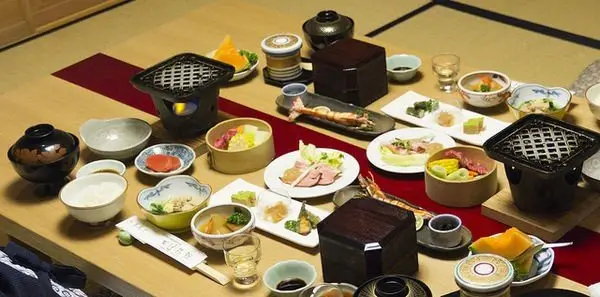
The Japanese Kaiseki cuisine is known for its meticulous preparation and beautiful presentation. It is also one of the most expensive Japanese meals. Kaiseki restaurants often offer a private room – often with a view of a Japanese garden.
In the past, Kaiseki was a simple banquet served to monks that began to gain fame in the tea ceremony, eventually turning into a sophisticated banquet composed of several dishes served in various portions.
There are no rules regarding food, but there is all that Japanese aesthetics. And these meals are often divided into up to 14 types of dishes that we will see below:
Also read:
- The 100 Most Popular Japanese Foods in Japan
- List of 100 Japanese Sweets
- Unagi – Freshwater Eels in Japanese Cuisine
Table of Contents
The Origin and History of Kaiseki
The origin of Kaiseki dates back to the 16th century when Zen monks in Japan began serving simple meals to visitors in their temples. These meals consisted of simple dishes, such as cooked rice, vegetables, and tea. Over time, these meals were refined and became increasingly sophisticated, including finely prepared and presented dishes.
Kaiseki is a form of culinary art that values simplicity, the quality of ingredients, and elegant presentation. The word “Kaiseki” refers to a formal and traditional Japanese meal, which typically includes a series of delicately prepared dishes presented in a specific order. Each dish is designed to please not only the palate but also the eyes, and is carefully selected to harmonize with the other dishes in the meal.
Kaiseki is often compared to French haute cuisine, but with an emphasis on simplicity and the presentation of natural ingredients. It is a dining experience that can be enjoyed in a formal setting, such as a specialized Kaiseki restaurant, or in a more informal setting, such as a traditional Japanese inn, known as a ryokan.
Dishes of Kaiseki
Sakizuke (先附): This is a small dish served at the beginning of the meal to open the appetite and welcome the guests. It usually consists of one or two bites of food, such as a piece of sashimi or a small salad.
Hassun (八寸): is an appetizer dish that consists of a wooden or ceramic tray with a variety of small dishes showcasing seasonal and local ingredients. The dishes may include fish, meat, vegetables, rice, and other items.
Mukōzuke (向付): is a sashimi dish that is usually served after the hassun. It consists of thin slices of raw fish, such as tuna or salmon, and is often decorated with herbs or edible flowers.
Takiawase (煮合わせ): is a dish that features vegetables and fish cooked together. The ingredients are usually cut into small sizes and are carefully arranged on a plate.
Futamono (蓋物): is a soup that may include a variety of ingredients, such as fish, tofu, or vegetables. The soup is usually served in a dish with a lid and is presented elegantly.

Yakimono (焼物): is a grilled dish, such as fish or meat. The dish is usually seasoned with soy sauce or other seasonings to enhance the natural flavor of the ingredients.
Su-zakana (酢肴): is a dish that features pickled fish. The fish is usually marinated in vinegar and seasoned with salt and sugar to create a sweet and sour flavor.
Shiizakana (強肴): Usually a pot with a hot dish. To provide greater satisfaction to the appetite, or to stimulate a bit more sake, this mixture may be based on vegetables and nerimono (fish-based dough, which can be kamaboko, chikuwa, hanpen, etc.)
Gohan (御飯): is cooked rice, usually served with miso and other simple accompaniments. The rice is usually of high quality and is considered an important part of a Kaiseki meal.
Kō no mono (香の物): is a fruit or dessert served at the end of the meal. It is usually a light and refreshing dessert, such as fresh fruits or ice cream.

Tome-wan (止椀): is a thicker soup than the Futamono and is usually served in a small dish or bowl.
Taki-gohan (焚きご飯): is a dish of rice cooked in a hot broth, usually made from seafood and vegetables.
Mizumono (水物): is a light dessert, usually consisting of fresh fruits, gelatin, or ice cream.
Kaiseki ryori (懐石料理): The general name that refers to the entire set of Kaiseki dishes, which may vary according to the chef or the season.
Naka-choko (中猪口): is a cleansing soup or light broth served after the main dish and before dessert.

Shokuji (食事): is the last part of the Kaiseki meal, in which cooked rice, miso soup, and other simple accompaniments are served, to ensure that guests finish the meal completely satisfied.
Omogashi-koicha (主菓子-濃茶): Sweet and Tea.
Each of these dishes is designed to provide a unique and authentic dining experience, combining fresh, high-quality ingredients, elegant presentation, and meticulous preparation.
There are also other dishes not mentioned, which are often served at tea ceremonies and not in restaurants.

How Much Does a Kaiseki Meal Cost?
The price of a Kaiseki meal can vary greatly, depending on the restaurant you choose and the number of dishes included in the meal. Some high-quality restaurants may charge hundreds or even thousands of dollars per person for a complete Kaiseki meal, while other restaurants may have more affordable prices.
On average, a Kaiseki meal can cost between $50 and $300 per person, but again, this can vary widely depending on the restaurant. If you are interested in trying a Kaiseki meal, it is advisable to do careful research and book in advance to ensure you can enjoy the full experience.
We also recommend reading:
- The Bento – Japanese Lunchboxes – The Art of Culinary
- Ryokan – The Charming Japanese Inns
- 18 Wagashi – Japanese Desserts
Cheap Kaiseki Varieties
Sometimes you can find promotions and offers for lunch or dinner, which range from 3,000 to 10,000 yen per person. (75 to 250 Reais.)
Some restaurants also sell lunchboxes priced between 3,000 to 6,000 yen per person. (75 to 150R$)
There are also common restaurants that sell kaiseki; they do not offer private rooms and bring all the food at once in boxes. They usually cost between 6,000 to 15,000 yen (150 to 380 Reais.)
Ryokan inns also often offer a small kaiseki during your stay.
The Best Kaiseki Restaurants
With the rise in popularity of Japanese cuisine worldwide, many high-quality Kaiseki restaurants have emerged in various cities in the West. Here are some examples of popular Kaiseki establishments in the West and in Japan:
N/Naka – Los Angeles, USA: N/Naka is a Kaiseki restaurant located in Los Angeles, run by chef Niki Nakayama. The restaurant offers a personalized tasting experience with seasonal dishes inspired by Kaiseki cuisine, using local ingredients and Japanese cooking techniques.
Kikunoi – Kyoto, Japan: Kikunoi is a Kaiseki restaurant established in Kyoto, Japan, since 1912. Chef Yoshihiro Murata is known for his skills in preparing classic Kaiseki dishes, using fresh, high-quality local ingredients.
RyuGin – Tokyo, Japan and Hong Kong: RyuGin is a Kaiseki restaurant located in Tokyo, Japan, which also has a location in Hong Kong. Chef Seiji Yamamoto is known for his ability to transform natural ingredients into delicate and beautiful dishes, with complex flavors and textures.
Shigeyoshi – Japan: Shigeyoshi is a small Kaiseki restaurant located in Tokyo, run by chef Kenzo Sato. The restaurant offers a unique and personalized dining experience, using fresh, seasonal ingredients in traditional Kaiseki dishes.
Kitcho – Osaka, Japan: Kitcho is a Kaiseki restaurant in Osaka, Japan, run by chef Kunio Tokuoka. The restaurant is known for its emphasis on high-quality ingredients, as well as its elegant presentation of Kaiseki dishes.
- Kaiseki Room by Yamada – New York, USA
- Kaiseki Yuzu – Las Vegas, USA:
- Kaiseki Saryo Hachi – Burlingame, CA, USA
- Kaiseki Sanga – Las Vegas, USA
Leave a Reply