
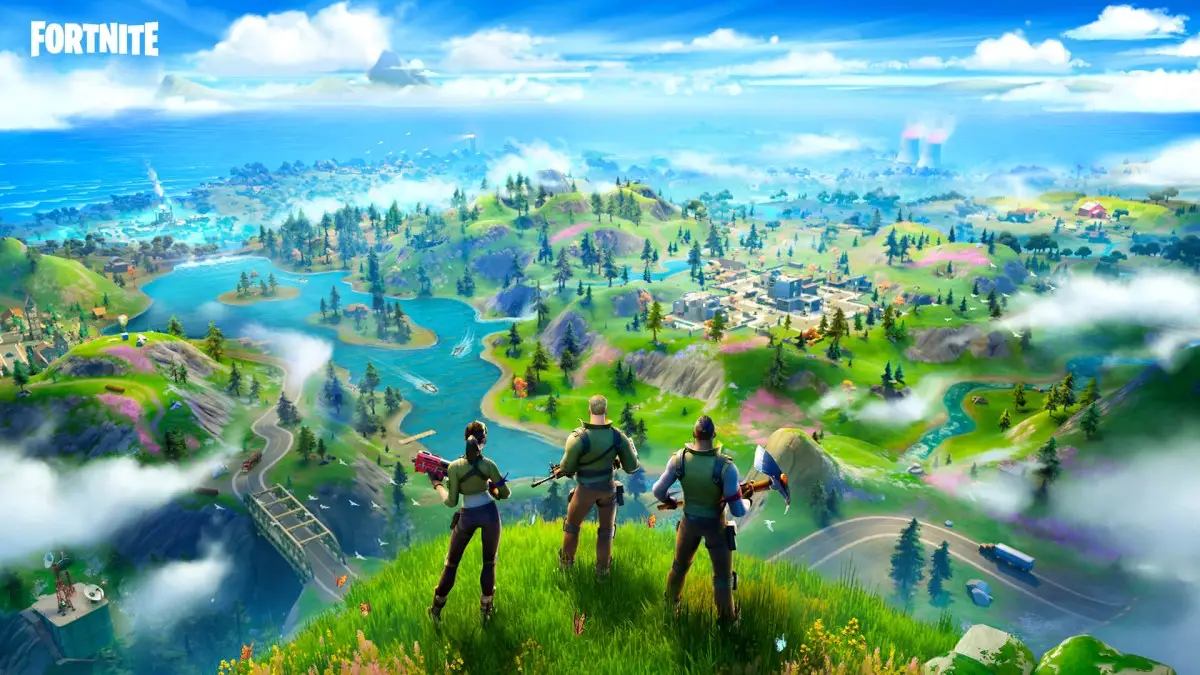
PUBG and Fortnite opened an era of battle royale games in which a hundred players drop onto an island and fight until one remains. In Japan the genre took a different path than in Europe or the United States: realistic shooters struggled there for years while role-playing games and cute titles dominated, and yet Japanese players now show up in the same Fortnite lobbies as everyone else.
This article does two things. First, it explains why Fortnite works in Japan and how the Japanese novel and film Battle Royale prepared the ground for the genre. Second, it gives you a vocabulary list with weapons, items and in-game terms in Japanese, so you can join the voice chat instead of muting it.
Contents 15
Why Japanese players enjoy Fortnite
For years the Japanese market was dominated by role-playing games and cute titles, and realistic first-person shooters had a harder time. Anyone in Japan who wants to play with guns often reaches for airsoft replicas rather than a console shooter. Fortnite did not fill that gap with realism; it filled it with colour, cartoon characters and live events.
For language learners that is a lucky accident. Start a squad round today and you will often land with Japanese players, and the voice chat becomes real practice: short sentences, clear intentions, plenty of repetition. The words below cover exactly what those few minutes require.
The Japanese work behind the name
Long before the genre reached video games, Japan had a novel with exactly that title. The English phrase battle royal has described a fight with many participants since the seventeenth century, in boxing among other places; the novel made it a genre label again.
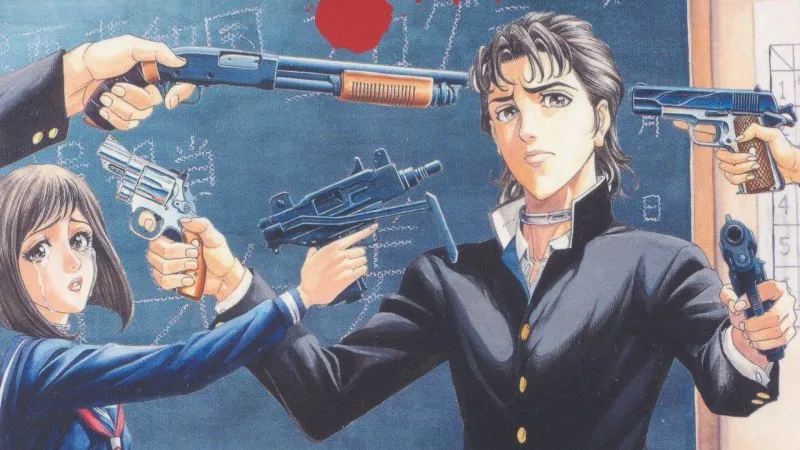
Batoru Rowaiaru [バトル・ロワイアル] is the Japanese title. Koushun Takami wrote it in 1996 and it was published in 1999, quickly becoming both a bestseller and a scandal. A manga series, a 2000 film by Kinji Fukasaku and further adaptations followed; an American television version never got past planning.
The premise is simple and brutal: a school class is taken to an isolated island, fitted with collars and weapons, and forced to kill each other until only one is left. The whole thing is broadcast on television, and anyone who has not won after three days dies as well. That mix of rules, cameras and a time limit is exactly what the game genre borrowed decades later.
Anime and manga with the same premise
The best-known anime in this tradition is Btooom!. Players of an online game are forced onto an island and fight for survival using only bombs, which means the rules of the game suddenly apply to real life.
Danganronpa mixes the premise with investigation and trial: a class is locked away, and after every death the survivors have to identify the killer. The series began as visual novels and was adapted into several anime seasons.
Mirai Nikki pits twelve people against each other so that one of them becomes a god. Their diaries show fragments of the future and turn into strategic tools during the fight.
Then there are manga such as Doubt, closer to a locked-room mystery, Ousama Game, whose 2017 anime is hard to recommend, and Real Account, which turns the rules of a social network into mortal danger.

Weapons and items in Japanese
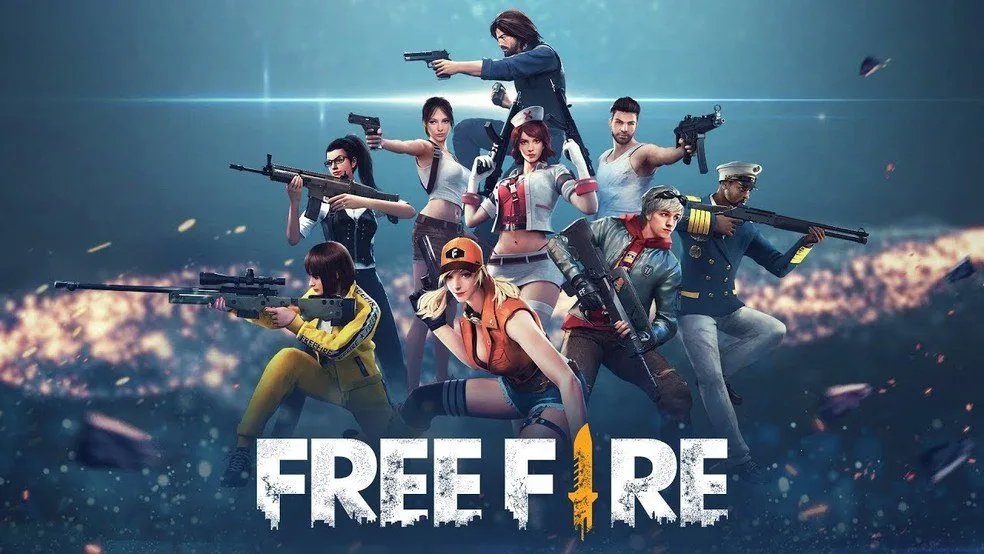
The table lists weapons and items from Fortnite with the Japanese spelling and romaji. The same words appear in similar form in PUBG, Free Fire and other battle royale games.
| English | Japanese | Romaji |
| Assault Rifle | アサルトライフル | asaruto raifuru |
| Burst Assault Rifle | バーストアサルトライフル | bāsuto asaruto raifuru |
| Pump Shotgun | ポンプショットガン | ponpu shotto gan |
| Tactical Shotgun | タクティカルショットガン | takutikaru shotto gan |
| Bolt-Action Sniper | ボルトアクションスナイパー | boruto akushon sunaipā |
| Submachine Gun (SMG) | サブマシンガン | sabu mashin gan |
| Pistol | ピストル | pisutoru |
| Rocket Launcher | ロケットランチャー | roketto ranchā |
| Bandage Bazooka | バンテージバズーカ | bantēji bazūka |
| Harpoon Gun | ハープーンガン | hāpūn gan |
| Grenade | グレネード | gurenēdo |
| Pickaxe | ツルハシ | tsuruhashi |
| Outfits | コスチューム | kosuchūmu |
| Glider | グライダー | guraidā |
| Scoped Revolver | スコープ付きリボルバー | sukōpu-tsuki riborubā |
| Minigun | ミニガン | minigan |
| Slurp Juice | スラープジュース | surāpu jūsu |
| Chug Jug | チャグジャグ | chagu jagu |
| Stink Bomb | スティンクボム | sutinku bomu |
| Chug Splash | チャグスプラッシュ | chagu supurasshu |
| Bush | ブッシュ | busshu |
More in-game vocabulary
The second list collects words that come up during a round and in the victory screen. Learning them makes callouts from teammates much easier to follow.
| English | Japanese | Romaji |
| Item Shop | アイテムショップ | aitemu shoppu |
| Assault | アサルト | asaruto |
| Safe Zone | 安置 | anchi |
| Aim | エイム | eimu |
| Emote | エモート | emōto |
| Eliminate | エリミネート | eriminēto |
| Opening phase | 開幕 | kaimaku |
| Supply Drop | 救援物資 | kyūen busshi |
| Fisherman | 漁夫 | gyofu |
| Aerial battle | 空中戦 | kūchū-sen |
| Glider | グライダー | guraidā |
| Crafting | クラフト | kurafuto |
| Supply | サプライ | sapurai |
| Materials | 資材 | shizai |
| Season | シーズン | shīzun |
| Squad | スクワッド | suwaddo |
| Storm area | ストームエリア | sutōmu eria |
| Instant landing | 即着 | sokuchaku |
| Solo | ソロ | soro |
| Double pump | ダブルポンプ | daburu ponpu |
| Chest | チェスト | chesuto |
| Challenge | チャレンジ | charenji |
| Teaming | チーミング | chīmingu |
| Tier | ティアー | tiā |
Things to keep in mind while learning
Three practical points. First, many game terms are English loanwords written in katakana, so they stay English in sound and only change in pronunciation. Second, short commands such as "here" or "careful" matter more in chat than full sentences, so learn those first. Third, politeness can be dropped in a match; a simple thanks is enough.
More on this topic: anime skins in Fortnite, Japanese Fortnite names, V-Bucks, the Japanese game industry and a Japanese gaming name generator.
Words that are often mistranslated
Three examples show why the Japanese spelling matters. 安置 (anchi) literally means "to place" or "to install", but in Fortnite it names the safe zone. チェスト (chesuto) comes from English chest and means a loot chest, not a treasure. 即着 (sokuchaku) combines "immediate" and "arrive" and describes landing right after the jump. Knowing these three makes the round callouts readable without guessing.
How the words sound in a match
The romaji in the tables follows Hepburn, the convention used in Japanese teaching: shi, chi, tsu and fu instead of English spelling habits. Japanese speakers give syllables even weight, without the English stress on the first syllable, and a macron such as sunā marks a long vowel. In voice chat, do not swallow the final -u the way English speakers do with loanwords; pronounce it briefly and you will be understood immediately.
Why collaborations land in Japan
Fortnite has spent years borrowing anime licences, including Naruto, Dragon Ball and My Hero Academia. For Japanese players that detail often becomes the reason to start: the characters are familiar, outfits are collected rather than bought, and an event reaches further than any advertising campaign. Learning Japanese in that environment means running into words from those series constantly, as names, emotes and catchphrases.
How a Japanese lobby differs
Two things stand out when you drop with Japanese players. Callouts are short and often reduced to a single word plus a direction, and players tend to mark the map instead of describing it. The tone stays polite even after a bad round, which is why a quick thanks at the end goes a long way. If you answer in Japanese, expect a short reply and then a stream of katakana terms for items and zones, which is exactly what the lists above cover.
A short practice routine
Pick five words from the first table and three from the second, and use only those for one evening. Say them out loud before the round, then listen for them in the chat. Repeat the same eight words the next day instead of adding new ones, and only move on when you recognise them without translating in your head. It sounds slow, but it works better than memorising the whole table at once.
What the novel adds to the games
The novel centres on a class that knows each other, where points do not exist. The forty-two students of Shiroiwa High School are sent against one another within three days, and a television programme broadcasts the whole thing. The 2000 film directed by Kinji Fukasaku kept that structure and started a wave of similar stories. The games inherited the frame and removed the reason: instead of a class forced to fight, strangers opt in, and the pressure comes from the closing zone rather than from a camera.
When nobody answers in English
Many Japanese players understand written English better than spoken, so typing in the lobby often works when voice chat stays silent. Keep it to simple lines: where to land, what to pick up, whether to push. If someone replies in Japanese and you only catch half of it, a short repeat with a question mark is normal and nobody minds. The worst outcome is muting the squad; the best is a routine of ten or fifteen phrases that you can use in every match.
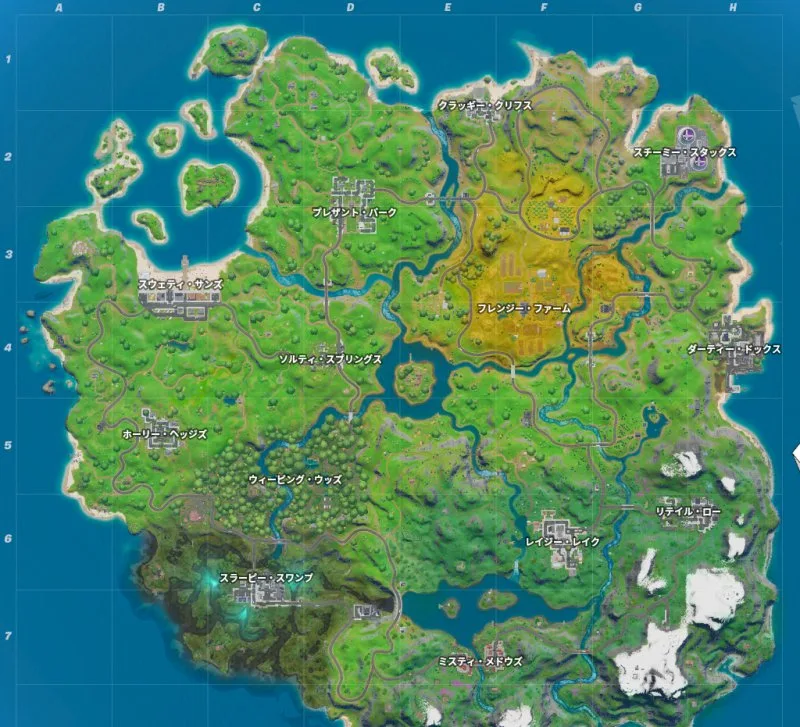
Words for the map itself
Some of the most useful words have nothing to do with weapons. A building is 建物 (tatemono), a town is 街 (machi), a mountain is 山 (yama), a river is 川 (kawa) and a forest is 森 (mori). When a teammate marks a spot and says one of these, you know whether to expect close quarters or open ground. Add them to the same routine as the weapon words and the map callouts stop sounding like noise.
Final thoughts
Battle royale has its own Japanese prehistory, from the 1999 novel to anime and manga. Fortnite works there as a meeting point where learners can practise real conversations. The tables above are enough for a first round, and the rest comes while playing. Pick two titles from the anime list, watch one episode each and you will already recognise the vocabulary the characters use in the game.


Community
Comments
0 comments
There are no published comments in this language yet.
Send comment