
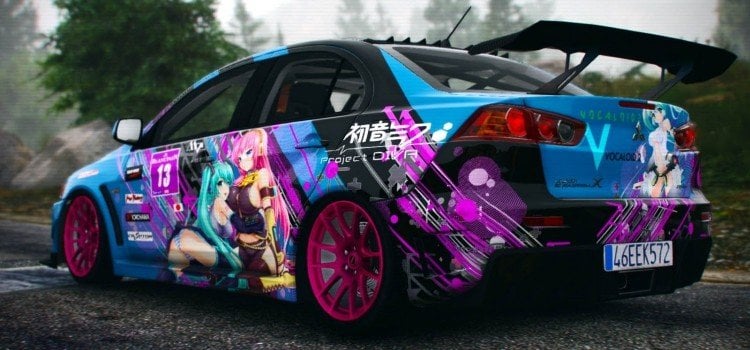
In Japan, the passion for animes and mangas goes beyond collectibles and invades the streets. It is in this scenario that the concept of Itasha (痛車) emerges, customized cars with stickers and paintings of characters from animes, mangas, games, or idols. This practice combines otaku culture with automotive customization, creating true works of art on wheels.
The term “Itasha” carries a curious meaning: originally, in the 1980s, it referred to imported Italian cars (itariasha). However, in the 1990s, the word became slang that plays with the ideogram 痛 (ita), which means “pain.” For some, this customization is “painful” to the eyes, while for others, it is a passion worth every penny.

How did Itasha culture emerge?
The Itasha culture began to gain traction in Japan in the 1990s, when the first decorated cars started to appear on the streets. The practice was influenced by other Japanese automotive trends, such as bosozoku (biker gangs) and the dekotora trucks, famous for their extravagant decorations. Initially, Itasha were simple stickered cars, but the practice evolved to include complex designs, customized accessories, and even fully themed interiors.
The turning point came in 2005, with the striking presence of Itasha at the Comiket (Comic Market), the largest dōjinshi (independent manga) event in Japan. Two years later, the Auto Salon held a convention dedicated exclusively to Itasha cars, consolidating the hobby as part of Japanese pop culture.

How much does an Itasha wrap cost?
Transforming a regular car into an Itasha can be a significant investment. Costs vary depending on the type of customization and the complexity of the design, but here are some approximate values:
- Partial wrapping: Between 50,000 and 150,000 yen (about 300 to 1000 USD), depending on the area to be covered and the quality of the material.
- Full wrapping (complete wrap): Can cost from 200,000 to 500,000 yen (1300 USD to 3300 USD). Detailed designs or those customized by renowned artists can be even more expensive.
- Custom painting: This method is less common due to the high cost, exceeding 500,000 yen.
In addition to stickers and paintings, many enthusiasts invest in accessories, such as custom wheels, LED lights, and even engine modifications, which can significantly increase costs.
Besides the wrap, cars used in Itasha are generally expensive and sophisticated models like GR Corolla, Nissan 370z, Toyota 86, Subaru BRZ, Mazda MX, Honda Civic, Nissan Silvia, and other compact sports cars.
Of course, minivans, kei cars, and even trucks are not left out. Others even create Itasha from motorcycles and bicycles. Anything with wheels can become an Itasha depending on how much you want to spend.
How to create Itasha abroad?
Although Itasha is more popular in Japan, the practice is growing in other countries. Here are some tips for creating your own Itasha abroad:
- Plan the design:
- Choose your favorite characters or themes and decide how they will be arranged on the car. Software like Photoshop can help with visual planning.
- Find sticker suppliers:
- Look for local companies that offer automotive wrapping services. Many accept custom designs sent by customers.
- Make sure to use high-quality materials, such as UV-resistant vinyl, so the stickers do not fade over time.
- Consider local laws:
- Check traffic and automotive customization regulations in your area. In some countries, certain types of wrapping may be prohibited or require authorization.
- Add unique touches:
- In addition to external stickers, you can customize the car’s interior with cushions, mats, and themed accessories to complete the experience.

Where to find Itasha in Japan?
If you are a fan of Itasha culture, Japan offers iconic places where you can admire these decorated cars:
Itasha in Akihabara
Akihabara, in Tokyo, is the epicenter of otaku culture and one of the best places to see Itasha. During weekends, it is common to find cars parked on the nearby streets, showcasing their elaborate designs. In addition, events and meetups for enthusiasts are regularly held in the area.
Other popular locations:
- Nipponbashi (Osaka): Known as the “Akihabara of Osaka,” it is another meeting point for Itasha fans.
- Osu (Nagoya): The area is famous for its pop culture shops and also attracts enthusiasts of decorated cars.
- Itasha events: Large events like the Auto Salon and regional exhibitions offer the chance to see dozens of Itasha gathered in one place.
The influence of Itasha on global culture
Itasha have become a symbol of otaku pride, inspiring events and conventions around the world. The practice has also expanded to other means of transportation, such as motorcycles (Itansha) and bicycles (Itachari), in addition to influencing even bolder projects, such as themed airplanes.
In Brazil, Itasha culture is still emerging, but the presence of customized vehicles at anime events demonstrates the potential for growth of this trend. Whether due to the passion for iconic characters or the pursuit of artistic expression, Itasha continue to unite fans around the world.
The world of Itasha reflects the creativity and love of anime and manga fans. Decorating a car with favorite characters goes beyond simple customization; it is a way to express identity and passion. If you have ever had the opportunity to see an Itasha up close, you know the visual and emotional impact these machines can have. And who knows? Maybe you will be inspired to create your own.
Leave a Reply