
Visiting Japan for the first time is less about ticking off temples and skyscrapers than about noticing how daily life works: quiet trains, clean stations, politeness formulas and food organised by region. This guide explains how to experience the real country without reducing it to a list of sights: when to go, which places deserve the time, how to travel, where to sleep and what preparation actually helps.
Contents 12
Why Japan travels differently
Japan was almost completely closed between 1639 and 1853 and developed its own forms of city life, craft and cuisine during that period. The effects are still visible today, from the way temples sit next to residential blocks to the way guests are treated. Travellers do not meet this as a museum but in ordinary places: a convenience store on the corner, station announcements, the care with which purchases are wrapped.
When to go
Cherry blossom season in March and April draws the largest crowds and the highest prices. If you want fewer people, travel in May, October or November. Summer is hot and humid, but that is when the big festivals happen. Winter is cold and quiet, and the mountains get snow. Region matters too: Hokkaido in the north is cooler, while Okinawa in the south stays mild even in winter.
Tokyo: arriving in the city
Tokyo looks like one continuous city at first, yet it is a collection of neighbourhoods with distinct moods. Shinjuku and Shibuya are loud and bright, while Yanaka and Kōenji are much calmer. A good first day combines a market in the morning, a museum at midday and a narrow alley of small restaurants in the evening. If you arrive by train, get an IC card; it works on buses, trains and in many shops.
Kyoto: temples and ordinary life
If you can only visit one city, choose Kyoto. Golden pavilions, shrines at the edge of the forest and districts of wooden houses are all here. Timing matters: the famous sites fill up from mid-morning, while early morning is almost empty. Away from the main streets you find tea houses, workshops and gardens that show the character of the old capital. For half a day, consider a trip to the countryside, such as the bamboo grove at Arashiyama.
Osaka and the Kansai region
Osaka is known for food and loud conversation. From there, Nara with its deer and the old capital of Nagaoka are easy day trips. With more time, continue to Kobe or the coast. The region is more densely populated than rural Japan, so cities and landscape combine well.
Nature: mountains, lakes and forests
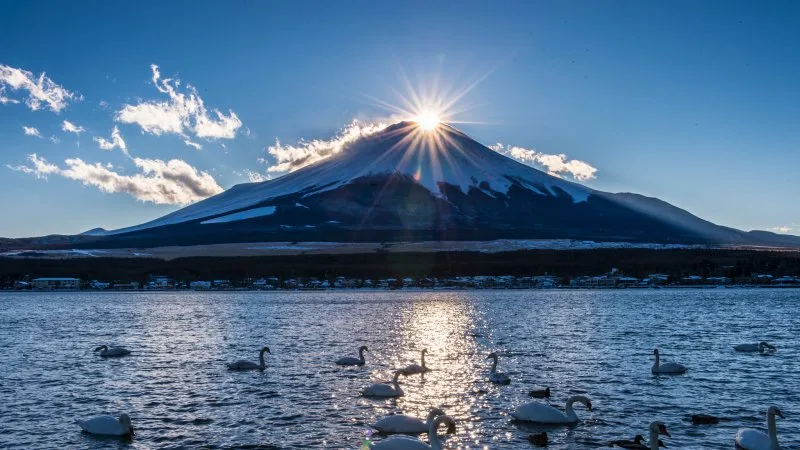
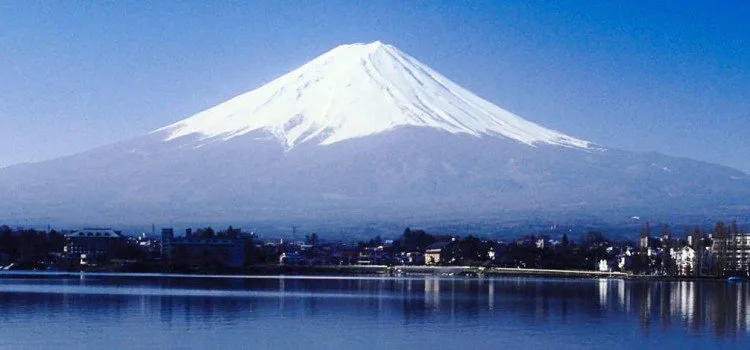
Mount Fuji is the best-known goal, but not the only one. Around Lake Yamanaka there are hiking trails, hot springs and quiet shores. In the Japanese Alps you can plan multi-day routes, while the forests of Tohoku in the north reward slower travel. Planning matters: many mountain huts close in winter and rural buses run less often.
Temples, shrines and onsen
Temples and shrines are not scenery but places where people pray, hold festivals and mark the new year. Visitors should follow a few rules: do not stand in the middle of the path at a gate, bow before the shrine and rinse hands and mouth. An onsen is also a cultural space. First-time visitors wash thoroughly before entering and keep towels outside the water. A ryokan with a private onsen is a good way to combine both.
What to eat
Cuisine changes a lot by region. Tokyo offers sushi, tempura and many styles of ramen, while Osaka has okonomiyaki and takoyaki. In the countryside, look for local dishes: soba in Nagano, oysters in Hiroshima, seafood in Hokkaido. If you want to eat cheaply, station areas and shopping streets have small restaurants with fixed-price lunch sets.
Festivals
Matsuri follow the seasons. In summer, neighbourhoods carry shrines through the streets; autumn brings harvest celebrations, spring the blooming trees. If you want to attend one, check whether it falls within your dates and arrive early, because the best spots fill quickly. For visitors, festivals are often the most direct way into a neighbourhood.
Practical preparation
A few things make the trip easier. Cash still matters, even though cards are widely accepted. The JR Pass only pays off with several long-distance trips; regional passes are often cheaper. If you move often, leave luggage in station lockers. Etiquette is less strict than its reputation: speaking quietly, not eating on the train and taking off your shoes where required is usually enough.
Off the main route
To escape the crowds, look for Nagasaki with its traces of trade with Europe, Wakayama with pilgrimage routes and coastline, or Kanazawa with gardens and workshops. These places are less crowded and show a Japan that was not built for postcards. They take longer to reach, but they stay in memory longer.
Final thoughts
The real Japan is not experienced on a single route. It comes from small encounters: breakfast at a convenience store, a conversation on a train, an evening at an onsen. If you allow time for detours and respect the rules of daily life, you leave with more than photographs of famous sites.
More on Japan and travel: reasons to know Japan and its culture, how long to travel in Japan, airport and immigration, buying the JR Pass, ryokan as a Japanese inn, onsen and hot springs, Kyoto guide, Tokyo neighbourhoods and must-visit places for a first trip.


Community
Comments
0 comments
There are no published comments in this language yet.
Send comment