
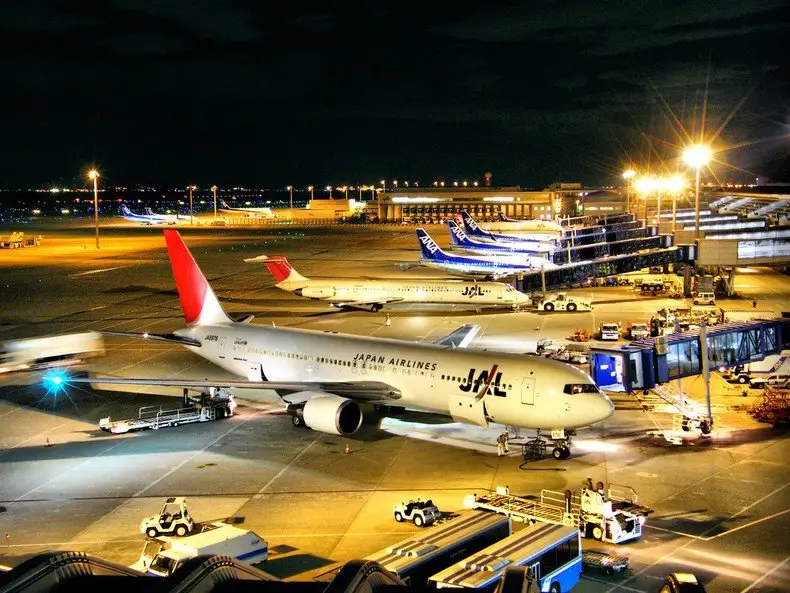
Thirty-something hours after leaving central Brazil, you can still be in the air—or finally watching Tokyo lights from the window. That stretch is what most people mean by “how long does the trip to Japan take,” and it has almost nothing to do with swimming the Pacific.
The real answer depends on your city, airline, and layover. If you meant how long you can stay as a tourist, that is a different question: usually up to three months under the right visa or visa-free entry for Japan, not the flight clock.
Contents 4
How long does a flight to Japan take
In September 2016 and 2018, I traveled to Japan from the State of Goiás to Narita, Tokyo, flying with Emirates via Dubai. I left from Brasília once and Goiânia another time, each with a connection in São Paulo.
Door to door, that trip took about 32 hours, counting the plane changes in São Paulo and Dubai. Air time was roughly 15 hours from São Paulo to Dubai and about 9 hours from Dubai to Tokyo—close to a full day spent in the cabin.
From São Paulo (GRU) to Tokyo there is still no nonstop flight. One-stop itineraries commonly land around 25 to 32 hours total, depending on the hub and how long you sit on the ground. Some multi-stop tickets can stretch toward 40–50 hours if you change planes in two countries.
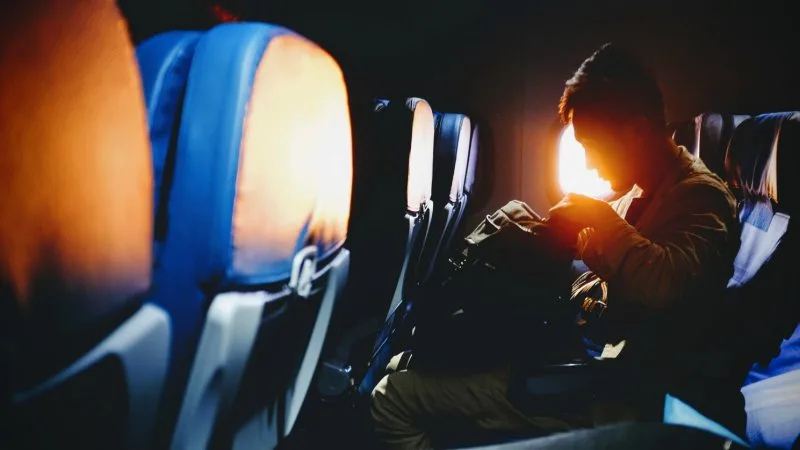
If you leave from Portugal or elsewhere in Western Europe, the journey is usually shorter—often about 16 to 20 hours with one stop or a long nonstop. Flying into Osaka or Sapporo instead of Tokyo can add a few hours of connection time inside Japan or via another Asian hub.
From Brazil, most practical routes either go through the Middle East or Europe, or they cross the Americas and the Pacific (for example via the USA or Canada). Both can work; total time is what matters more than the map on the seat-back screen.
How long does a ship trip to Japan take
On a cruise or freighter, everything depends on the itinerary. Many options take about 40 to 60 days because they stop in several ports—and those stops often mean extra visas and health paperwork.
If a ship barely stops, crossing can theoretically approach two weeks, but pure point-to-point passages without landings are hard to book as a passenger. Weather and schedules can push some freighter routes toward months rather than weeks.
A freighter usually carries fewer guests and can be cheaper than a full cruise, but it is still a slower, pricier lifestyle choice than flying. Book well ahead—often several months—if you want a berth at all.

Curiosities about the time and distance to Japan
The straight-line distance between São Paulo and Tokyo is about 18,555 kilometers. Using that as a playful baseline (not a real road), the impossible transport math looks like this:
- Car at 100 km/h: roughly 185 hours, or about 7 days of nonstop driving in a straight line—more like two weeks if you imagine real curves and short breaks on a hypothetical land bridge.
- Walking at 5 km/h: around 154 days without rest; for a real person with sleep and food stops, think on the order of a year or more.
- Bicycle at 25 km/h: about 30 days nonstop on the same imaginary line.
- Bullet train at 300 km/h: roughly two days of pure speed, again only if the tracks somehow crossed the ocean.
- Snail at ~0.01 km/h: on the order of 200 years. Share that one if someone claims “Japan is just a hop away.”
None of these replace the airplane—but they show why a day-plus in the sky still beats almost every fantasy alternative.
Flight time from major cities to Tokyo
Approximate commercial flight times to the Tokyo area (nonstop when it exists; total journey when a stop is normal). Schedules change, so treat these as planning ranges, not boarding-pass promises:
- San Francisco / Los Angeles: about 10–12 hours nonstop; West Coast USA is the shorter American hop.
- New York / East Coast USA: about 13–15 hours nonstop when available.
- Honolulu: roughly 8–10 hours.
- Vancouver: about 9–11 hours; Toronto often ~13 hours.
- São Paulo / Rio de Janeiro: no nonstop; plan on roughly 25–32 hours with one or more connections (my Emirates trips landed near 32 hours door to door from Goiás).
- Lima / Buenos Aires: usually long one-stop itineraries in the ~20–28 hour range total—not a short hop.
- Beijing / Shanghai: about 2.5–3.5 hours.
- Seoul: about 2–2.5 hours; same broad time zone as Tokyo.
- Hong Kong / Taipei: about 3–4.5 hours.
- Singapore / Kuala Lumpur: about 7–8 hours.
- Bangkok: about 6 hours; Hanoi / Ho Chi Minh City roughly 4.5–6 hours.
- Delhi / Mumbai: about 8–10 hours.
- Dubai: about 9–10 hours (the classic Brazil–Japan stop for many Emirates tickets).
- London / major Western Europe: often about 11–14 hours nonstop or one-stop.
- Sydney / Melbourne: about 9–11 hours nonstop; Auckland roughly 11–12 hours.
Time zones also flip your body clock: Japan is about 12 hours ahead of São Paulo most of the year, and several hours ahead of Western Europe. Factor recovery into the “trip length,” not only the air hours.
So: from Brazil, expect a long one-stop day (or more). From East Asia or Australia’s east coast, you can be there before a workday ends. From everywhere else, the number sits between those extremes—and the honest answer always starts with “from where?”







Community
Comments
0 comments
There are no published comments in this language yet.
Send comment