If you study Japanese, you should know that it includes several words or variants for a single thing. Many of these variations are related to culture, hierarchy, courtesy, and formality. Gender language lives in that same mix: the way someone says they are going, or how they say I, can sound gentler or blunter without changing the dictionary meaning.
If you study Japanese pronouns, you will notice different ways to say I and you that lean by gender. There are also words, constructions, and endings treated as more masculine or more feminine. In casual Japanese that difference is still easy to hear. Anime turns the volume all the way up.
Feminine words are called onna kotoba (女言葉) while the habits of feminine conversation are called joseigo (女性語). Masculine words are called otoko kotoba (男言葉) and that conversation style is danseigo (男性語). There is also 女らしい / 男らしい for gendered behavior. A useful correction: think gentle versus blunt, not a law that every woman or man must follow.
Contents4
Spoken Japanese versus writing and keigo
The Japanese words and endings that tend to be popular among each gender are not so important that you should feel embarrassed about speaking “like a girl” (or the other way around). There are things beyond words that separate feminine language from masculine. Sometimes those words and endings only help with that.
The stereotype says women speak more softly and pick gentler words, while men pick stronger, more direct ones. Treat that as a social script, not as a personality test. Plenty of women drop the most “feminine” endings. Plenty of men live in neutral Japanese. Young speakers, in particular, often stay closer to the middle.
Gendered speech is a tool for casual conversation. It is not the default of writing, and it almost vanishes in polite speech (teineigo) and in keigo. Honorific prefixes like お- and ご- show up more in the gentle style, but that is still a register choice. Titles such as san, chan, and kun sit in a neighboring layer: they mark relationship more than “male language / female language.”
You do not need to worry too much about language and gender when you start studying Japanese. Same advice as with keigo: leave the fine shading for later. You are normally learning the neutral way of conversing, which is what shops, classrooms, and most writing actually use. Gender language also keeps changing, so a frozen list will mislead you.
Endings and their genders
If we look at how Japanese speech was taught as “proper,” we notice that women’s language was held up as a special style, while a large part of masculine language sits close to the casual standard. That picture was sharpened from the Meiji period, when schoolgirl speech was treated as a model of how women “should” sound — not because every particle was invented then.
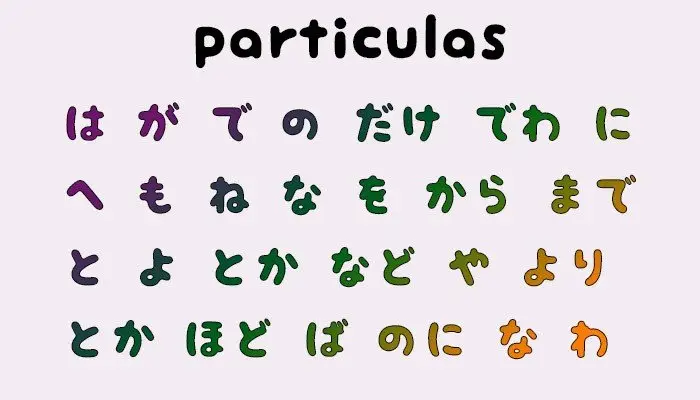
Japanese endings tend to emphasize or give some special force to the word or verb at the end of the sentence. In the standard picture, women tend to use the following endings:
わ - wa
わよ - wa yo
わね - wa ne
のね - no ne
のよ - no yo
の - no
だこと - da koto
なの - na no
のねぇ - no nee
だわ - da wa
てよ - te yo
かしら - kashira
Men, on the other hand, tend to use the following endings:
や - ya
ぜぇ - zee
ぜ - ze
だぞ - da zo
だな - da na
だ - da
だね - da ne
な - na
さ - sa
ぞ - zo
かい - kai
Practically all the examples above used to be used by both sexes. Some are still somewhat neutral and can be used by both; it all depends on the occasion, the voice, the region, and the final word of the sentence.
One detail that those lists skip: わ with a rising tone is the classic feminine particle. The same わ with a falling tone is common in Kansai and does not work as a gender badge. かしら is the “I wonder” ending; most people just say かな. Dropping だ before よ also reads feminine: きれいよ versus きれいだよ.
Girls tend to ask more questions without using ka (か) or use expressions like の and なの. Boys use か in questions more frequently and also tend to use かい and だい. かい now sounds old-fashioned — more like an uncle, or a witch in a Ghibli film, than a teenager. For the particles themselves, see sentence-ending particles such as か, の, ね, よ, な, ぞ and わ.
Pronouns, word pairs, and words that have no gender
Let's see some examples of words, expressions, and questions in neutral, masculine, and feminine. We recommend that you understand at least the basics of Japanese, as we will use only hiragana and some kanji from N5.
Neutral
Masculine
Feminine
行く
行くよ
行くわよ
日本人
日本人だ
日本人だわ
高いのか?
高いのかい?
高いの?
何?
何だい?
何なの?
私
僕/俺
あたし
First-person words do most of the obvious gendered work. 私 (watashi) is polite for everyone; in casual talk it leans feminine. 僕 (boku) is casual masculine, often boyish. 俺 (ore) is casual masculine and rougher. あたし (atashi) is casual feminine, and easy to overdo if you only know it from manga. The longer map is in how to say I with 私, 僕 and 俺.
Then there are word pairs that feel blunt versus standard, not “boys versus girls” as a law:
食べる (taberu) / 食う (kuu) — to eat
おいしい (oishii) / うまい (umai) — delicious
ご飯 (gohan) / 飯 (meshi) — a meal, rice
お腹が空いた / 腹減った — I’m hungry
The Japanese pronouns are separated by gender, but ironically, Japanese nouns and words do not usually have genders. There is no obligatory word for cat and female cat, just neko (猫). You can say 雌猫 or 雄猫 if you need the biology, but the language does not demand it. In some rare cases, Japanese speakers use honorifics that can distinguish a neutral name from a feminine and masculine one. That grammar-without-gender point is also in nouns, pronouns, and plural.
What to copy from anime — and what to leave on the screen
Although many anime use gender language, more and more women in real life speak a mostly neutral Japanese without those feminine expressions. There are many variations, exceptions, and rules that must be examined before reaching any conclusions. わよ and だぜ are excellent at painting a character in two mora. Using them at a convenience store can sound like you walked out of a panel.
If you are learning, copy the people in the same situation as you — class, shop, group chat — not only a textbook list or a shoujo heroine. Neutral Japanese will take you further, faster. The flavor can come later, once your ear can tell costume from conversation.
Kevin Henrique has written about the Japanese language, culture, anime, games, and travel since founding Suki Desu in 2014. He first visited Japan in 2016.
Community
Comments
0 comments
There are no published comments in this language yet.



 You do not need to worry too much about language and gender when you start studying Japanese. Same advice as with keigo: leave the fine shading for later. You are normally learning the neutral way of conversing, which is what shops, classrooms, and most writing actually use. Gender language also keeps changing, so a frozen list will mislead you.






Community
Comments
0 comments
There are no published comments in this language yet.
Send comment