

With the information that the visa for Yonsei students will start being released in July and that a proficiency certificate (N4 – basic level) will be required, many are starting to rush to study for the JLPT exam, which will also take place in July. That said, the question remains: How much of the Japanese language can be learned in three months?
Level 4: 1,500 words and 300 kanjis, needs to study more than 400 hours
Understanding the information above: Level 4 (N4) is achieved when you master the basics of the language – that is, when you have a command of hiragana and katakana, vocabulary, and can handle everyday situations.
400 hours of study: This is the estimated time needed to deal with all the possibilities of confusion and doubts involving the basics of the language – that is, doubts about which kanji to use, how to write a certain word, or why pronouns are not used in certain conversations. If you study with planning and dedication, in 400 hours you can master the basics of the language.

One day has 24 hours. A person generally needs 6 – 8 hours of sleep per night. Therefore, that person's day still has 16 hours. The work hours in Brazil allow only 44 hours per week, let's consider: Monday to Friday – 5 days a week, 8 hours a day. There are still 8 hours left in that person's day. Considering: meals, bathroom breaks, stops to drink water, and that time to think and breathe – about 3; 3.5 hours are used. With the remaining 5.5 hours, if the person activates and practices their willpower to study the Japanese language, intelligently and efficiently, in about 72 days (2 months and 2 weeks), they can master the basics of the language.
What to do after Hiragana
Once hiragana and katakana have been learned, a person is already able to start reading Japanese, albeit in a limited way. From there, it is possible to start learning, for example: names of colors, animals, objects, etc. Even words that are usually written using kanji can be written with hiragana and katakana. You may be wondering why the Japanese use kanji, and the answer is simple: comprehension.
During a conversation, it is not difficult to understand its context or which meaning of the word the person is referring to. However, in a written conversation, whether by letter or WhatsApp for example, this is not always possible. The purpose of written communication is precisely to seek the best way to communicate something that cannot be explained in person.
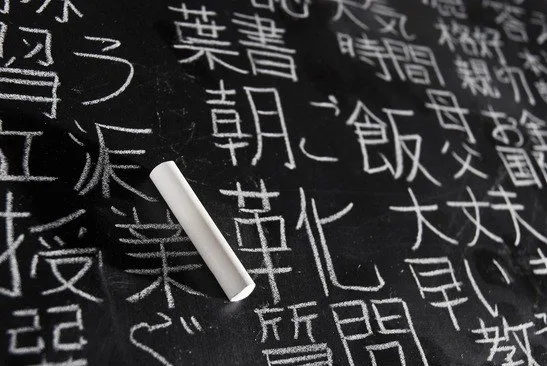
That said, kanjis, which are ideograms, serve to eliminate the 'double meaning' of some words, which if written only with hiragana and katakana could cause confusion, but which are easily understood through the kanjis that were used to write them.
Is it possible to learn Japanese in 3 months?
Therefore, if you learn the 300 kanjis required at the basic level and their applications, pronunciations, and meanings, you will have a vocabulary of about 1,500 words.
Taking all this into consideration, it is possible to reach the following conclusion: If you study for 5.5 hours every day, in a structured way and with good material, by the end of these 3 months you will have studied for 495 hours, which is much more than what is understood to be necessary to master the basics of the language.
Imagining that not everyone would use the remaining 5.5 hours in their day, and then deducing that the person studied for 3 hours every day, they would reach a total of 270 hours of study, which is equivalent to (2/3) two-thirds of the recommended time.
With good materials and dedication, the chances of passing the JLPT test and obtaining the certificate are very high. In the end, it all depends on you.






Community
Comments
0 comments
There are no published comments in this language yet.
Send comment