
Japan spent centuries at war with itself and with neighbors across Asia. Then the country rebranded, almost overnight in historical terms, as a place of late-night trains, unattended bags, and people who still look genuinely shocked when violence breaks into ordinary life. That contrast is the real question behind “peaceful Japan”: not whether crime vanished, but how people react when it does appear.
Many visitors leave Japan saying they felt safer than at home. Many Japanese travelers abroad, meanwhile, struggle to read danger the way people do in cities with more street crime—because their baseline is so different. Newspapers and dramas fill screens with tragedy, yet everyday habit still assumes the street will hold.
The Japanese can hardly imagine that the world can be as dangerous as in anime and Japanese movies. They are so used to seeing the world the way they live in Japan that even news coverage of disasters does not always rewire caution the way outsiders expect.
Contents 3
Are there violent crimes in Japan?
Yes. Violent crime happens everywhere, including Japan—only in much smaller numbers than the country’s size might suggest. Strict laws, tight gun control, dense social pressure, and a justice system that still allows the death penalty all shape that picture, but they do not erase every offense.
International comparisons usually put intentional homicide in Japan around 0.2–0.3 per 100,000 people in recent years—among the lowest rates recorded worldwide. Firearm killings are near zero in a normal year, not a weekly headline. When a shooting does happen, the shock is cultural as much as statistical.

As anywhere else, some crimes stay almost invisible to people who never meet them. Perspective does a lot of work: Japan still carries an old reputation for high suicide rates even as official totals fell over recent decades, while other countries live with far higher street violence that no longer surprises anyone at home.
When a shocking Japanese case goes viral, comment sections abroad rush to “prove” Japan is no different. That reflex says more about comparison culture than about the numbers. A rare knife attack in a packed street does not cancel a homicide rate that remains a fraction of many larger economies—but it also does not mean nothing bad ever happens.
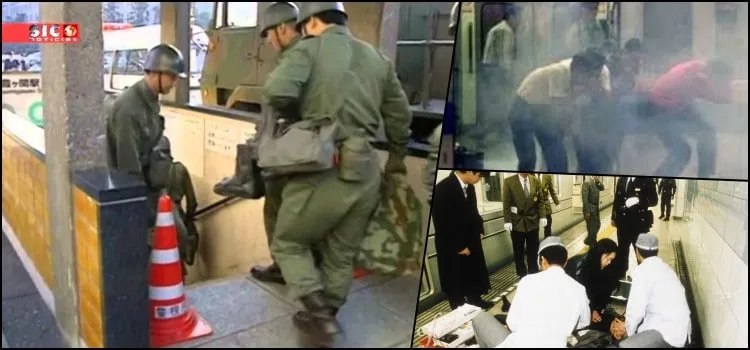
It is easier to hunt for a flaw than to sit with a good result. Every time the conversation turns to life abroad, someone digs for dirt so home does not look worse by comparison. That habit is human—and it often derails the actual subject of safety in Japan.
How do Japanese people react to crimes?
In Nagoya (May 25, 2019), a man stabbed and beat another man with a bat in a busy street. People filmed, shouted, and froze. Almost nobody closed the gap.
The first instinct, if you come from a place where crowds sometimes pile on a fighter, is to ask why no one rushed the attacker. On the ground, intervening can feel deeply mendokusai—messy, risky, and full of consequences that fall on whoever steps in.

The attacker could be tied to the Yakuza, and bystanders who grab him can imagine retaliation long after the police leave. Statements, station visits, and bureaucratic follow-up also pull ordinary people into a long process they never asked for.
Many Japanese residents are simply unused to improvising in a bloody street fight. Hesitation is not always indifference; it can be lack of rehearsal. In societies where street brawls are common entertainment, the crowd’s script looks different.
In Nagoya, shouting did not save the victim, who died on the way to the hospital. Accountability afterward is another story: serious violence in Japan tends to meet a hard response, and the worst cases can still reach the death penalty.
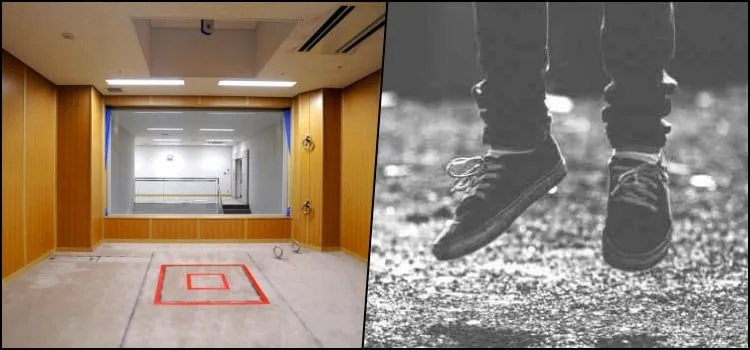
Online, people argued for hours about whether bystanders should have intervened. Designing a safe group response is easy from a keyboard; on the pavement, with a blade and a bat in motion, courage and coordination are different skills.
Japan even has a traditional restraining tool, the sasumata, still kept in some schools and facilities to pin a threat at a distance. In pure panic, almost nobody reaches for equipment they have never drilled with.
Does Japanese media hide violent crime?
Violent cases often get less wall-to-wall television time than outsiders expect. That leads to a familiar accusation: that Japan hides crime to protect a peaceful brand. The better question is what volume of coverage does to a country that already runs on low daily risk.
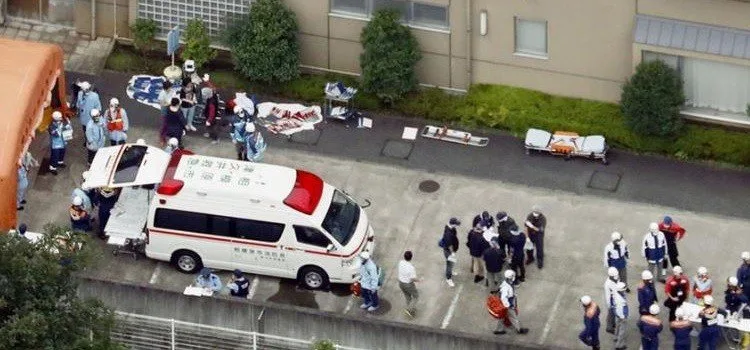
Not turning every homicide into a multi-day national spectacle is not the same as erasing statistics. National police data still exist; local papers still report cases. What many Japanese viewers resist is saturating prime time with killers’ faces and methods, on the belief that endless crime theater trains both fear and imitation.
Elsewhere, continuous crime shows and breaking-news loops can make whole cities feel like war zones even when risk is uneven by neighborhood. Japan’s quieter broadcast habit has the opposite risk: when a rare mass attack or political assassination hits, the shock feels absolute because the everyday soundtrack is calm.
Social media now fills the gap television leaves. Clips of fights, scams, and foreign crime stories travel faster than careful reporting, and surveys keep showing a gap between how safe Japan is on paper and how unsafe some residents feel. Perception and police ledgers are no longer the same conversation.
None of that means Japan is a crime-free theme park. Fraud, sexual offenses, domestic violence, and occasional random attacks are real problems. It means “peaceful Japan” is a statistical story and a cultural one at once—and the reaction in the street, when the rare nightmare arrives, still looks like a country that did not practice for it every night on TV.


Community
Comments
0 comments
There are no published comments in this language yet.
Send comment