
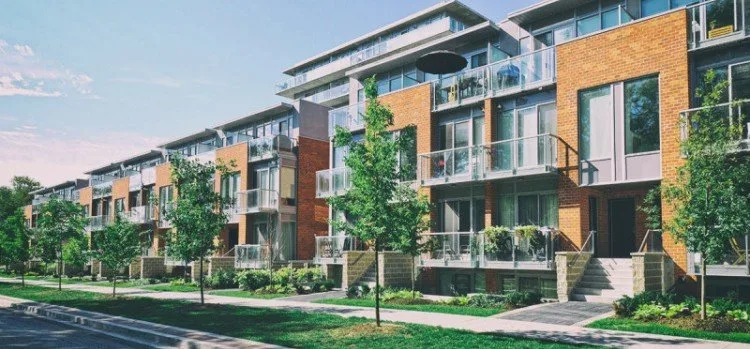
Are apartments in Japan really tiny, or are they designed to use space well? The honest answer is both: Japan has compact apartments, especially in large cities, but it also has larger homes and many different floor plans. Size depends on the city, neighborhood, building age, layout, and budget.
For someone searching for an apartment in Japan, the floor plan often matters more than the word “small.” A well-organized 1K can feel easier to live in than a larger room with poor storage. Here is what to expect from a Japanese apartment and how to read the descriptions used in rental listings.
Contents 9
Are apartments in Japan really small?
Many apartments for one person are compact because they are built around a specific routine: one main room, a separate entrance, a small kitchen, a bathroom unit, and storage placed along the walls. This is common in dense urban areas, where proximity to a train station may be more valuable than extra floor space.
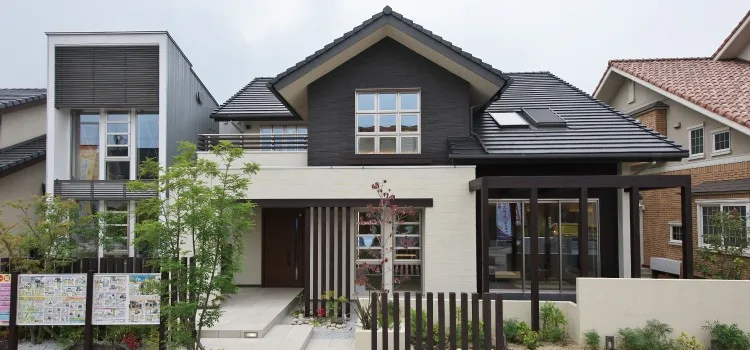
That does not describe every home in Japan. Families may choose multi-room apartments or houses, while people outside the largest metropolitan areas can find different sizes and prices. A listing in Tokyo should not be treated as a picture of every apartment in the country.
If you want to compare apartments with houses, see our guide to whether Japanese houses are really small.
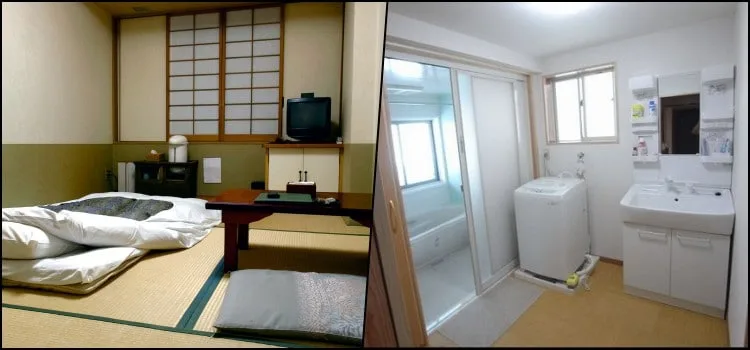
How Japanese apartment layouts work
Japanese rental listings use numbers and letters to describe the plan. The number indicates rooms, while the letters identify the kitchen or dining area:
- 1R: one room with the kitchen in the same open space.
- 1K: one main room with a separate kitchen.
- 1DK: one room plus a dining-kitchen area.
- 1LDK: one room plus a larger living-dining-kitchen area.
The difference between 1K, 1DK, and 1LDK is not merely a marketing label. It changes where you cook, eat, store belongings, and receive visitors. A 1R may suit someone who spends most of the day outside, while a 1LDK gives more room for cooking, working, or sharing the apartment.
Listings normally show floor area in square meters. Some rooms are also described in tatami, a traditional Japanese unit based on the size of a tatami mat. Tatami dimensions vary by region and use, so a room described as six tatami should be treated as an approximate room-size reference rather than an exact measurement.
Common features of Japanese apartments
Genkan and shoe storage
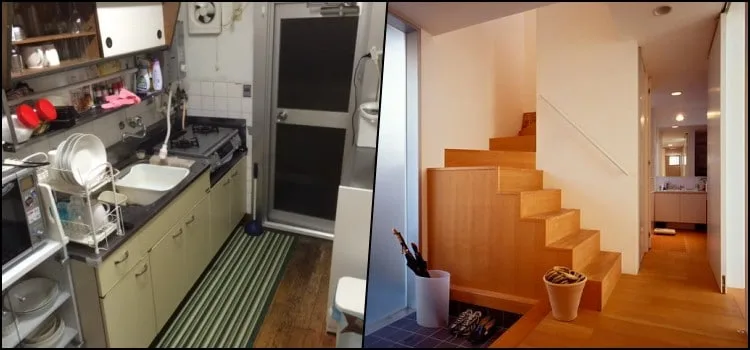
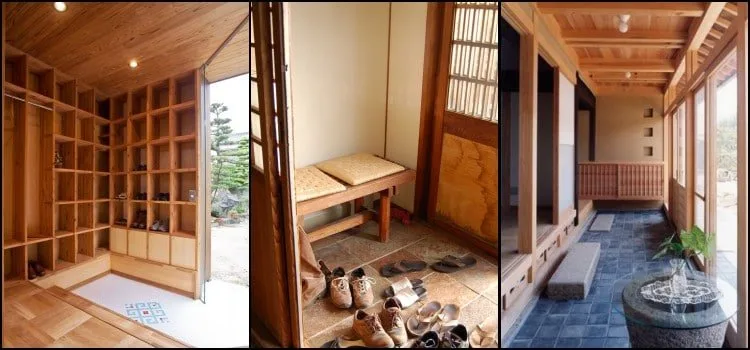
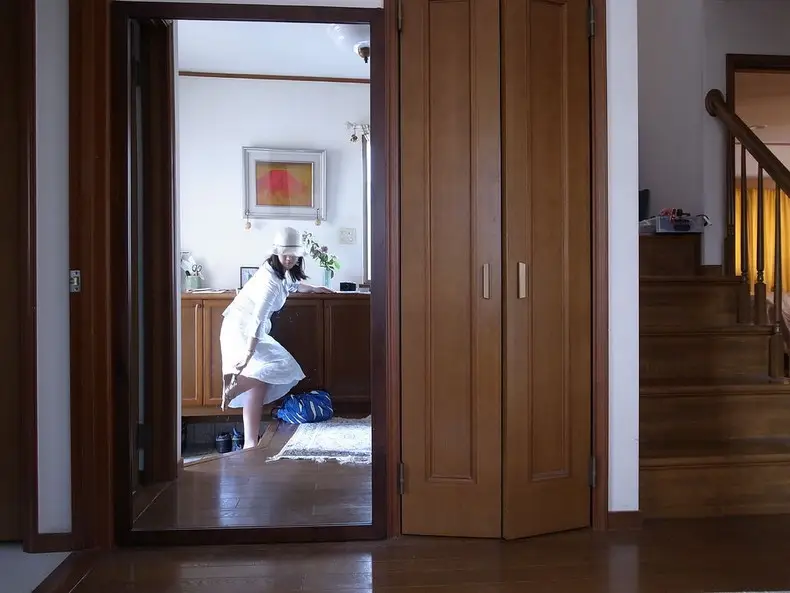
The genkan is the lower entry area where residents remove their outdoor shoes before stepping up into the living space. A shoe cabinet is often placed beside it. This small transition zone is one reason the entrance can feel different from a typical Western apartment hallway.
Bathroom and washing area
Apartment bathrooms vary by size and age. A compact unit may combine the bathtub, shower, sink, and toilet in one room. Other apartments separate the toilet from the bath and place the washing machine near the bathroom or kitchen. Always check the floor plan and photos instead of assuming that every apartment has the same arrangement.
Compact kitchens
A single-person apartment may have a narrow kitchen with one or two burners, a small sink, and limited counter space. Larger apartments usually provide more room for cooking and storage. The best choice depends on how often you cook: a small kitchen can be perfectly functional for simple meals, but frustrating if you need several appliances or prepare food every day.
Sliding doors and storage
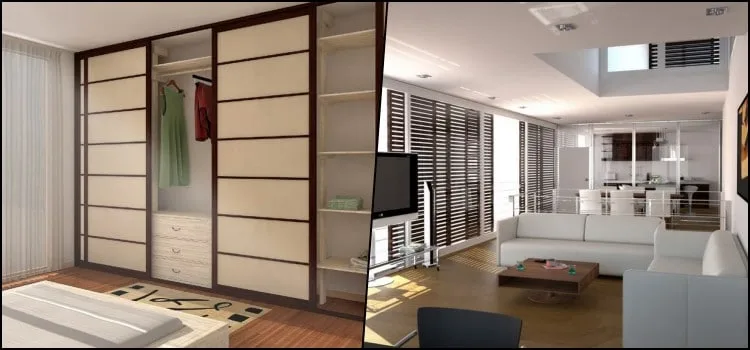
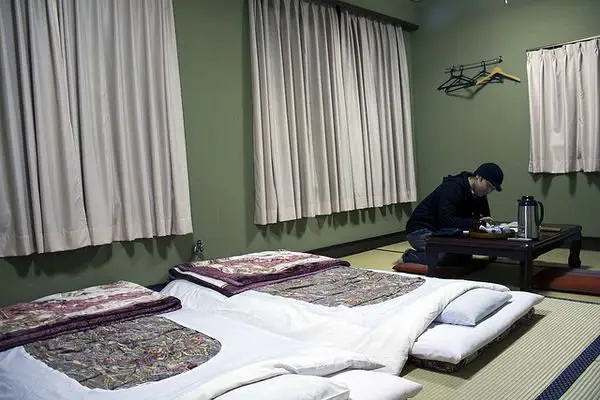
Sliding doors can divide a room without requiring space for a swinging door. Built-in closets, overhead shelves, and under-bed storage also matter because furniture placement is limited in a compact plan. Before renting, measure large furniture and check where the refrigerator, washing machine, and air conditioner can go.
Choosing the right size
The right apartment is not necessarily the largest one. A smaller home near work or a station may reduce commuting time and cleaning, while a larger home may be worth the extra rent for a couple, family, remote worker, or serious cook.
Compare these points before deciding:
- total floor area in square meters;
- number of separate rooms;
- storage and furniture placement;
- distance to the station and daily services;
- building age, insulation, heating, and ventilation;
- bathroom layout and washing-machine space;
- initial fees, monthly management fees, and renewal conditions.
Rent changes sharply by prefecture, city, neighborhood, distance from a station, building age, and apartment size. A single Tokyo price cannot represent Japan as a whole. Use current listings or a regional rental report when comparing costs, and check whether the advertised amount excludes management fees or initial contract charges.
So, are Japanese apartments practical?
They can be. Japanese apartments often make deliberate trade-offs: less floor area in exchange for a convenient location, lower maintenance, and a layout built around everyday routines. They can also feel cramped when storage, natural light, insulation, or cooking space do not match the resident’s needs.
The practical question is not “How small is an apartment in Japan?” It is “Does this layout fit the way I live?” Read the plan, check the measurements, inspect the entrance and wet areas, and compare the full monthly and move-in costs before signing.
We recommend reading
- Overcrowding and the growing urban population of Japan
- Where is the cost of living higher? Brazil or Japan?
- Houses in Japan - What are they like? Rent or Buy?
- 14 classic characteristics of Japanese houses

Community
Comments
0 comments
There are no published comments in this language yet.
Send comment