
We have already talked about how the Japanese manage to stay so young through food, climate, and genetics. Today the question is narrower: what they actually put on the face — and what they strap onto it — against expression lines, sagging, and the first real wrinkles. Creams are only half the story. The other half looks frankly bizarre.
Can Japanese women really dodge that calamitous age everyone jokes about, or does the makeup just get heavier after 40?
Contents 8
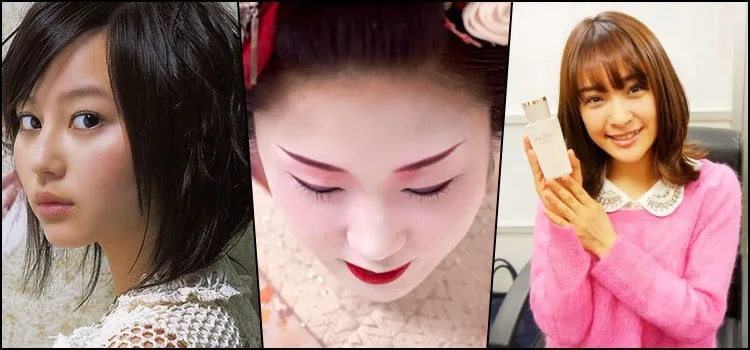
How do Japanese women delay visible aging?
As I mentioned in another article, climate helps — but Japan is not one single cold country. Hokkaido is one story; Okinawa is another. What travels better as an explanation is the daily fight with the sun: parasols in August, long sleeves in April, hats, and a sunscreen treated as skincare rather than a beach product.
Diet still matters. Japanese meals are often rich in magnesium, fish with omega-3, and a bowl of misoshiru that shows up even on rushed mornings. Convenience-store food exists, of course, but it is usually less of a sugar bomb than the equivalent snack elsewhere.
Then there are the baths. Onsen water is not a nationwide magnesium spa — the mineral mix changes from town to town — yet soaking, steam, and time spent not frying the skin outdoors add up. Plenty of daily life in Japan happens to line up with that: shade, fish, hot water.
None of this is a free pass. Around 40, skin still changes, makeup becomes part of the weekday, and the hunt for a cream that “does something” gets louder. Genetics and climate buy time. They do not cancel the calendar.

The unglamorous part: shade and sunscreen
Ask what actually keeps expression lines from deepening and you hear the same unsexy answer: ultraviolet light, every day, not only at the beach. Japanese sunscreens are built to be worn under makeup — light, high SPF, high PA — so people actually reapply them. Hats and UV umbrellas are not a tourist costume; they are how a lot of women walk to the station in July.
That is why a bottle of Shiseido or SK-II never works as a magic trick on its own. If the morning routine skips the sunscreen, the night serum is mopping up a problem that started on the commute. Prevention first, then lotion, essence, and cream in thin layers — not one heavy jar slapped on at noon.
Do Japanese women use anti-aging creams?
Some people imagine that Japan, its climate, customs, and cooking are the whole reason a woman can look 20 at 40. That is not always true. A lot of makeup and a lot of bottles are involved.
The ones who really lock onto “don’t age” follow a strict diet and an even stricter shelf: cleanser, lotion, serum, cream, and sunscreen, often twice a day. We have already gone through everyday Japanese skin habits in more detail. This time the recut is narrower: wrinkles, sagging, and the extreme gadgets that sit next to the cream.
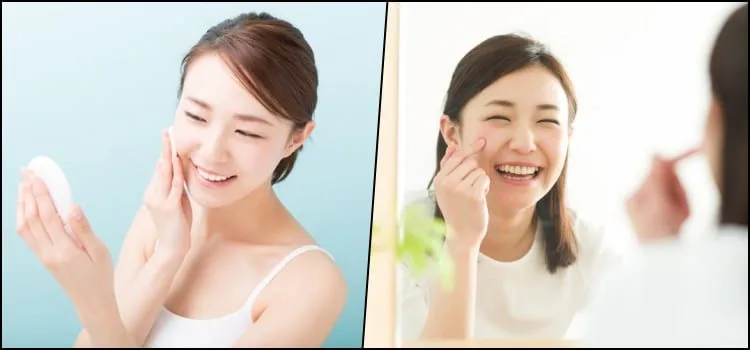
Anti-wrinkle creams from Japan
Talking about anti-wrinkle creams, expression-line serums, or sagging treatments is messy. There are thousands of creams, oils, lotions, scrubs, and “beauty essences” aimed at aging or at some other skin complaint.
DHC and Shiseido are still the names you hear first in Japan when the conversation turns to skincare. It is not smart to pile heavy creams on during the day. The opposite happens: clogged pores, oil, breakouts. Treatments belong at night, after the face is washed. Body temperature rises while you sleep, and the product has a better chance of sinking in.
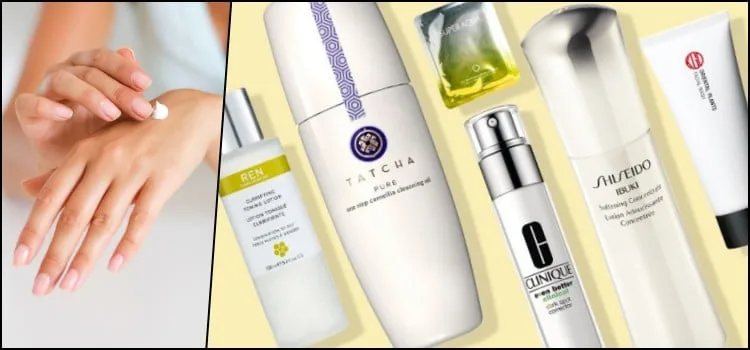
I personally don’t believe much in most of the miracle claims. Japan still has a few families of products that show up again and again, from the drugstore basket to the department-store counter. This is a map of names, not a ranking that pretends to be current forever — formulas rotate.
- Shiseido Ultimune — the lightweight “power infusing” concentrate a lot of routines start from
- Shiseido Elixir — the wrinkle-care line aimed at firmness after 30 or 40
- HAKU melanofocus — Shiseido’s brightening serum for spots that sit next to wrinkles
- SK-II — Pitera essence and the Genoptics spot treatments
- Melano CC — drugstore vitamin C that is cheap, sharp-smelling, and everywhere
- Hada Labo Gokujyun — hyaluronic acid lotions and the wrinkle cream that lives in the same aisle
- DHC — cleansing oil plus a long drugstore line
- MUJI Aging Care essence — no-logo bottle, no drama
- POLA B.A — the expensive counter serum people save for
If you only remember one rule from the cream aisle: wash, layer light to heavy, and leave the thick stuff for night. Daytime is for sunscreen, not for a second coat of night cream.
Beauty clinics and massage in Japan
Japanese women also walk into professional rooms. Esthetic salons and small clinics sell facial cleansing, stronger prescriptions, treatments that promise to soften wrinkles, pores, sagging, or dark spots. A simple session can already pass 10,000 yen. Surgery is another budget entirely.
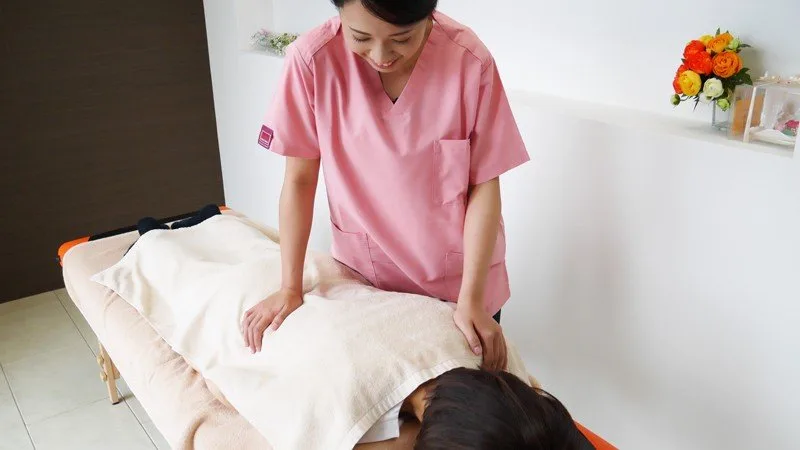
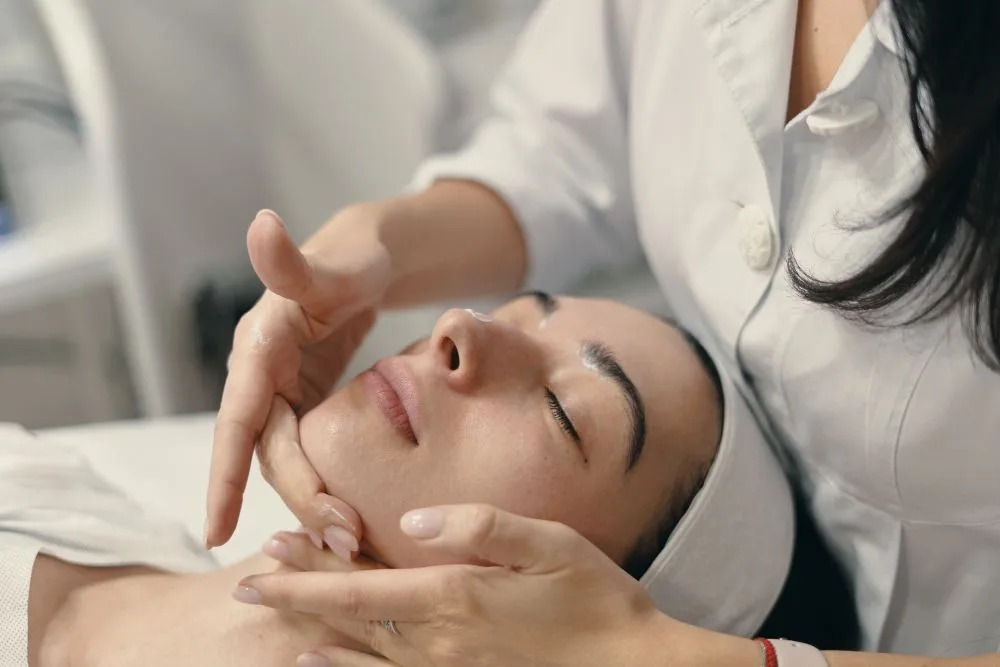
Besides those rooms, there is a very ordinary habit of going to massage houses that include facial work with oil — less “spa day,” more weekly maintenance. Kobido is the version that sells itself as wrinkle prevention rather than just relaxation.
Saunas show up in onsen and spa complexes all over the country. Some people treat the bathhouse as their real skincare: heat, steam, then moisturizer on skin that is actually clean. The cream at home is the last step, not the whole program.
Stickers, masks, and anti-wrinkle bands
Now the bizarre part. Japan invents objects that either go unnoticed or explode as a worldwide joke. One family of them is the sticker, mask, or belt meant to iron expression wrinkles while you sleep.
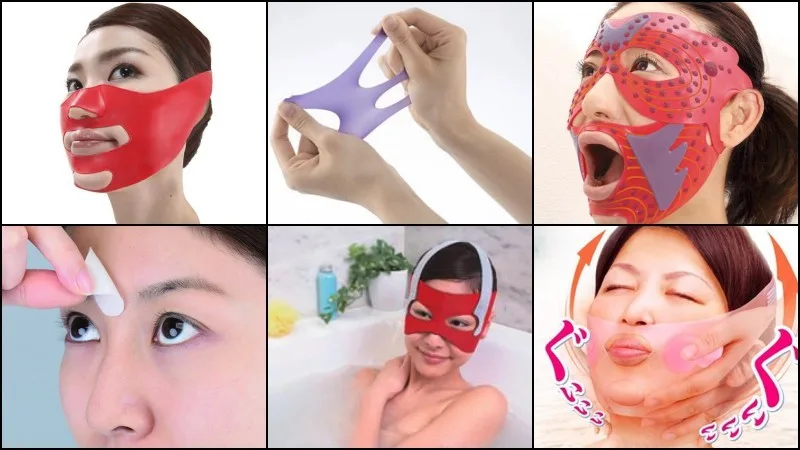
They come in every shape. Some are silicone; some look like aluminum. The idea is usually the same: hold the face in a smaller, tighter shape — kogao, the “small face” ideal — so smile lines and sagging do not settle overnight. I don’t even know which mask to recommend. There are thousands, and most of them look like a costume until someone wears one on the train home.
If you want to stare at the full cabinet of odd belts and overnight tapes, the bizarre Japanese products roundup is the rabbit hole. Shops that specialize in kogao face belts keep restocking the same silhouette: chin strap, cheek lift, forehead patch.
Oral and nasal anti-wrinkle devices
Believe it or not, there are also gadgets for the nose and mouth that promise to erase wrinkles. They claim to reshape the face so lines cannot form — and, while they are at it, to “improve” the look of the nose or the smile. The Japanese have no limits when it comes to invention.
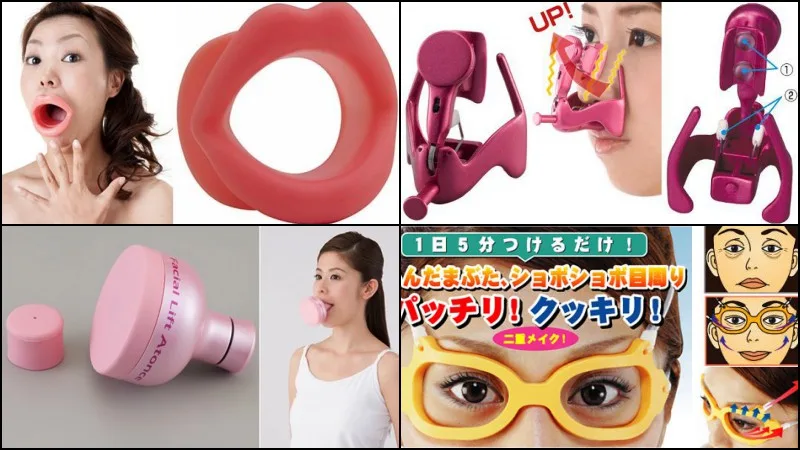
Some of these products are meant to train a smile or a set of facial expressions. Others even promise to change your voice. From a distance they look horrendous. A few may do something if you treat them like physiotherapy for the face. Let’s not forget the anti-wrinkle glasses, which try to hold the eyelids and the brow in place so you stop squinting.
Rollers, steamers, and other odd machines
Besides masks, stickers, bands, oral gadgets, glasses, and nose clips, there is a whole electronics-store wall of devices that promise the same thing: fewer wrinkles, better lift, more “penetration” for the lotion you already bought.
One of the least shy objects is the ReFa Carat roller: two platinum-coated spheres, a geometric grip, and a tiny solar panel that generates a mild microcurrent while you roll. It looks like jewelry and sells like a gadget. In Bic Camera-type shops it sits next to YA-MAN wands (EMS, radio frequency, LED masks) and Panasonic steamers.
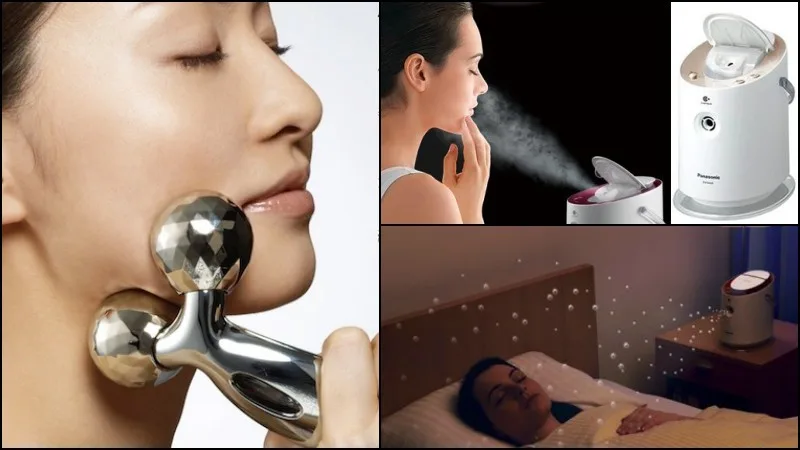
The steamer that looks like a small rice cooker is the Panasonic Nano Care (the Nanocare / SKINACT family). It throws a fine mist at the face — and, in some models, at the hair — so the night cream has damp skin to work with. Some people run it while they sleep. That is either dedication or a fire hazard with better marketing, depending on how you look at the nightstand.
Most ordinary Japanese women still stop at cleanser, lotion, cream, sunscreen, and the occasional salon. The belts, mouth trainers, and platinum rollers are the loud minority. Have you ever met someone brave enough to sleep in a kogao mask?





Community
Comments
0 comments
There are no published comments in this language yet.
Send comment