
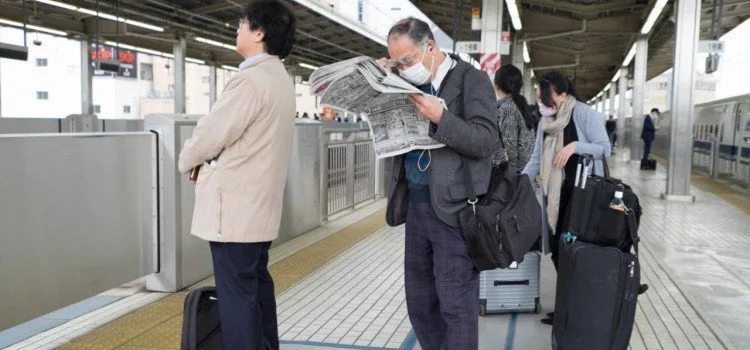
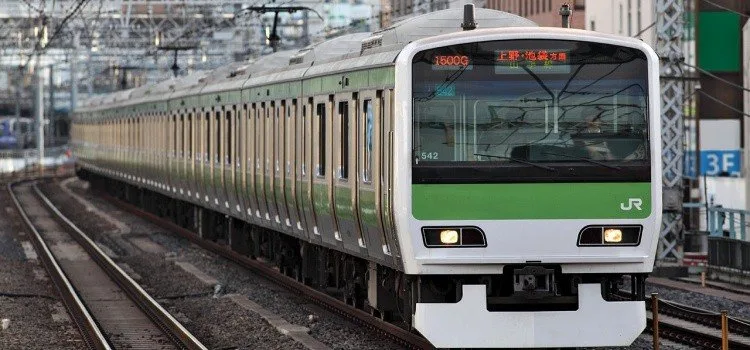
A Japanese commuter train can look silent and still be packed with repeating characters. Someone dozes off standing up, then wakes at the right station as if an internal clock did the work — and never quite explains how.
For plenty of people this ride is not a novelty. It is the commute, five or six days a week, in a space that barely leaves room for elbows. The types below are the ones you keep meeting once you stop staring only at the map.
Contents 8
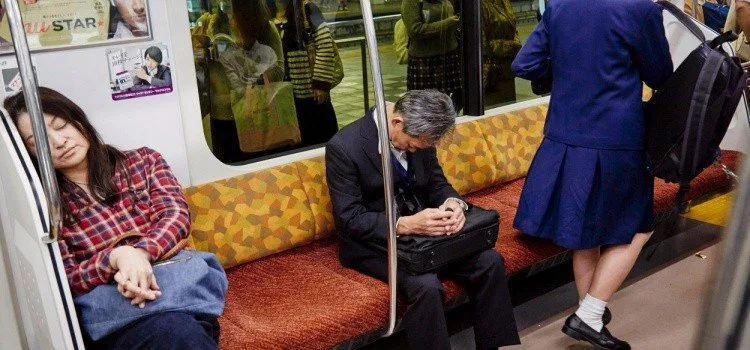
The Sleepers on the Train – Inemuri
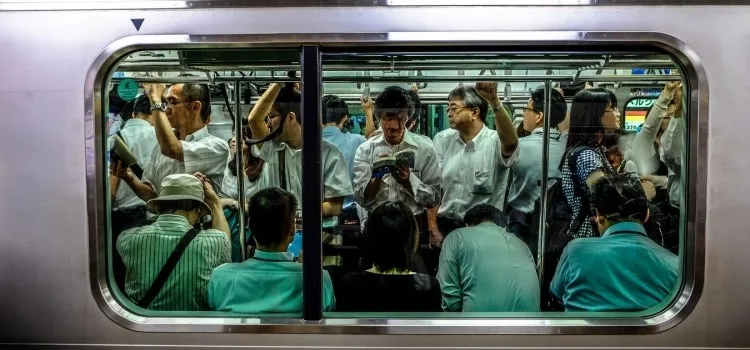
Let's start with the most eye-catching type: the beautiful sleepers. Sleeping on the train is part of Japanese culture, and some riders will sprawl out and take up several seats at once. People doze off standing or sitting, so it is not unusual to feel someone's head gently lean on your shoulder.
They sleep in all sorts of positions, many of them strange and funny, sometimes with their mouth wide open, and only rarely does anyone end up on the floor. The striking part is that they so often wake up at exactly the right station and continue on their way home or to work. This practice is called inemuri (居眠り): being present while asleep.
The Sumimasen-Sayers
Whether you are on a train or not, you will find this type everywhere in Japan. Even when the carriage is spacious and nearly empty, they somehow manage to bump into you, perhaps while grabbing the door as they get on and off.
Sooner or later, out of sheer etiquette, they will whisper a soft sumimasen, which means "excuse me," "pardon me," or "may I pass" — often before they have even touched you.
They apologize in a way that discreetly nudges you to give up your spot. On the other hand, there are also those who do not move at all and simply wait for you to ask permission before squeezing past.
The Phone Addicts on the Train
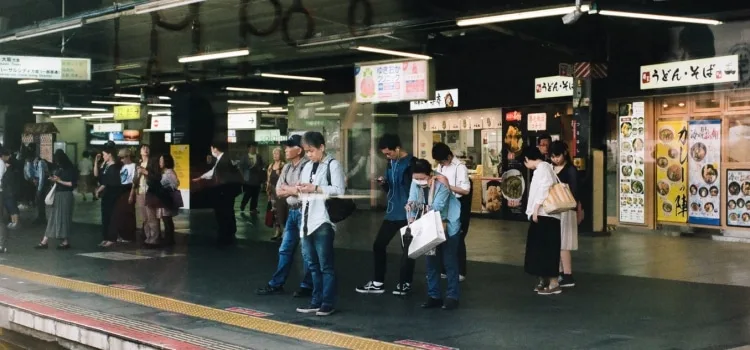
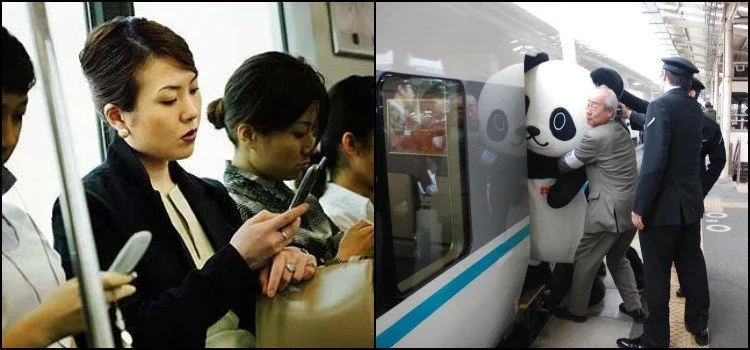
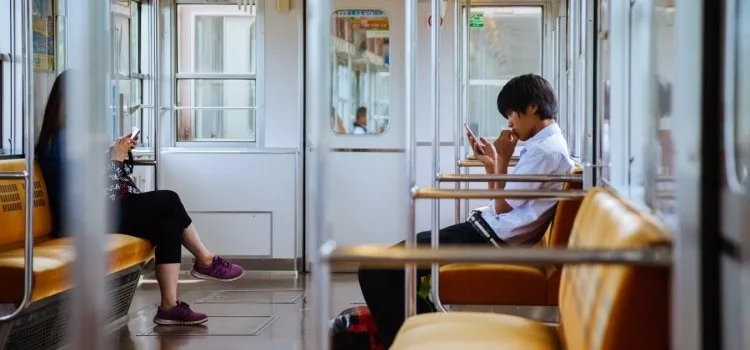
You won't see anyone talking loudly on the phone on Japanese trains, but most riders never let go of their smartphones. They are constantly looking at the screen, browsing websites, watching anime, reading, or chatting on LINE.
They will bump into you or nudge you as they walk by, sometimes without even noticing. Whether standing, sitting, or sleeping, the phone simply does not leave their hands.
The expected setting is Manner Mode (マナーモード): silent or vibrate, headphones kept low, no voice calls inside the car. On long-distance trains, a call is more acceptable between cars. Near the priority seats, many lines still ask riders to keep phones fully quiet so they do not interfere with pacemakers.
Those Who Cross the Line
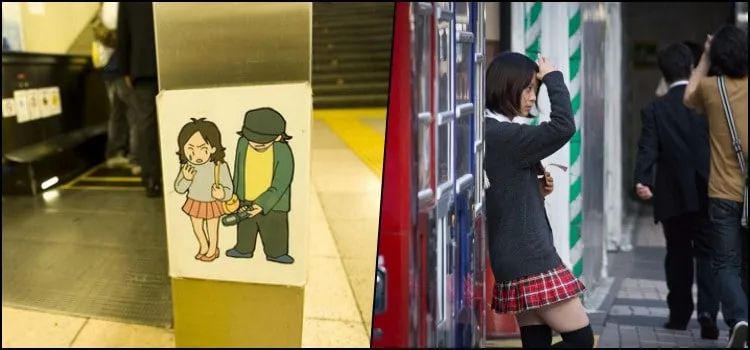
Unfortunately, there are also gropers — chikan (痴漢) — who take advantage of a packed carriage. Crowding makes it hard to tell who touched whom. Many victims stay silent in the moment not because they accept it, but because they cannot turn around, cannot prove it, and do not want a scene in a car that will empty at the next station.
People do get arrested when they are caught in the act. The response on the rails was not a lecture about how women sit. It was women-only cars (女性専用車), marked in pink on platforms and doors. Keio Electric Railway tried them late at night in December 2000 after complaints about drunken gropers during year-end bōnenkai parties, then made the service regular in March 2001. JR East followed on the Saikyo Line in July 2001. Hours vary by company — often weekday rush — and men should not board when the sign is in force.
The Loud Ones on the Japanese Train
Many people assume that since phone calls are banned on Japanese trains, the journey must be completely silent. Until you run into a group of schoolgirls or a noisy clique. They do not whisper – they shout. They talk non-stop and pay no attention to anyone around them.
If you try to ask them to keep it down, they often get even louder. The situation becomes more awkward by the minute, and no one dares step in. Sooner or later, you will see people talking loudly on the train; not everyone realizes they are being loud – for some, it is just second nature.
"This Seat Is Mine"
On Japanese trains, it is quite normal to see pregnant women or elderly passengers standing while the priority seats — yūsenseki (優先席) — are taken by perfectly healthy riders. Once someone sits down, they rarely give up that seat before their own stop. Some think about it, but the mutual embarrassment gets in the way.
Those seats are meant for the elderly, people with disabilities, pregnant riders, and adults with small children. You can sit there when the car is empty, as long as you stand up when someone who needs it appears. Even when someone does stand up to offer the seat to an elderly woman, she often refuses and prefers to keep standing – as if pretending to feel younger. And of course, another young rider will quickly take the empty seat.
The Anti-Socials on the Japanese Train
The vast majority of Japanese passengers do not exchange a single word. Shyness dominates the journey, and the chance of getting to know a stranger is slim. Nobody takes the initiative, and even if you start a conversation, the words rarely flow easily.
In reality, many Japanese people feel anxious about striking up a conversation, especially with a foreigner. The language barrier makes them unsure of how to help. At the same time, passengers constantly stare at each other – not just at foreigners, but also at each other, particularly across genders.
The Door-Dashers – Kakekomi Jōsha
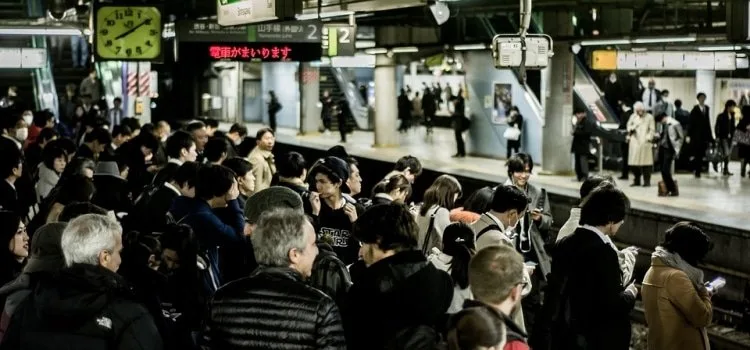
The eighth type is the one the speakers keep warning about: the rider who sprints down the stairs and throws a bag, an arm, or a whole body into a closing door. That last-second boarding is kakekomi jōsha (駆け込み乗車). Stations repeat the request to stop doing it because a delayed door delays the whole line — and because people get hurt.
The rest of the choreography is the opposite of a dash. Wait for people to get off. Board quickly. Move away from the doors so the next station can empty. If you need to get out, start shifting toward the door before the train stops; a quiet sumimasen is usually enough. Running on the platform is the same habit in a longer corridor.
These are only some of the types you will encounter on Japanese trains. There are plenty more curious characters to discover on journeys across Japan. The same car can hold a sleeper, a phone statue, and someone still negotiating the doors — which is why a ride that looks identical on the map never quite feels the same twice.
If you want the wider social cast, there is a companion piece on 11 types of Japanese people you will meet in Japan. For the machines themselves, start with trains in Japan. And if the quiet car still feels like a stereotype, the notes on myths about Japanese culture and on passions and stereotypes fill in the rest of the picture.

Community
Comments
0 comments
There are no published comments in this language yet.
Send comment