
In Japan, the so-called kira-kira names have always sparked controversy. The term literally means “shiny” or “sparkling,” but in practice refers to extravagant names that deviate from the norm. Some sound creative and modern, while others verge on the absurd: invented readings that no one can pronounce, direct references to international brands, or even tributes to anime characters.
Over time, this excess of originality stopped being just a cultural curiosity and started worrying authorities. A name can be fun for parents, but what happens when it becomes unpronounceable at school, offensive in the workplace, or a lifelong source of embarrassment for the child? That tension between freedom and responsibility led, in May 2025, to a long-awaited revision of the Family Register Act that officially restricts which names can be entered into Japan’s civil records.
Contents 11
What are kira-kira names and how did they arise?
The wave of flashy Japanese names began in the 1990s and gathered real momentum in the 2000s. Young parents, influenced by globalization and pop culture, wanted names that sounded modern or “international.” The term kira-kira 「キラキラネーム」 caught on precisely because it conveys the idea of excessive shine.
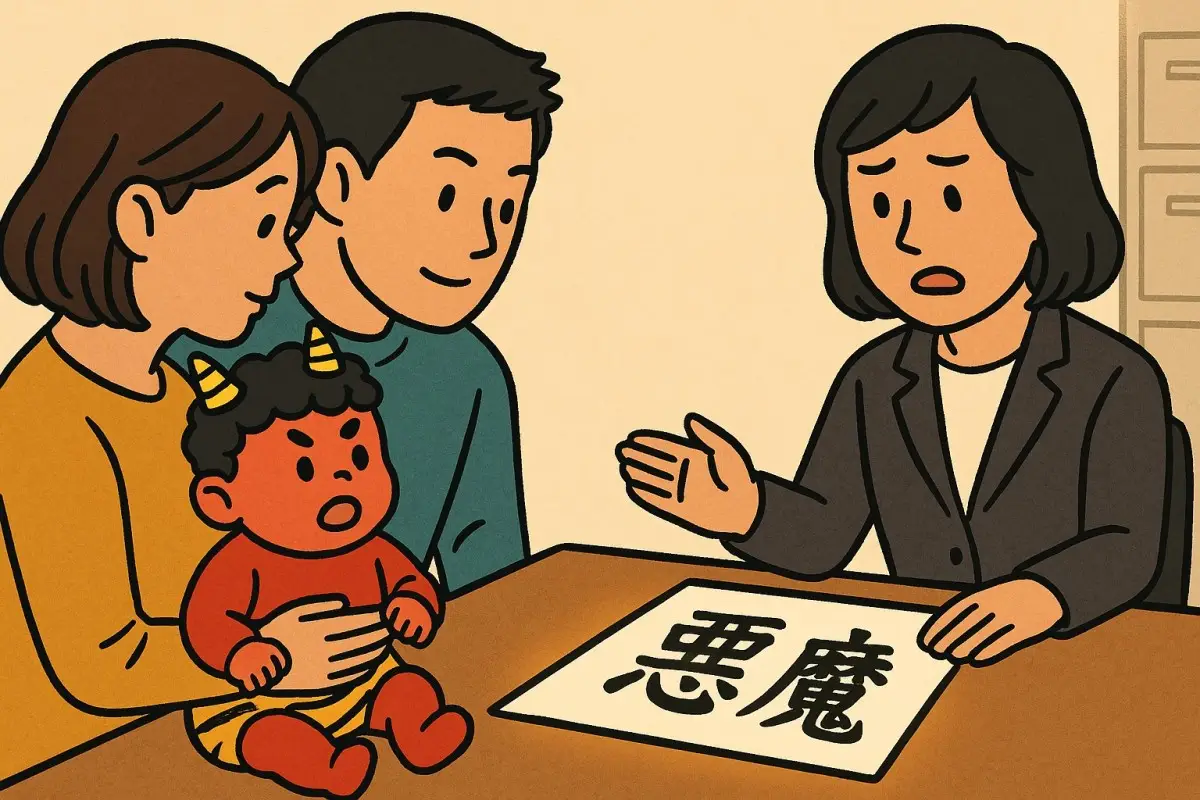
The problem is that, more often than not, these names were illegible without explanation. Some carried heavy meanings, like the famous 1993 case in Fukuoka where a father tried to register his son as Akuma (悪魔), “demon.” The family court refused the entry, and the case became a founding moment of the public debate. Others sounded merely funny or awkward, like attempts to name children after Pokémon characters or Disney princesses.
What changed with the new law in 2025
The revision of the Family Register Act (戸籍法 / Kosekihō) came into force in May 2025 and brought significant changes to how baby names are registered in Japan. The central goal of the reform is to make sure that names are legible, socially acceptable, and compatible with digital systems.
Mandatory reading declaration
Until then, parents only registered the name in kanji, without being required to officially provide its reading. That created problems, since many kanji have several possible pronunciations. Under the reform, parents must indicate the official reading in hiragana or katakana at the time of registration, so authorities and digital systems can process the name unambiguously.
Acceptance only of recognized readings
It is not enough to invent any pronunciation. The government published a list of readings considered common usage for each kanji, based on official dictionaries and social practice. Readings not on this list can be questioned or rejected, putting a hard limit on pure invention.
Offensive and “anti-social” names
The law explicitly authorizes registrars (koseki tantōsha, the officials in charge of registration) to deny names with negative, insulting connotations or that may cause real social suffering to the child. Terms related to violence, demons, obscenities, or religious offense fall into this category.
Brands, characters, and foreignisms
Names that try to register commercial brands, products, or fictional characters also fall under the prohibition radar. That covers both directly imported names (like “Pikachu”) and kanji forced to reproduce foreign words, such as Naiki (Nike) or Raito (Light).
Digital standardization
A point little discussed outside Japan is that the law also responds to a technological need. With the full digitization of koseki (the family register), names need to be legible to electronic systems. Readings that do not exist, or characters without official encoding, can freeze national databases, and that risk was one of the strongest practical arguments for the reform.
Appeal process
If parents insist on an unusual reading, they can submit a written justification. The registry office forwards the case to the Ministry of Justice, which evaluates the legality of the request. In many cases the refusal is upheld, but there is room for exceptions around regional readings or lesser-known traditional names.
Officially registered kira-kira names
Even though many strange names are now refused, hundreds of thousands of Japanese people already live with flashy given names that were registered back in the 1990s and 2000s.
Seiko Hashimoto, the former Olympic speed skater turned politician, made the news when she admitted her children were named Girishia (“Greece”) and Torino (“Turin”), and that the kanji she chose would not be easy for most people to read.
There are also reports of people with rare surnames from Okinawa, or unusually written surnames on the mainland, who face discrimination or unwanted curiosity simply for having a name that stands out. The reform therefore does not just touch given names; it sits inside a broader cultural tension between individual freedom and the expectations a name has to live up to in everyday Japanese life.
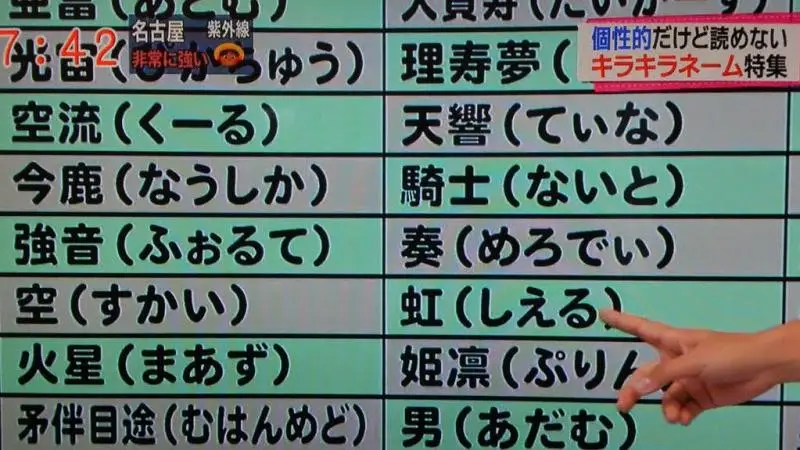
Examples of rejected and criticized names
Although the government has not published a definitive blacklist, Japanese and international press coverage has highlighted several cases that illustrate where the line sits. Some of these names were already turned down in the past, and others would have a hard time getting through under the new rules.
- Akuma (悪魔) – means “demon” and was blocked in 1993 by the Fukuoka family court.
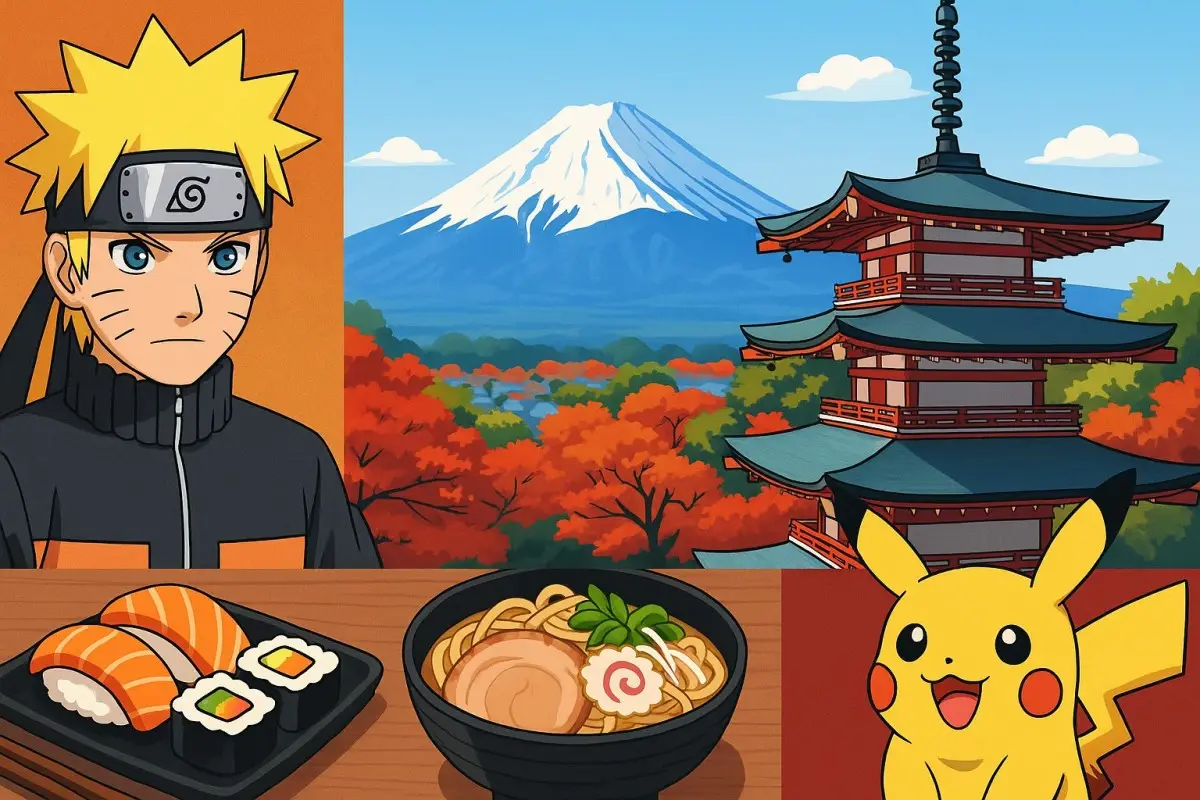
- Pikachu – a direct tribute to the character from Pokémon.
- Ōjisama (王子様) – literally “prince,” which sounds more like a title than a name.
- Naiki (Nike) – a phonetic adaptation of the sports brand.
- Lovely (ラブリー) – an English word used as a proper given name.
- Pū (プー) – a reference to Winnie-the-Pooh.
- Daiya (ダイヤ / Diamond) – an attempt to write “diamond” in kanji.
- Elsa – tied to the Disney character, written with a forced reading.
- Purin (プリン) – “pudding” in Japanese, used as a child’s name.
- Naruto – originally a city name and a type of fishcake, but marked forever by the anime.
These examples show that the limit is not really the word itself, but the social impact and the viability of everyday use. That grey area is exactly what the 2025 reform tries to define more clearly.
Common names with alternative readings
Not every kira-kira name stands out because of its writing. Often the parents use traditional kanji but register unusual readings. On paper the name looks ordinary, but spoken out loud it becomes something else entirely.
Known examples include 光, usually read as Hikari, registered as Raito (Light), or 愛, normally Ai, which has appeared in some cases as Love. There are also cases of 海 (umi, sea) read as Marin or Ocean, and 心 (kokoro, heart) used as Heart. In situations like these, Japanese nicknames tend to reinforce the creative reading even more.
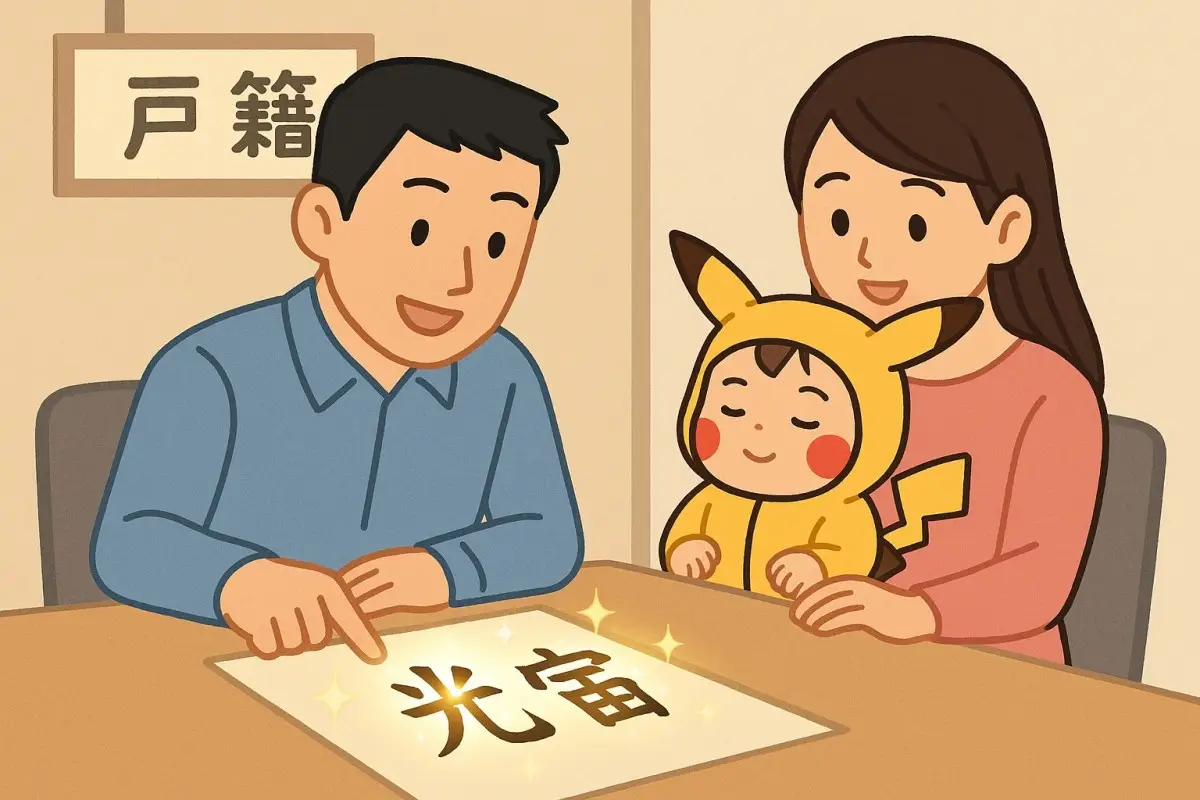
Others officially register a perfectly ordinary name but choose kanji that can be read in other ways and end up meaning something completely different. If, for example, the name Pikachu is written [光宙], the registry office may be forced to accept the ordinary reading Mihiro for those same characters. These kanji and reading games were almost impossible to police for decades, which is why the 2025 reform finally gives registrars a clear legal handle on them.
Looking back at Akuma, Torino, and the long line of attempted Pikachus, the issue in Japan is not only about eccentric parents. It is about how a society handles a writing system where a single kanji can carry dozens of readings, and what happens when what starts as a small joke becomes an entry that has to last a whole life on paper, on official forms, and in every database the person ever touches.


Community
Comments
0 comments
There are no published comments in this language yet.
Send comment