
Limited express trains (特急列車, tokkyū ressha) are a major part of rail travel in Japan. They stop at fewer stations than local, rapid, and ordinary express services, making them a useful middle ground between a local train and the shinkansen. Many long-distance journeys still rely on them, especially where no bullet-train line runs.
The category is easy to misunderstand because “limited express” describes a service, not one fixed train design. A modern electric multiple unit, a classic sleeper train, and a private railway panoramic train can all be limited expresses. What they share is a limited stop pattern and, in most cases, an extra limited-express fare on top of the base ticket.
Contents 9
How limited express trains work in Japan
For a typical JR journey, start with the fare for the distance travelled, then add a limited-express ticket. The exact rules vary by operator and service: some trains have unreserved cars, others require a seat reservation, and Green Car or sleeper accommodation has its own surcharge. Check the operator’s timetable before buying, especially if you are changing trains or travelling during a busy holiday period.
Compared with the shinkansen, a limited express usually shares conventional tracks with slower services. That makes it valuable on regional corridors: it can link a city centre with a resort, airport, mountain area, or prefectural capital without treating every stop as a long journey. The trade-off is speed. A limited express may be the fastest practical option on its line, but it is not automatically a bullet train.
Five historic Japanese limited express services
Named services gave Japanese rail travel much of its character. Their names appeared on timetables, destination boards, souvenirs, and railway magazines; several later returned on newer trains. These five show how the category changed across different parts of the country.
Raichō (雷鳥): the ptarmigan
Raichō means “ptarmigan,” a bird associated with Japan’s high mountains. The service began in 1964 and became closely associated with travel between Osaka and Kanazawa. For many passengers in Kansai and Hokuriku, its 485-series trains were a familiar sight long before the region gained faster shinkansen connections.
Raichō finished in March 2011, but it remains one of the best-known names of the pre-shinkansen era. Its story also explains why train names can outlive a timetable: routes change, rolling stock is retired, and the name stays alive in photographs and railway collections.
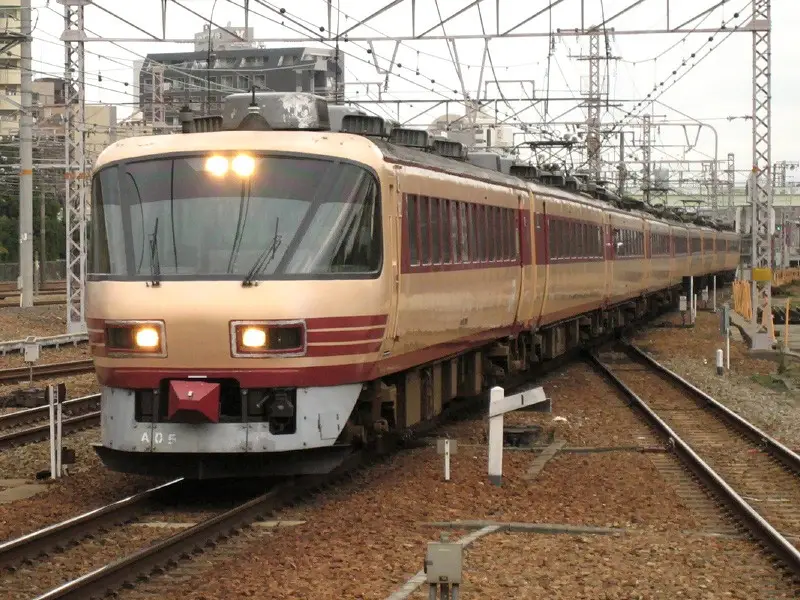
Asakaze (あさかぜ): a Blue Train overnight journey
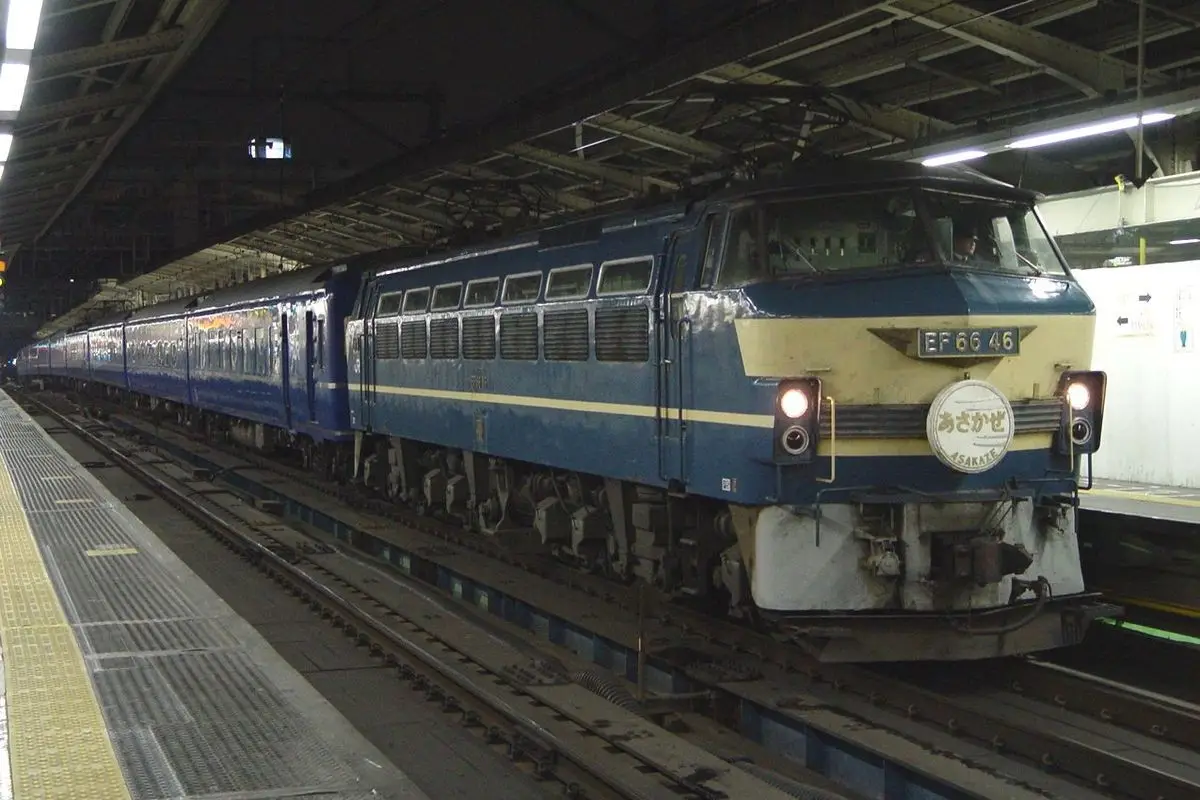
Asakaze, meaning “morning breeze,” was a celebrated overnight limited express. It was part of the Blue Train tradition: long-distance sleeper services whose blue coaches made night travel feel like an event rather than a compromise between flights and daytime trains.
The service began in 1956 and ended in 2005. Its route and accommodation changed over its lifetime, but its image remained consistent: board in the evening, sleep on the train, and arrive in western Japan the next morning. That rhythm is why Asakaze still has a special place in discussions of classic Japanese railways.
Yamabiko (やまびこ): a name carried north
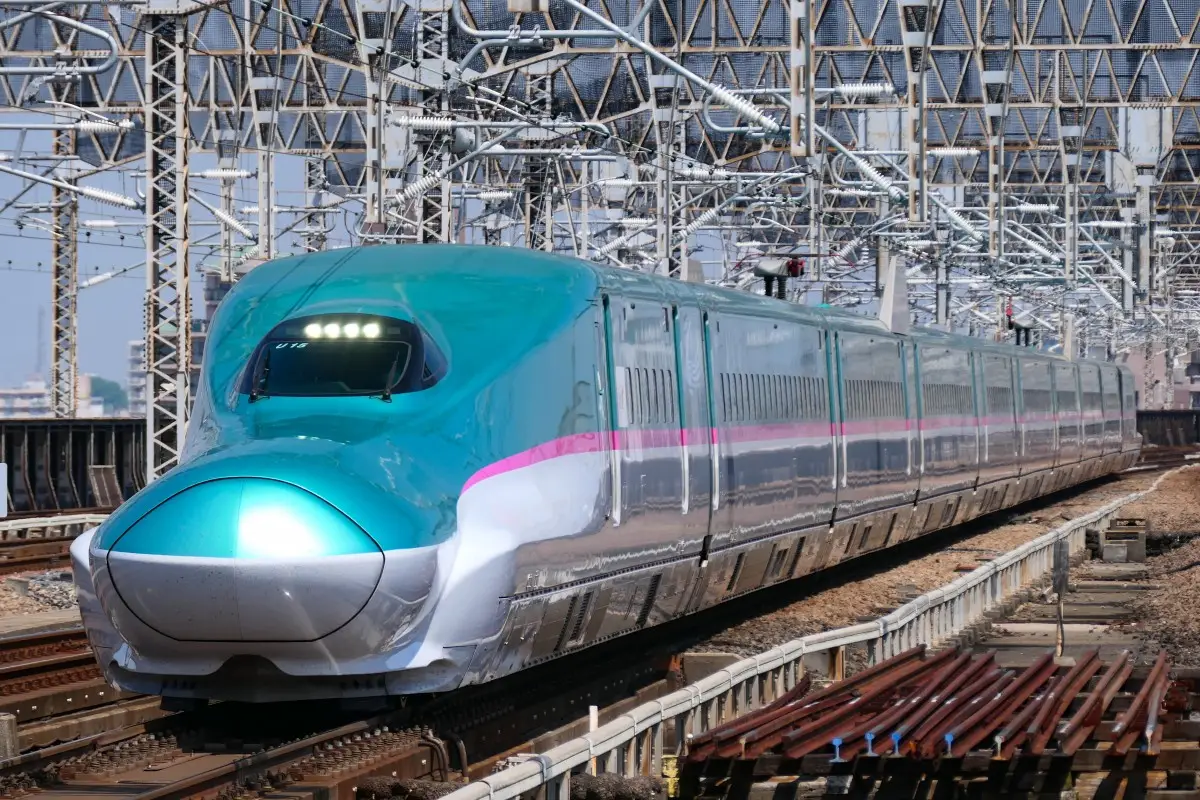
Yamabiko means “mountain echo.” Before it became familiar as a Tōhoku Shinkansen service, the name belonged to a northbound conventional-line service from the Tokyo area. A semi-express Yamabiko started in 1959, and the name later appeared on limited-express services using the Tōhoku Main Line.
When the Tōhoku Shinkansen opened in 1982, Yamabiko moved with the new era. This is a useful reminder that a train name is not always tied to one kind of vehicle. In Japan, a respected name may be reused when a route receives a new role.
Hatsukari (はつかり): the first wild goose
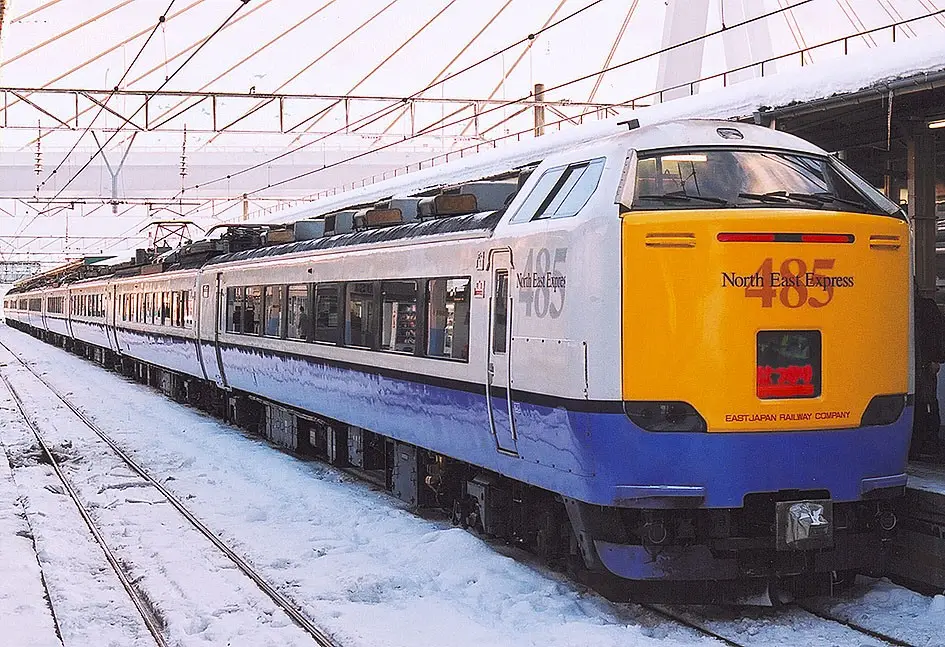
Hatsukari translates as “first wild goose,” a fitting image for a service built around long northern journeys. It started in 1958 and was associated with the route towards Aomori from Ueno in Tokyo. Later versions crossed the Seikan route toward Hokkaidō, giving the name a place in the story of travel between Honshū and the north.
The final Hatsukari services ran in 2002. Its changing route shows how a limited express could adapt to new infrastructure instead of remaining a museum piece from one decade.
Tsubame (つばめ): a name revived for Kyūshū
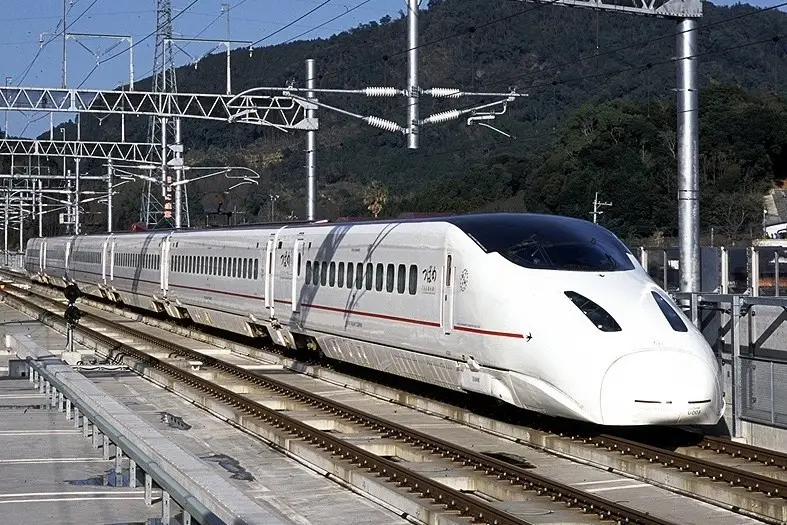
The legendary Tsubame means “swallow.” First used for a limited express in 1930, it became a prestigious name across several railway eras. Rather than treat one route as its whole identity, it is better to see Tsubame as a name repeatedly chosen for speed, polish, and the idea of a bird in flight.
It was later revived for the Kyūshū Shinkansen, where it remains a reminder that today’s railway branding often carries older railway history with it.
Why many classic services disappeared
The shinkansen changed the busiest intercity routes from the 1960s onward. On corridors where a bullet train offered a much faster journey, classic limited expresses lost their main advantage. Overnight services also faced competition from cheaper flights, highways, and changing travel habits.
That did not make limited express trains obsolete. It pushed them toward roles where they still make sense: regional links, scenic trips, airport connections, and routes through areas without a shinkansen. Names such as Romancecar, Azusa, and Thunderbird show that the category is still alive, even if the carriages and passenger expectations have changed.
What to check before riding one today
- Check the operator. JR rules, private railway tickets, and pass coverage are not identical.
- Look for the supplement. A base ticket alone is often not enough for a limited express.
- Confirm your seat type. Reserved, unreserved, Green Car, and sleeper accommodation have different conditions.
- Use the train name and destination together. A familiar name can run in several patterns, while a destination board tells you the actual service.
For a visitor, limited express trains can be one of the most comfortable ways to see more than Tokyo, Osaka, and Kyoto. For a rail fan, they preserve another layer of Japanese railway history: the period when a named overnight or intercity train could make the journey itself memorable.



Community
Comments
0 comments
There are no published comments in this language yet.
Send comment